
Catalogue Search | MBRL


Are you sure you want to remove the book from the shelf?

{{itemTitle}}
7,448
result(s) for
"Gems."
Sort by:

Gems
From glimmering diamonds to strong sapphire, learn all about gems in five easy-to-read chapters. This book captivates young readers through vibrant, full-color photographs. Zoom in even deeper with a key stats section and glossary words. Aligned to Common Core Standards and correlated to state standards. Abdo Zoom is a division of ABDO.
Book

Preface
UKES2024 – the 2024 energy storage conference and its outcomes. (a foreword to the special issue of papers from UKES2024)Prof. Seamus Garvey, University of Nottingham.One thing is certain about the inevitable – it will eventually happen! UKES2024, the 2024 instance of UK Energy storage conference, took place at the University of Nottingham from April 10 – 12, 2024. Like every conference, UKES2024 had its own quite unique flavour and its own very singular core message. That core message can probably be summarised as: Energy Storage is many-faceted, it’s real and it is going to be very big - inevitably!UKES2024 continued a tradition established by previous instances of the UKES conference by bringing together a wide range of expertise and backgrounds to discuss research right at the cutting edge. Previous UKES conferences have not assembled a proceedings, and the invitation to authors to submit a full journal paper was therefore something of an experiment. This resulting volume is small but nonetheless filled with gems and I commend it to the reader. With over 100 presentations in the conference, this volume does not cover the full spread of topics that were touched-upon in UKES2024. For that reason, I offer the remaining paragraphs here as something of an overview of UKES2024 and I will let the journal papers included herein speak for themselves.The executive committee that made UKES2024 possible comprised:Prof. Seamus Garvey, Conference Chair. (University of Nottingham)Ms. Annabel Brown (Energy Engineer at ARUP)Prof. Solomon Brown (University of Sheffield)Prof. Christos Markides (Imperial College)Prof. Daniel Friedrich (University of Edinburgh)Prof. Katriona Edlmann (University of Edinburgh)
Journal Article


Tropospheric NO2 Column over Tibet Plateau According to Geostationary Environment Monitoring Spectrometer: Spatial, Seasonal, and Diurnal Variations
Nitrogen oxides (NOx) are key precursors of tropospheric ozone and particulate matter. The sparse local observations make it challenging to understand NOx cycling across the Tibetan Plateau (TP), which plays a crucial role in regional and global atmospheric processes. Here, we utilized Geostationary Environment Monitoring Spectrometer (GEMS) data to examine the tropospheric NO2 vertical column density (ΩNO2) spatiotemporal variability over TP, a pristine environment marked with natural sources. GEMS observations revealed that the ΩNO2 over TP is generally low compared with surrounding regions with significant surface emissions, such as India and the Sichuan basin. A spatial decreasing trend of ΩNO2 is observed from the south and center to the north over Tibet. Unlike the surrounding regions, the TP exhibits opposing seasonal patterns and a negative correlation between the surface NO2 and ΩNO2. In the Lhasa and Nam Co areas within Xizang, the highest ΩNO2 in spring contrasts with the lowest surface concentration. Diurnally, a midday increase in ΩNO2 in the warm season reflects some external sources affecting the remote area. Trajectory analysis suggests strong convection lifted air mass from India and Southeast Asia into the upper troposphere over the TP. These findings highlight the mixing interplay of nonlocal and local NOx sources in shaping NO2 variability in a high-altitude environment. Future research should explore these transport mechanisms and their implications for atmospheric chemistry and climate dynamics over the TP.
Journal Article


Forensic characterization of Brazilian gemstones: A pilot study employing raman spectroscopy and multivariate analysis
Forensic gemstone analysis faces many challenges. One of the most critical aspects of gemological research is the classification of a gemstone. It is necessary to understand the mineral species, purity, origin, and identification of treatments to identify and classify a gem correctly, as well as assign a monetary value to it. However, the identification methodology must be neither destructive nor invasive to the material. Raman spectroscopy offers several advantages, such as fast, non-destructive analysis, requiring little material, being fully reproducible, and requiring no sample preparation. Furthermore, the development of portable Raman spectrometers allows the analysis to be carried out anywhere. Fourteen Brazilian gemstones (agate, amazonite, amethyst, yellow calcite, orange calcite, citrine, hematite, yellow jasper, tiger's eye, onyx, blue quartz, rose quartz, green quartz, and sodalite) were analyzed using the TacticID N 785 nm portable Raman system. For each of the fourteen types of gemstones, three fragments of rough and three polished gemstones were analyzed. Three spectra of each piece in different faces were taken, totaling nine spectra for each species and 252 spectra in all. We used one univariate technique (Pearson correlation coefficient) and one classificatory technique-Soft Independent Modelling of Class Analogy (SIMCA) to evaluate the spectra. Results showed that the univariate method was not able to discriminate the classes. However, SIMCA analysis showed promising results for classification. These results were achieved after removing outliers and making a variable selection. More specifically, some samples presented anomalous behavior due to the nature of the technique applied. Some regions of the spectrum did not offer information, or that information was redundant; because of these, it was removed. This suggests that Raman spectroscopy and multivariate methods can be essential tools for classifying gemstones, not only Brazilian ones but of any origin.
•The work evaluated 14 raw gems and 14 polished gems found in Brazil.•The gems were analyzed by Raman spectroscopy.•Data were analyzed using univariate and multivariate methods.•The SIMCA multivariate classification method was able to distinguish between the indicated groups.•The study demonstrated the possibility of using Raman spectra and statistical techniques to identify Brazilian gemstones.
Journal Article


Estimation of emerald mineralization probability using machine learning algorithms
This research proposes a machine learning (ML) model that estimates the probability of emerald mineralization in rocks of the Western Emerald Belt (CEOC). Element concentrations, lithologies and coordinates were used as input variables and productivity as the target variable (176 samples). The variables were transformed to be integrated into the model. (1) Variable selection was performed using the Boruta method and backward elimination. (2) A logistic regression, a neural network, and a support vector machine were trained. (3) Calibration was achieved with the Platt method. (4) Calibration assessment was conducted by using the Brier score and calibration curves. The model selected was a calibrated support vector machine (C = 0.19 and λ = 0.1) that included 17 geochemical variables and the coordinates. The results were presented in a 3D plot. Assigning a probability value to each sample allows the mining targets to be ranked. La investigación propone un modelo de aprendizaje automático para estimar la probabilidad de mineralización de esmeraldas en el Cinturón Esmeraldífero Occidental (CEOC). Se emplearon concentraciones elementales, litología y coordenadas como variables de entrada y la productividad como variable objetivo (176 muestras). Las variables fueron transformadas para ser integradas al modelo. (1) Se recurrió a los métodos Boruta y backward elimination para seleccionar las variables. (2) Una regresión logística (LR), una red neuronal de retropropagación (BPNN) y una máquina de vectores de soporte (SVM) fueron entrenadas. (3) Se usó la calibración de Platt y (4) se evaluó su desempeño usando la puntuación Brier y curvas de calibración. El modelo elegido fue una máquina de vectores de soporte calibrada (C = 0.19 y λ = 0.1) que incluyó 17 variables geoquímicas y las coordenadas. Asignar valores de probabilidad permitió jerarquizar los objetivos mineros.
Journal Article

What are gems?
\"Single or multicolored, smooth or multifaceted, gems of all kinds captivate people of all ages. This vibrant volume will teach the budding geology buff how a single mineral can form many varieties of gems, how some gems are actually created by animals, and why certain types of jewelry are so valuable. Young readers who might display their birthstones with pride will be fascinated to learn about the role gems have played in superstition. The use of gems in tools including lasers and saws is also covered.\"--Provided by publisher.
Book
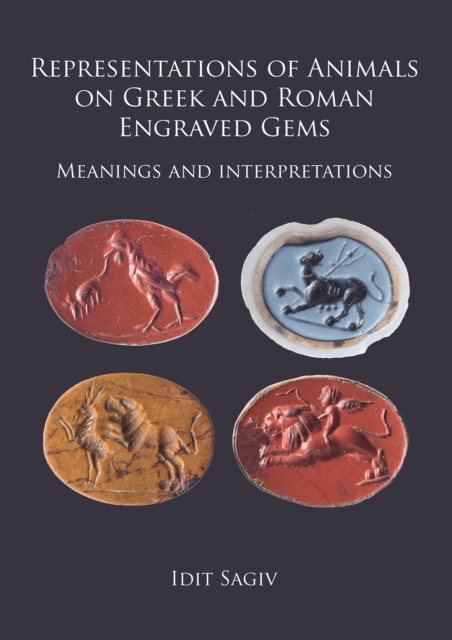
Representations of Animals on Greek and Roman Engraved Gems
A comprehensive study of the depictions of animals and their significance on Greek and Roman gems. The work examines the associations between animal depictions and the type of gemstone and its believed qualities. The study also compares the representation of animals on gems to other, larger media, and analyses the differences.
eBook