
Catalogue Search | MBRL


Are you sure you want to remove the book from the shelf?

{{itemTitle}}
657
result(s) for
"Genètica humana"
Sort by:

Enhancing Evolution
InEnhancing Evolution, leading bioethicist John Harris dismantles objections to genetic engineering, stem-cell research, designer babies, and cloning and makes an ethical case for biotechnology that is both forthright and rigorous. Human enhancement, Harris argues, is a good thing--good morally, good for individuals, good as social policy, and good for a genetic heritage that needs serious improvement.Enhancing Evolutiondefends biotechnological interventions that could allow us to live longer, healthier, and even happier lives by, for example, providing us with immunity from cancer and HIV/AIDS. Further, Harris champions the possibility of influencing the very course of evolution to give us increased mental and physical powers--from reasoning, concentration, and memory to strength, stamina, and reaction speed. Indeed, he says, it's not only morally defensible to enhance ourselves; in some cases, it's morally obligatory.
In a new preface, Harris offers a glimpse at the new science and technology to come, equipping readers with the knowledge to assess the ethics and policy dimensions of future forms of human enhancement.
eBook

Delivery of oligonucleotide‐based therapeutics: challenges and opportunities
Nucleic acid‐based therapeutics that regulate gene expression have been developed towards clinical use at a steady pace for several decades, but in recent years the field has been accelerating. To date, there are 11 marketed products based on antisense oligonucleotides, aptamers and small interfering RNAs, and many others are in the pipeline for both academia and industry. A major technology trigger for this development has been progress in oligonucleotide chemistry to improve the drug properties and reduce cost of goods, but the main hurdle for the application to a wider range of disorders is delivery to target tissues. The adoption of delivery technologies, such as conjugates or nanoparticles, has been a game changer for many therapeutic indications, but many others are still awaiting their eureka moment. Here, we cover the variety of methods developed to deliver nucleic acid‐based therapeutics across biological barriers and the model systems used to test them. We discuss important safety considerations and regulatory requirements for synthetic oligonucleotide chemistries and the hurdles for translating laboratory breakthroughs to the clinic. Recent advances in the delivery of nucleic acid‐based therapeutics and in the development of model systems, as well as safety considerations and regulatory requirements for synthetic oligonucleotide chemistries are discussed in this review on oligonucleotide‐based therapeutics.
Graphical Abstract
Recent advances in the delivery of nucleic acid‐based therapeutics and in the development of model systems, as well as safety considerations and regulatory requirements for synthetic oligonucleotide chemistries are discussed in this review on oligonucleotide‐based therapeutics.
Journal Article

Diverse monogenic subforms of human spermatogenic failure
Non-obstructive azoospermia (NOA) is the most severe form of male infertility and typically incurable. Defining the genetic basis of NOA has proven challenging, and the most advanced classification of NOA subforms is not based on genetics, but simple description of testis histology. In this study, we exome-sequenced over 1000 clinically diagnosed NOA cases and identified a plausible recessive Mendelian cause in 20%. We find further support for 21 genes in a 2-stage burden test with 2072 cases and 11,587 fertile controls. The disrupted genes are primarily on the autosomes, enriched for undescribed human “knockouts”, and, for the most part, have yet to be linked to a Mendelian trait. Integration with single-cell RNA sequencing data shows that azoospermia genes can be grouped into molecular subforms with synchronized expression patterns, and analogs of these subforms exist in mice. This analysis framework identifies groups of genes with known roles in spermatogenesis but also reveals unrecognized subforms, such as a set of genes expressed across mitotic divisions of differentiating spermatogonia. Our findings highlight NOA as an understudied Mendelian disorder and provide a conceptual structure for organizing the complex genetics of male infertility, which may provide a rational basis for disease classification.
The GEMINI consortium sequenced 1,000 cases of idiopathic male infertility and identified a plausible Mendelian cause in 20% of cases. The infertility genes can be grouped by expression pattern, facilitating their interpretation and follow-up.
Journal Article

Genetic Nature/Culture
The so-called science wars pit science against culture, and nowhere is the struggle more contentious-or more fraught with paradox-than in the burgeoning realm of genetics. A constructive response, and a welcome intervention, this volume brings together biological and cultural anthropologists to conduct an interdisciplinary dialogue that provokes and instructs even as it bridges the science/culture divide. Individual essays address issues raised by the science, politics, and history of race, evolution, and identity; genetically modified organisms and genetic diseases; gene work and ethics; and the boundary between humans and animals. The result is an entree to the complicated nexus of questions prompted by the power and importance of genetics and genetic thinking, and the dynamic connections linking culture, biology, nature, and technoscience. The volume offers critical perspectives on science and culture, with contributions that span disciplinary divisions and arguments grounded in both biological perspectives and cultural analysis. An invaluable resource and a provocative introduction to new research and thinking on the uses and study of genetics,Genetic Nature/Cultureis a model of fruitful dialogue, presenting the quandaries faced by scholars on both sides of the two-cultures debate.
eBook
A de novo paradigm for male infertility
De novo mutations are known to play a prominent role in sporadic disorders with reduced fitness. We hypothesize that de novo mutations play an important role in severe male infertility and explain a portion of the genetic causes of this understudied disorder. To test this hypothesis, we utilize trio-based exome sequencing in a cohort of 185 infertile males and their unaffected parents. Following a systematic analysis, 29 of 145 rare (MAF < 0.1%) protein-altering de novo mutations are classified as possibly causative of the male infertility phenotype. We observed a significant enrichment of loss-of-function de novo mutations in loss-of-function-intolerant genes (
p
-value = 1.00 × 10
−5
) in infertile men compared to controls. Additionally, we detected a significant increase in predicted pathogenic de novo missense mutations affecting missense-intolerant genes (
p
-value = 5.01 × 10
−4
) in contrast to predicted benign de novo mutations. One gene we identify,
RBM5
, is an essential regulator of male germ cell pre-mRNA splicing and has been previously implicated in male infertility in mice. In a follow-up study, 6 rare pathogenic missense mutations affecting this gene are observed in a cohort of 2,506 infertile patients, whilst we find no such mutations in a cohort of 5,784 fertile men (
p
-value = 0.03). Our results provide evidence for the role of de novo mutations in severe male infertility and point to new candidate genes affecting fertility.
Germline de novo mutations can impact individual fitness, but their role in human male infertility is understudied. Trio-based exome sequencing identifies many new candidate genes affecting male fertility, including an essential regulator of male germ cell pre-mRNA splicing.
Journal Article

Development of Engineered-U1 snRNA Therapies: Current Status
Splicing of pre-mRNA is a crucial regulatory stage in the pathway of gene expression. The majority of human genes that encode proteins undergo alternative pre-mRNA splicing and mutations that affect splicing are more prevalent than previously thought. Targeting aberrant RNA(s) may thus provide an opportunity to correct faulty splicing and potentially treat numerous genetic disorders. To that purpose, the use of engineered U1 snRNA (either modified U1 snRNAs or exon-specific U1s—ExSpeU1s) has been applied as a potentially therapeutic strategy to correct splicing mutations, particularly those affecting the 5′ splice-site (5′ss). Here we review and summarize a vast panoply of studies that used either modified U1 snRNAs or ExSpeU1s to mediate gene therapeutic correction of splicing defects underlying a considerable number of genetic diseases. We also focus on the pre-clinical validation of these therapeutic approaches both in vitro and in vivo, and summarize the main obstacles that need to be overcome to allow for their successful translation to clinic practice in the future.
Journal Article

The mitochondrial-derived peptide MOTS-c: a player in exceptional longevity?
Summary Mitochondrial-derived peptides (MDP) are encoded by functional short open reading frames in the mitochondrial DNA (mtDNA). These include humanin, and the recently discovered mitochondrial open reading frame of the 12S rRNA-c (MOTS-c). Although more research is needed, we suggest that the m.1382A>C polymorphism located in the MOTS-c encoding mtDNA, which is specific for the Northeast Asian population, may be among the putative biological mechanisms explaining the high longevity of Japanese people.
Journal Article

The Nazi symbiosis
The Faustian bargain—in which an individual or group collaborates with an evil entity in order to obtain knowledge, power, or material gain—is perhaps best exemplified by the alliance between world-renowned human geneticists and the Nazi state. Under the swastika, German scientists descended into the moral abyss, perpetrating heinous medical crimes at Auschwitz and at euthanasia hospitals. But why did biomedical researchers accept such a bargain? The Nazi Symbiosis offers a nuanced account of the myriad ways human heredity and Nazi politics reinforced each other before and during the Third Reich. Exploring the ethical and professional consequences for the scientists involved as well as the political ramifications for Nazi racial policies, Sheila Faith Weiss places genetics and eugenics in their larger international context. In questioning whether the motives that propelled German geneticists were different from the compromises that researchers from other countries and eras face, Weiss extends her argument into our modern moment, as we confront the promises and perils of genomic medicine today.
eBook
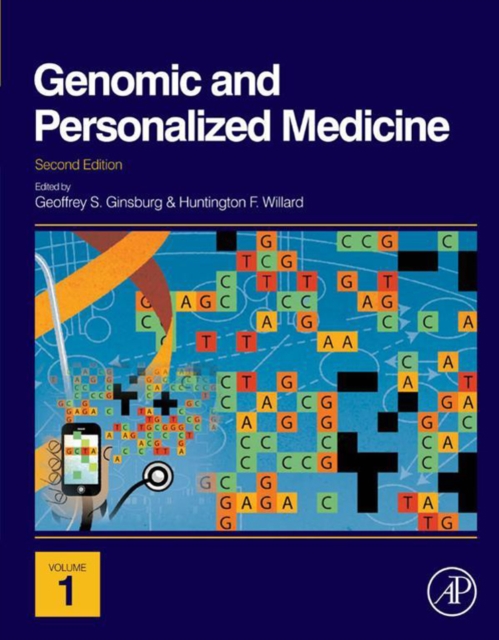
Genomic and personalized medicine
Genomic and Personalized Medicine, Second Edition -- winner of a 2013 Highly Commended BMA Medical Book Award for Medicine -- is a major discussion of the structure, history, and applications of the field, as it emerges from the campus and lab into clinical action.
eBook
Establishment of a Human iPSC Line from Mucolipidosis Type II That Expresses the Key Markers of the Disease
Mucolipidosis type II (ML II) is a rare and fatal disease of acid hydrolase trafficking. It is caused by pathogenic variants in the GNPTAB gene, leading to the absence of GlcNAc-1-phosphotransferase activity, an enzyme that catalyzes the first step in the formation of the mannose 6-phosphate (M6P) tag, essential for the trafficking of most lysosomal hydrolases. Without M6P, these do not reach the lysosome, which accumulates undegraded substrates. The lack of samples and adequate disease models limits the investigation into the pathophysiological mechanisms of the disease and potential therapies. Here, we report the generation and characterization of an ML II induced pluripotent stem cell (iPSC) line carrying the most frequent ML II pathogenic variant [NM_024312.5(GNPTAB):c.3503_3504del (p.Leu1168fs)]. Skin fibroblasts were successfully reprogrammed into iPSCs that express pluripotency markers, maintain a normal karyotype, and can differentiate into the three germ layers. Furthermore, ML II iPSCs showed a phenotype comparable to that of the somatic cells that originated them in terms of key ML II hallmarks: lower enzymatic activity of M6P-dependent hydrolases inside the cells but higher in conditioned media, and no differences in an M6P-independent hydrolase and accumulation of free cholesterol. Thus, ML II iPSCs constitute a novel model for ML II disease, with the inherent iPSC potential to become a valuable model for future studies on the pathogenic mechanisms and testing potential therapeutic approaches.
Journal Article