
Catalogue Search | MBRL


Are you sure you want to remove the book from the shelf?

{{itemTitle}}
3,580
result(s) for
"Gender Identity United States."
Sort by:


Body Panic
p strongDworkin and Wachs analyze 10 years of health and fitness magazines to uncover how bodies are made in popular culture/strong Are you ripped? Do you need to work on your abs? Do you know your ideal body weight? Your body fat index? Increasingly, Americans are being sold on a fitness ideal—not just thin but toned, not just muscular but cut—that is harder and harder to reach. In strongBody Panic/strong, Shari L. Dworkin and Faye Linda Wachs ask why. How did these particular body types come to be “fit”? And how is it that having an unfit, or “bad,” body gets conflated with being an unfit, or “bad,” citizen? Dworkin and Wachs head to the newsstand for this study, examining ten years worth of men’s and women’s health and fitness magazines to determine the ways in which bodies are “made” in today’s culture. They dissect the images, the workouts, and the ideology being sold, as well as the contemporary links among health, morality, citizenship, and identity that can be read on these pages. While women and body image are often studied together, strongBody Panic/strong considers both women’s and men’s bodies side-by-side and over time in order to offer a more in-depth understanding of this pervasive cultural trend./p
eBook


American Sexual Character
When Alfred Kinsey's massive studiesSexual Behavior in the Human MaleandSexual Behavior in the Human Femaleappeared in 1948 and 1953, their detailed data spurred an unprecedented public discussion of the nation's sexual practices and ideologies. As they debated what behaviors were normal or average, abnormal or deviant, Cold War Americans also celebrated and scrutinized the state of their nation, relating apparent changes in sexuality to shifts in its political structure, economy, and people.American Sexual Characteremploys the studies and the myriad responses they evoked to examine national debates about sexuality, gender, and Americanness after World War II. Focusing on the mutual construction of postwar ideas about national identity and sexual life, this wide-ranging, shrewd, and lively analysis explores the many uses to which these sex surveys were put at a time of extreme anxiety about sexual behavior and its effects on the nation. Looking at real and perceived changes in masculinity, female sexuality, marriage, and homosexuality, Miriam G. Reumann develops the notion of \"American sexual character,\" sexual patterns and attitudes that were understood to be uniquely American and to reflect contemporary transformations in politics, social life, gender roles, and culture. She considers how apparent shifts in sexual behavior shaped the nation's workplaces, homes, and families, and how these might be linked to racial and class differences.
eBook


Adolescent Literacies and the Gendered Self
Today's youth live in the interface of the local and the global. Research is documenting how a world youth culture is developing, how global migration is impacting youth, how global capitalism is changing their economic and vocational futures, and how computer-mediated communication with the world is changing the literacy needs and identities of students. This book explores the dynamic range of literacy practices that are reconstructing gender identities in both empowering and disempowering ways and the implications for local literacy classrooms. As gendered identities become less essentialist, are more often created in virtual settings, and are increasingly globalized, literacy educators need to understand these changes in order to effectively educate their students.
The volume is organized around three themes:
gender influences and identities in literacy and literature;
gender influences and identities in new literacies practices; and
gender and literacy issues and policies.
The contributing authors, from North America, Europe, and Australia offer an international perspective on literacy issues and practices. This volume is an important contribution to understanding the impact of the local and the global on how today's youth are represented and positioned in literacy practices and polices within the context of 21st century global/cosmopolitan life.
eBook

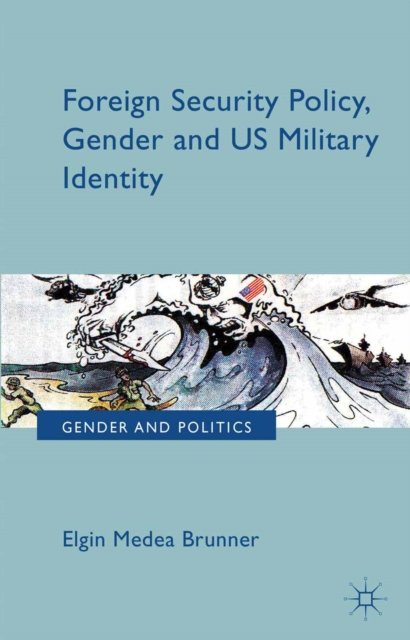
Foreign security policy, gender, and US military identity
01
02
The concept of 'othering' which can be understood as the process of differentiation from the Self has been a basic tenet of the war story since war stories were first told. This practise of deliberate differentiation is indicative of the fact that war stories are essentially about the production of identity. The aim of this book, therefore, is to unravel some of the gendered ideologies that underpin the link between state identity and foreign security policy by looking at a certain case, state and foreign security policy. In particular this volume explores the identity of the United States through military documents on perception management in conflict from 1991-2007 shedding light on the 'othering' and the 'selfing' that occurs in these particular war stories. In doing so it lays bare the gendered ideologies that underpins US identity between these years as well as exploring potential spaces for alternatives. Thus, this book ventures a detailed and unique look at a particular aspect of the gendered reproduction of the state.
02
02
Differentiation from the Self has been a unifying feature of war stories since they were first told highlighting that war stories are about the production of identity. Based on analysis of military documents, this book aims to unravel some of the gendered ideologies that underpin the link between state identity and foreign security policy
13
02
Elgin Medea Brunner was a Senior Researcher at the Center for Security Studies. She holds a Doctorate in Political Science from the University of Vienna, a Master in Political Science and a Master in International Relations both from the Graduate Institute of International and Development Studies in Geneva. Her research focus lies on gender issues in security studies and international relations, risk analysis and resilience as well as critical (information) infrastructure protection and cyber conflicts.
04
02
Figures, Tables and Illustrations Acknowledgements Introduction
1. Contextualizing the Study of Gender and War 2. Making Gender Tangible in Military Discourse 3. Poststructuralism in International Relations Theory
4. From Women to Gender – Poststructuralist Feminism in International Relations and Security Studies
5. The Performative Relation between Foreign Policy (Military Discourse) and (Gendered) Identities
6. Accounting for the Unaccountable: Ideology and Discourse – a Strained Relation?
7. Methodology and Data 8. The Doctrine of Military 'Perception Management' in Conflict 9. Information (Age) Warfare 10. Reading Identity I: (not so) Silent Documents 11. Gendered Ideological Underpinnings: Masculinist Neoliberalism 12. The Practice of Military 'Perception Management' in Conflict 13. Self and Other in Psyop Leaflets 14. Reading Identity II: Telling Articulations 15. The Masculinist Orientalism of the Omnipotent aviour 16. Performing Identity/Foreign (Security) Policy Conclusion – Another Gendered Reproduction of the State Annex: Sources I. Military Doctrine Documents II. US Armed Forces Leaflets Bibliography
08
02
What do military doctrines and propaganda leaflets have to do with national identity and gender? Everything, argues Elgin Brunner in this wide-ranging and innovative book. Theoretically sophisticated, methodologically thorough, and refreshingly not loath to inject an updated notion of ideology into her post-structuralist approach, the book adds a new spin to feminist contentions that link foreign policy to gendered constructions of state identity. A multiple reading of texts and silenced intertexts reveal an 'information age' military with neoliberal traits, Orientalist productions of hypermasculine enemies and feeble civilian others, and stealth performances of US identity. A dizzying tour through the discursive corridors of the US military that shakes our understanding of what foreign policy and military strategy are all about! Elisabeth Prügl, Deputy Director, Graduate Institute of International and Development Studies, Switzerland This timely book engages with the hereto insufficiently researched subject area of US military perception management doctrine and practice in an analytically deep and critically sophisticated manner. By unearthing war schemes of power through gendered constructions of identity and by showing the implications of these constructions for the state, its society, and its foreign policy from a wealth of documents, the book positions itself as a highly relevant and thought-provoking volume in the poststructuralist research tradition. Myriam Dunn Cavelty, lecturer in security studies and senior researcher at the Center for Security Studies (CSS), Swiss Federal Institute of Technology, ETH Zurich, Switzerland
eBook


Moral Panics, Sex Panics
Finalist for 2010 LGBT Anthology Award from the Lambda Literary AwardsUnwed teen mothers, abortion, masturbation, pornography, gay marriage, sex trafficking, homosexuality, and HIV are just a few in a long line of issues that have erupted into panics. These sexual panics spark moral crusades and campaigns, defining and shaping how we think about sexual and reproductive rights. The essays in Moral Panics, Sex Panics focus on case studies ranging from sex education to AIDS to race and the \"down low,\" to illustrate how sexuality is at the heart of many political controversies. The contributors also reveal how moral and sexual panics have become a mainstay of certain kinds of conservative efforts to win elections and gain power in moral, social, and political arenas. Moral Panics, Sex Panics provides new and important insights into the role that key moral panics have played in social processes, arguing forcefully against the political abuse of sex panics and for the need to defend full sexual and reproductive rights.Contributors: Cathy J. Cohen, Diane DiMauro, Gary W. Dowsett, Janice M. Irvine, Carole Joffe, and Saskia Eleonora Wieringa.
eBook