
Catalogue Search | MBRL


Are you sure you want to remove the book from the shelf?

{{itemTitle}}
446
result(s) for
"General Interest : Biography"
Sort by:
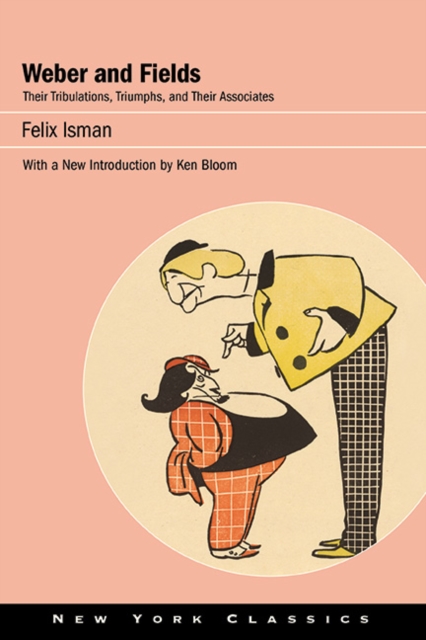
Weber and Fields
Joe Weber and Lew Fields were the dominant musical comedy team at
the turn of the last century. They created classic comedic
characters and routines and formed their own theatrical troupe,
running a theater in New York for many years where they produced
successful revues that combined music, dance, and song. So famous
were they in their time that they inspired a full-length biography
by a major publisher. Weber and Fields follows the duo
from their childhood on New York's rough-and-tumble Lower East Side
to the creation of their best-known characters, the Dutch
knockabout comedians Mike and Myer, and continues with the opening
of their own theater in 1896 (with landmark productions through
1904) to their reunion in 1912. This new edition brings an
out-of-print classic to a new generation of theater loves. A new
introduction by Ken Bloom carries the story through the rest of
their careers, showing how Weber and Fields set the stage for comic
duos that followed, including Mutt and Jeff of comic book fame,
Laurel and Hardy, Abbott and Costello, Rowan and Martin, and
countless others.
eBook
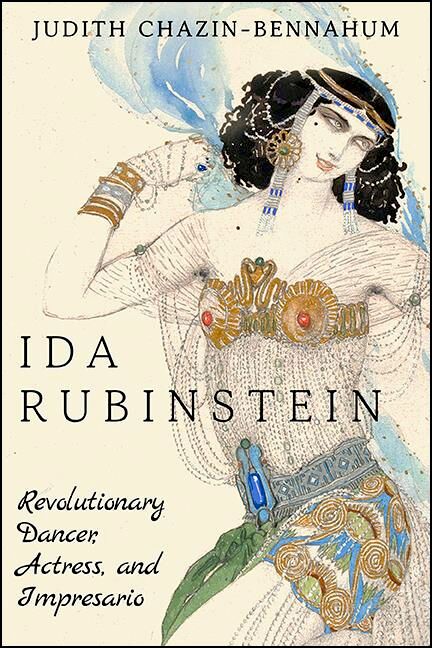
Ida Rubinstein
Ida Rubinstein (1883–1960) captivated Paris's dancers, composers, artists, and audiences from her time in the Ballets Russes in 1909 to her final performances in 1939. Trained in Russia as an actress and a dancer, her life spanned the artistic freedom of the Belle Époque through the ravages of World War I, the Depression, and finally World War II. This critical biography carefully examines aspects of Rubinstein's life and career that have previously received little attention. These include her early life in Russia, her writing about performance aesthetics, her curated approach to acting and dancing roles, and her encumbered position as a woman and a Jew. Rubinstein used her considerable fortune to produce dozens of plays, lyric creations, and ballets, making her one of the foremost producers of the first half of the twentieth century. Employing the greatest scenic artists, Léon Bakst and Alexander Benois; the distinguished composers Igor Stravinsky, Arthur Honegger, and Claude Debussy; celebrated writers including Paul Valéry and André Gide; and the brilliant choreographer Bronislava Nijinska, Rubinstein transformed twentieth-century theater and dance.
eBook

The First Chief Justice
Finalist for the 2022 Foreword INDIES Book of the
Year Award in the History Category The first Chief Justice
of the United States, John Jay faced many unique challenges. When
the stability and success of the new nation were far from certain,
a body of federalized American law had to be created from scratch.
In The First Chief Justice , New York State Appellate Judge
Mark C. Dillon uncovers, for the first time, how Jay's personal,
educational, and professional experiences-before, during, and after
the Revolutionary War-shaped both the establishment of the first
system of federal courts from 1789 to 1795 and Jay's approach to
deciding the earliest cases heard by the Supreme Court. Dillon
takes us on a fascinating journey of a task accomplished by
constant travel on horseback to the nation's far reaches, with Jay
adeptly handling the Washington administration, Congress, lawyers,
politicians, and judicial colleagues. The book includes the history
of each of the nine cases decided by Jay when he was Chief Justice,
many of which have proven with time to have enduring historical
significance. The First Chief Justice will appeal to
anyone interested in the establishment of the US federal court
system and early American history.
eBook

Mr. New York
Lew Rudin was one of New York City's most influential power brokers
in the latter part of the twentieth century, but he was also one of
its most indefatigable boosters. Born in the Throgs Neck section of
the Bronx on April 4, 1927, Rudin rose to become cochairman, with
his brother, Jack, of one of New York's oldest real estate
dynasties, Rudin Management. It is for his civic involvement,
however, that he is best remembered. Whether helping to get the New
York City Marathon off the ground, or rallying corporate and labor
leaders to come to the city's aid during the fiscal crises of the
1970s, Rudin worked tirelessly on behalf of the city he loved. The
Association for a Better New York, which he founded in 1971 in
response to growing concerns about the city's decline, continues to
play a vital role in virtually every area of municipal life, from
transportation to education. In Mr. New York , Seymour P.
Lachman chronicles Rudin's life and interesting times, and his love
affair with the city he never ceased to believe in. Drawing on
published materials as well as personal interviews with family
members, business associates, and federal, state, and city
officials, Lachman paints a portrait of a man who, by the time of
his death in 2001, had truly earned the nickname \"Mr. New York.\"
eBook

Inventors: incredible stories of the world's most ingenious inventions
Step into Leonardo da Vinci's workshop, relax on board Hideo Shima's speedy bullet train, and join movie star Hedy Lamarr to bounce ideas around in between takes. Inventors looks at the towering achievements of more than 50 inventors in great detail. From Lizzie Magie, who came up with the idea for the game Monopoly, but had it stolen, to the ancient Turkish polymath Ismail al-Jazari, who decided the best way to power a clock was with a model elephant, to Richard Turere, the Maasai inventor who created a lion-scaring device when he was just 13 years old - the inventors of this ebook have all used buckets-full of creativity to find ways to improve our world. Each page is packed with jaw-dropping facts, with every inventor's achievements written as a story. Professor Robert Winston's beautiful descriptions of the inventors' lives are brought to life through stunning illustrations by Jessamy Hawke and fantastic photography highlights the detail of their designs.The inventors come from all walks of life and parts of the world, making this the perfect ebook for every budding inventor.
eBook

But One Race
Born in South Carolina to a wealthy white father and mixed race mother, Robert Purvis (1810–1898) was one of the nineteenth century's leading black abolitionists and orators. In this first biography of Purvis, Margaret Hope Bacon uses his eloquent and often fierce speeches to provide a glimpse into the life of a passionate and distinguished man, intimately involved with a wide range of major reform movements, including abolition, civil rights, Underground Railroad activism, women's rights, Irish Home Rule, Native American rights, and prison reform. Citing his role in developing the Philadelphia Vigilant Committee, an all black organization that helped escaped slaves secure passage to the North, the New York Times described Purvis at the time of his death as the president of the Underground Railroad. Voicing his opposition to a decision by the state of Pennsylvania to disenfranchise black voters in 1838, Purvis declared \"there is but one race, the human race.\" But One Race is the dramatic story of one of the most important figures of his time.
eBook

Passionate Commitments
Winner of the 2014 Judy Grahn Award for Lesbian Nonfiction
presented by the Publishing Triangle Developing their
rhetorical skills in early-twentieth-century women's organizations,
Anna Rochester and Grace Hutchins, life partners and heirs to
significant wealth, aimed for revolution rather than reform. They
lived frugally while devoting themselves to several organizations
in succession, including the Episcopal Church and the Fellowship of
Reconciliation, as they searched for a place where their efforts
were welcomed and where they could address the root causes of
social inequities. In 1927, they joined the Communist Party USA and
helped to build the Labor Research Association. There they engaged
in research and wrote books, pamphlets, and articles arguing for
gender and racial equality, and economic justice. Julia M. Allen's
Passionate Commitments is a love story, but more than
that, it is a story of two women whose love for each other
sustained their political work. Allen examines the personal and
public writings of Rochester and Hutchins to reveal underreported
challenges to capitalism as well as little-known efforts to
strengthen feminism during their time. Through an investigation of
their lives and writings, this biography charts the underpinnings
of American Cold War fears and the influence of sexology on
political movements in mid-twentieth-century America.
eBook

Ecology Is Permanent Economy
For decades, Sunderlal Bahuguna has been an environmental activist in his native India, well known for his efforts on behalf of the Himalayas and its people. In the 1970s, he was instrumental in the successful Chipko (or \"hug\") movement during which local people hugged trees to prevent logging for outside concerns. He was also a leader of the long opposition to the Tehri Dam. In both conflicts, the interests of outsiders threatened the interests of local people living relatively traditional lives.
George Alfred James introduces Sunderlal Bahuguna's activism and philosophy in a work based on interviews with Bahuguna himself, his writings, and journalistic accounts. James writes that Bahuguna's work in the Indian independence movement and his admiration for the nonviolence of Gandhi has inspired a vision and mode of activism that deserves wider attention. It is a philosophy that does not try to win the conflict, but to win the opponent's heart.
eBook
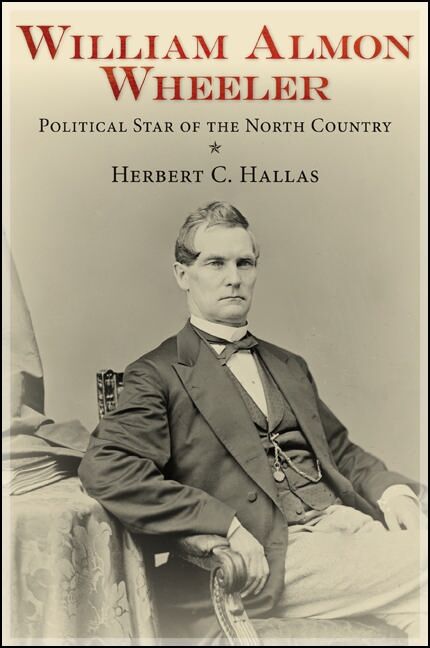
William Almon Wheeler
William Almon Wheeler's life is an American success story about how a poor boy living near the Canadian border in Malone, New York, achieved fame and fortune. Often referred to as \"the New York Lincoln,\" Wheeler was a lawyer, banker, railroad president, state legislator, five-term congressman, and the nineteenth vice president of the United States under Rutherford B. Hayes.
Using a variety of sources, including newspapers, letters, government reports, county histories, and biographies of Wheeler's contemporaries, Herbert C. Hallas examines Wheeler's role in shaping state and national public policy. Highlights include construction of the North Country and transcontinental railroads, the creation of the Adirondack and Niagara Falls state parks, the extension of voting rights in New York, the termination of racial civil war in Louisiana, and the curtailment of unnecessary government spending. The book traces Wheeler's path as he wound his way through the minefields of county, state, and national politics and helped found the Republican Party, without compromising his integrity or religious principles. Hallas rescues Wheeler's story from the dustbin of history. Along the way he debunks long-held myths about Wheeler and restores his place as an influential nineteenth-century political force.
eBook
Fight All Day, March All Night
In 1862 twenty-one-year-old Morris Brown Jr. left his studies at Hamilton College to take up the Union cause. He quickly rose in rank from sergeant major to captain and acting regimental commander for the 126th New York Volunteers. In letters written to his family in Penn Yan, New York, Brown describes his experiences at war: the unseemly carping between fellow officers, the fear that gripped men facing battle, and the longing to return home. Brown's letters also reveal an ambitious young man who not only wanted recognition but also wanted to assure himself of a financial future. Above all, this is the story of a courageous young man, told mostly in his own words. Few Civil War soldiers were as articulate as Morris Brown Jr., fewer served in a regiment that saw so much combat, still fewer commanded a regiment at such a young age, and even fewer were recognized by the newly minted Medal of Honor.
eBook