
Catalogue Search | MBRL


Are you sure you want to remove the book from the shelf?

{{itemTitle}}
261
result(s) for
"General Interest : Fiction"
Sort by:

The river that flows beside me
\"A vibrant, richly illustrated concertina book that takes the reader on a journey down the river, from the source high up in the mountains all the way to the sea, venturing down surging waterfalls and past meandering turns, whilst exploring the remarkable relationship between humans, animals, nature and rivers\"-- Publisher's description.
Book
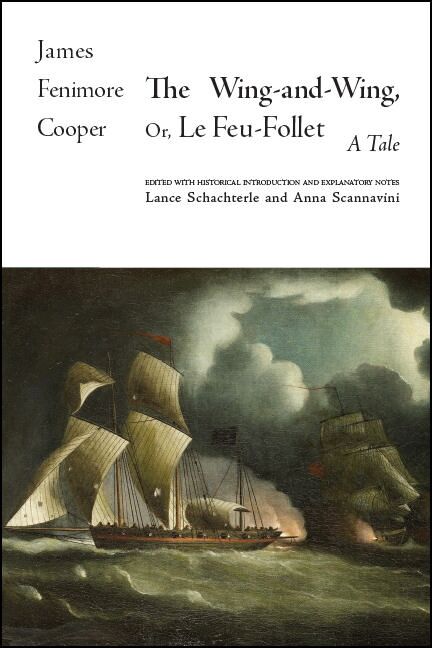
The Wing-and-Wing, Or Le Feu-Follet
In 1842, James Fenimore Cooper returned to transatlantic themes
with a thrilling historical novel set in the Mediterranean Sea,
weaving together a characteristically exciting narrative of naval
pursuit with a story of lovers separated by religious differences.
As the novel unfolds, warships under the command of the recently
ennobled Lord Nelson are thwarted in their attempt to capture the
French privateer Raoul Yvard and his graceful lugger Le
Feu-Follet , while Yvard himself is frustrated because the
Italian girl he loves, loyal to the Church, refuses to marry a
French deist. Cooper also worked into his story one of his most
colorful Yankee characters, Ithuel Bolt, an impressed seaman who
combines courage and righteousness with bitterness and greedy
self-interest. What sets The Wing-And-Wing apart from
Cooper's other maritime adventures is the setting: most of the
action occurs in the genial Italian waters of the Bay of Naples and
Gulf of Salerno, locations Cooper had visited in 1829-30 and later
recalled as \"the only region of the earth that I truly love.\" He
combined the struggle for naval dominance just beginning between
France and England with historical events occurring in the Kingdom
of Naples, especially the role reluctantly played by Nelson,
pressured by his lover Lady Hamilton, in the execution of the
Neapolitan hero Admiral Caraccioli. The editors provide a
historical introduction identifying Cooper's Italian sources as
well as detailed explanatory notes to enable readers fully to
appreciate the geographical and historical settings in the novel.
This scholarly edition, the twenty-seventh in the Writings of James
Fenimore Cooper, presents an accurate text drawing upon both the
first edition and a lightly revised authorial text from 1850. The
editors provide a full scholarly apparatus discussing their
editorial choices, and the edition has been approved by scholarly
peers in the Committee for Scholarly Editions of the Modern
Language Association.
eBook

How to draw a graphic novel
How to draw a graphic novel is structured as a series of short art courses that combine technical advice with creative inspiration. The book includes lessons in how to construct a narrative, develop characters, design settings, as well as the basics of printing, binding and digital file set-up. Each lesson is supported by striking illustrations by graphic novel artist Marco Maraggi, and professional artworking tips are delivered in the style of a graphic novel by renowned Italian cartoonist and comics lecturer Otto Gabos. The book also includes biographies of and interviews with cult creators who share insights into their working process as well as work from their sketchbooks.
Book
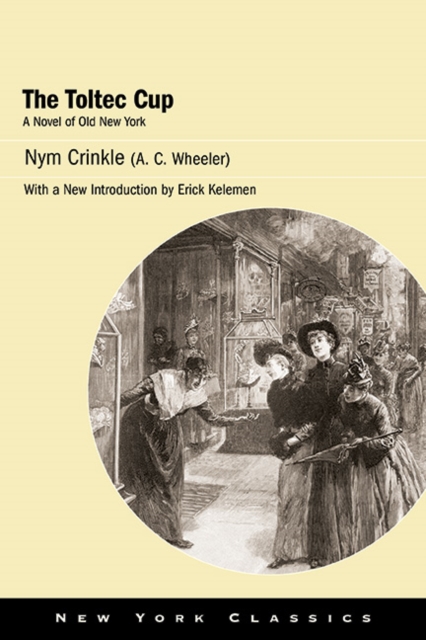
The Toltec Cup
The Toltec Cup was published in 1890 by A. C. Wheeler
under the pseudonym of \"Nym Crinkle.\" A tale of conspiracy and love
triangles, the novel centers on a mysterious silver cup covered in
hieroglyphs that goes missing just days after its owner's death.
New York Police Inspector John Wilder grows suspicious when someone
offers a huge reward for the cup's return. Wilder traces the reward
to Colin Carteret, an artist engaged to the murdered man's
daughter, who swears he did not know of the cup before the reward
appeared in the newspaper. Together, the two men follow a trail of
clues that lead them to New York City slums, a beautiful young
woman named Manuella Castleton, and a syndicate that believes that
the cup will lead to an extraordinary buried treasure. Contemporary
readers will enjoy the novel's remarkable depictions of
mid-nineteenth-century New York City. Roaming the Gas House
District, the Bowery, Union Square, Harlem, and the Meatpacking
District, The Toltec Cup explores a dynamic landscape and
diverse peoples. This new edition revives a forgotten world for a
new generation of readers.
eBook

Finally heard
Ten-year-old Lina wants to create a viral video to help her mom's business, but as she navigates the world of likes and views with her two best friends, Lina must find the courage to stay true to her authentic self.
BOOK
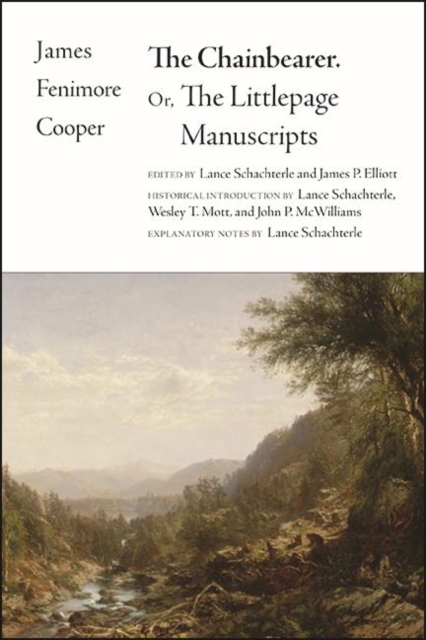
The Chainbearer
Cooper's The Chainbearer presents an exciting narrative that interrogates issues of what it means to own land. The novel examines the claims of ownership of wilderness land among Native Americans, New England squatters, and the old New York families with legal deeds.
eBook

Rosarita
A young student sits on a bench in a park in San Miguel, Mexico. Bonita is away from her home in India to learn Spanish. She is alone, somewhere she has no connection to. It is bliss. And then a woman approaches her. The woman claims to recognize Bonita because she is the spitting image of her mother, who made the same journey from India to Mexico as a young artist. No, says Bonita, my mother didn't paint. She never travelled to Mexico. But this strange woman insists, and so Bonita follows her. Into a story where Bonita and her mother will move apart and come together, and where the past threatens to flood the present, or re-write it.
BOOK

The Bravo
The Bravo (1831) takes place in early eighteenth-century
Venice, when the \"Serene Republic\" had lost much of its glory,
leaving its oligarchs struggling to hold on to their family wealth
by manipulating the government and people through secret councils
and a figure-head doge. In 1844, Cooper called it \"in spirit, the
most American book I ever wrote\" because of its depiction of the
masses duped by demagoguery and the attempts of Congress to rein in
President Jackson, who Cooper saw as representing the popular will.
In the novel, the low-born hero, Jacopo Frontoni, is forced to
become an agent of the state because his unjustly imprisoned father
languishes in the infamous state prison. On the last page, Jacopo
is executed as a scapegoat for the crimes attributed to him of
which he is innocent, rendering his beloved insane. Only in a
subplot does a noble couple escape Venice to enjoy marriage. The
present text is based on all extant manuscript witnesses (including
a lengthy deleted section) and offers extensive explanatory notes.
eBook

This time it's real
When seventeen-year-old Eliza Lin's entirely fictional essay about meeting her perfect boyfriend goes viral at her international school in Beijing, she has to make a deal with the handsome and charming Caz Song to play the part--but when the relationship starts to feel real all her career plans are suddenly threatened.
Book

The Redskins
The Redskins , James Fenimore Cooper's 1846 novel about the
Anti-Rent Wars in upstate New York, is now available in a scholarly
edition. The final work in the \"Littlepage trilogy,\" The
Redskins includes Cooper's enduring theme of Indigenous-White
relations but examines it in the context of contemporary tensions
between wealthy landlords and their tenant farmers in the Hudson
Valley region. The work is narrated in the voice of a privileged
landowner who presents an impassioned defense of the aristocratic
class in America and thus raises cardinal questions regarding
Cooper's own intentions and authorial control. Cooper himself was
often derided as an \"aristocrat\" in this later phase of his career,
and the novel can be read as both an endorsement of and a rebuttal
to that judgment. Edited by Hugh Egan, this volume includes
extensive historical background material as well as pertinent
textual notes based on the original manuscript. As part of the
series in the Writings of James Fenimore Cooper, this MLA-approved
edition of The Redskins will serve as the definitive text
for future teachers and scholars alike. The Writings of
James Fenimore Cooper The distinguished Cooper scholar
James Franklin Beard (1919-1989) began organizing the Writings of
James Fenimore Cooper in the late 1960s, as his work on publishing
the monumental Letters and Journals of James Fenimore Cooper came
to fulfillment. Beard's intention was to provide readers with sound
scholarly editions of Cooper's major works, based wherever possible
on authorial manuscripts. To date, the Writings of James Fenimore
Cooper has made available texts of many of Cooper's best-known
novels, as well as some of his most important works of political
and social commentary.
eBook