
Catalogue Search | MBRL


Are you sure you want to remove the book from the shelf?

{{itemTitle}}
10
result(s) for
"Generals Taiwan Biography."
Sort by:

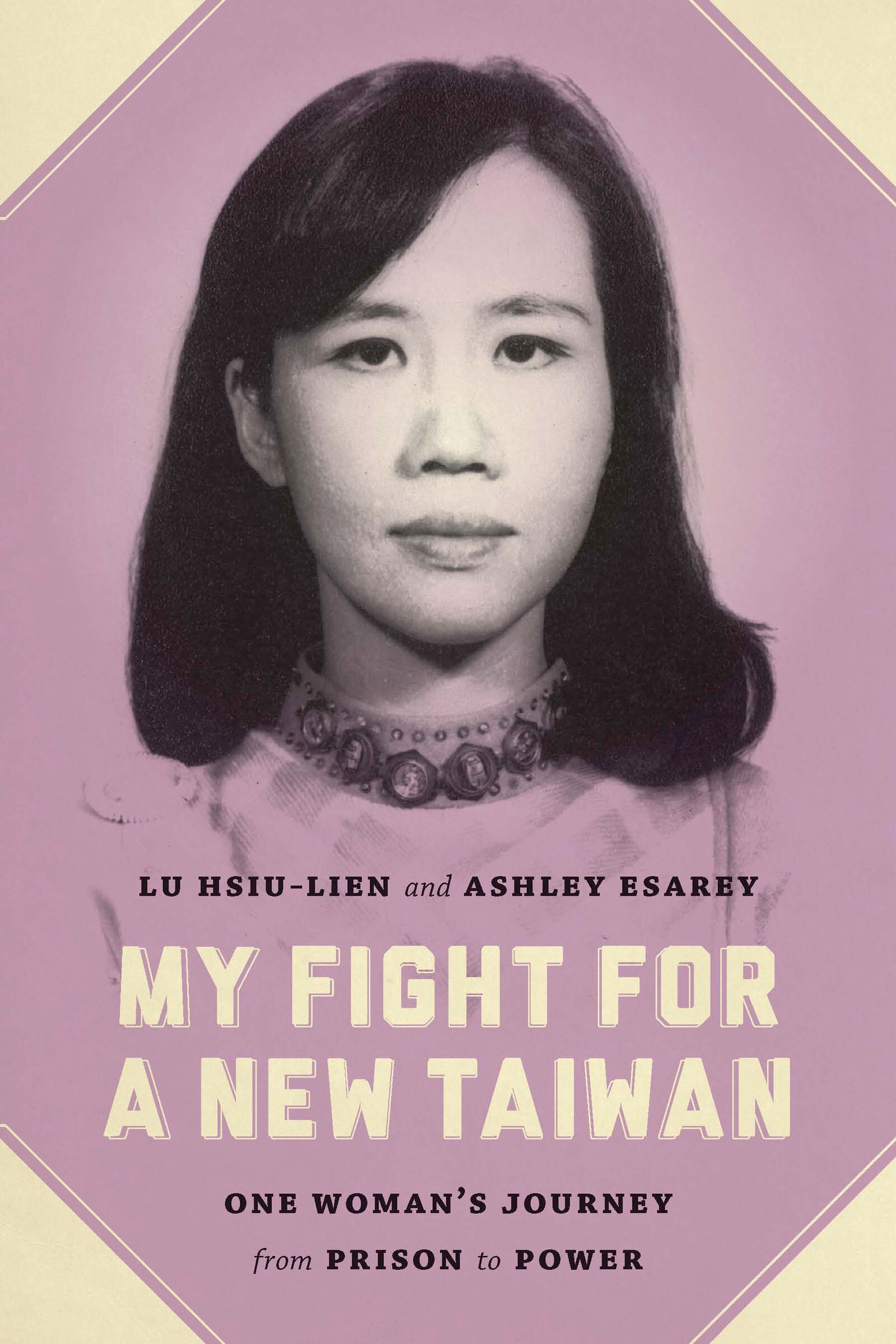
My Fight for a New Taiwan
Lu Hsiu-lien's journey is the story of Taiwan. Through her successive drives for gender equality, human rights, political reform, Taiwan independence, and, currently, environmental protection, Lu has played a key role in Taiwan's evolution from dictatorship to democracy. The election in 2000 of Democratic Progressive Party leader Chen Shui-bian to the presidency, with Lu as his vice president, ended more than fifty years of rule by the Kuomintang (Nationalist Party).Taiwan's painful struggle for democratization is dramatized here in the life of Lu, a feminist leader and pro-democracy advocate who was imprisoned for more than five years in the 1980s. Unlike such famous Asian women politicians as Burma's Aung San Suu Kyi, India's Indira Gandhi, and Pakistan's Benazir Bhutto, Lu Hsiu-lien grew up in a family without political connections. Her impoverished parents twice attempted to give her away for adoption, and as an adult she survived cancer and imprisonment, later achieving success as an elected politician-the first self-made woman to serve with such prominence in Asia.My Fight for a New Taiwan's rich narrative gives readers an insider's perspective on Taiwan's unique blend of Chinese and indigenous culture and recent social transformation.
eBook
Memories of Mount Qilai
Hualien, on the Pacific coast of eastern Taiwan, and its mountains, especially Mount Qilai, were deeply inspirational for the young poet Yang Mu. A place of immense natural beauty and cultural heterogeneity, the city was also a site of extensive social, political, and cultural change in the twentieth century, from the Japanese occupation and the American bombings of World War II to the Chinese civil war, the White Terror, and the Cold War. Taken as a whole, these evocative and allusive autobiographical essays provide a personal response to history as Taiwan transitioned from a Japanese colony to the Republic of China. Yang Mu recounts his childhood experiences under the Japanese, life in the mountains in proximity to indigenous people as his family took refuge from the American bombings, his initial encounters and cultural conflicts with Nationalist soldiers recently arrived from mainland China, the subsequent activities of the Nationalist government to consolidate power, and the island's burgeoning new manufacturing society. Nevertheless, throughout those early years, Yang Mu remained anchored by a sense of place on Taiwan's eastern coast and amid its coastal mountains, over which stands Mount Qilai like a guardian spirit. This was the formative milieu of the young poet. Yang Mu seized on verse to develop a distinct persona and draw meaning from the currents of change reshuffling his world. These eloquent essays create an exciting, subjective realm meant to transcend the personal and historical limitations of the individual and the end of culture, \"plundered and polluted by politics and industry long ago.\"
eBook

Gratitude and Adolescent Athletes' Well-Being
Two cross-sectional studies were conducted to examine the relationships between gratitude and athletes' well-being. Study 1 examines the relationship between dispositional gratitude and well-being, while Study 2 investigates the relationship between sport-domain gratitude and well-being. In Study 1, 169 Taiwanese senior high school athletes (M = 16.43, SD = 0.7 years) were administered the Gratitude Questionnaire (GQ; McCullough et al. 2002, \"Journal of Personality and Social Psychology,\" 82(1), 112–127), Team Satisfaction Scale (Walling et al. 1993, \"Journal of Sport & Exercise Psychology,\" 15, 172–183), Satisfaction with Life Scale (SWLS; Diener et al. 1985, \"Journal of Personality Assessment,\" 49, 71–75), and the Athlete Burnout Questionnaire (ABQ; Raedeke and Smith, 2001, \"Journal of Sport & Exercise Psychology,\" 23(4), 281–306). In Study 2, a separate sample of 265 adolescent athletes (M = 16.47 years, SD = 0.7) were administered the modified Sport-domain GQ, Team Satisfaction Scale, and ABQ. Study 1 results showed that dispositional gratitude positively predicts team satisfaction and life satisfaction, and negatively predicts athlete burnout. Findings from Study 2 revealed that sport-domain gratitude positively predicts team satisfaction and negatively predicts athlete burnout. A stronger gratitude and well-being relationship was observed in Study 2. This research provides the initial verification that gratitude and adolescent athletes' well-being are related. Possible mechanism of this relation, limitations, and practical implications are discussed.
Journal Article

Deng Xiaoping and the Transformation of China
No one in the twentieth century had a greater impact on world history than Deng Xiaoping. And no scholar is better qualified than Ezra Vogel to disentangle the contradictions embodied in the life and legacy of China’s boldest strategist—the pragmatic, disciplined force behind China’s radical economic, technological, and social transformation.
eBook


Prisoner of the rising sun : the lost diary of Brig. Gen. Lewis Beebe
A never-before-published account of the experience of an American officer at the hands of Japanese captors, Prisoner of the Rising Sun offers new evidence of the treatment accorded officers and shows how the Corregidor prisoners fared compared with the ill-fated Bataan captives.
When Japanese aircraft struck airfields in the Philippines on December 8, 1941, Col. Lewis C. Beebe was Gen. Douglas MacArthur’s chief supply officer. Promoted to brigadier general, he would become chief of staff for General Wainwright in early March, 1942. From his privileged vantage point, Beebe kept diary records of the Japanese invasion of the Philippines, their advance to Manila and capture of the Bataan Peninsula, and their assault on Corregidor. On May 6, Japanese troops assaulted Corregidor and secured the island in less than twelve hours. Beebe was among those captured and held prisoner until the end of the war in the Pacific, more than four years later.
During his captivity, Beebe managed to keep a diary in which he recorded the relatively benign treatment he and his fellow officers received (at least in comparison with the horrific conditions described in the better-known accounts of less high-ranking POWs held by the Japanese elsewhere). He reports on poor rations, less than adequate medical care, and field work in camps in the Philippines, on Taiwan, and in Manchuria. He also describes the sometimes greedy and selfish behavior of his fellow captives, as well as a lighter side of camp life that included work on a novel, singing, POW concerts, and Red Cross visits. His philosophy demanded that captivity should be borne with optimism and self-respect.
Annotation and an epilogue by General Beebe’s son, Rev. John M. Beebe, add details about his military career, and an informative introduction by historian Stanley L. Falk places the diary in the context of the broader American experience of captivity at the hands of the Japanese. The diary itself not only provides new details of the treatment of officers by the Japanese army, but also offers a glimpse into the psyche of one of the members of the Greatest Generation who transformed his captivity by using it to sort out what was most important in life.
eBook

My life's journey =: Wo di sheng ya yu xing si : reflections of an academic
Dr Wai-Fah Chen - a Chinese-born American academic and widely recognized structural engineering specialist in the field of mechanics, materials, and computing - has certainly led a fascinating life. A well-respected leader in the field of plasticity, structural stability, and structural steel design over the past half-century, he has made major contributions to introduce the mathematical theory of plasticity to civil engineering practice, especially in the application of limit analysis methods to the geotechnical engineering field. Having headed the engineering departments at the University of Hawaii and Purdue University, Chen is a widely cited author and the recipient of several national engineering awards, including the 1990 Shortridge Hardesty Award from the American Society of Civil Engineers and the 2003 Lifetime Achievement Award from the American Institute of Steel Construction.This book traces the life journey and reflections of Dr Chen. It presents a remarkable opportunity to understand his personal history and cultural passions: his struggle to achieve the American dream, his life as an eyewitness to the rise of China, and his career path to establish a solid engineering reputation. Presenting his scientific achievements spanning the last 40 years of his career, readers will thus be privy to his personal thoughts, experiences, and perspectives on these events.Sample Chapter(s)Chapter 1: The Civil War (671 KB)Contents:The Civil WarThe Wisdom of Class 33The Voyage to AmericaMy Lifelong Companion - LinlinAcademic Career at LehighAcademic Life at PurdueMy Life StoryAcademic ContributionsLife in Rapidly Changing TimesMy Journey in the Rise of ChinaMy Students at a GlanceThe Teacher D C DruckerTransforming the CollegeOn Higher Education Reform in ChinaMy Adviser and INTU and IKawasaki and IReadership: Undergraduate, graduate, postgraduate, college, and high school students as well as researchers in civil engineering, structural engineering, engineering science, and steel design; engineering students and faculty members.
eBook

Several worlds
This fascinating book comprises the autobiographical reminiscences and reflections of Monto Ho, M.D., a Chinese-born, American physician and widely recognized infectious disease specialist. It presents a remarkable opportunity to understand his personal history, the development of his scholarly qualities, and the logic of his scientific and cultural passions. A leader in the field over the past half a century, the author was a pioneer investigator of interferon. He made major contributions to the pathogenesis of virus infections in the immunocompromised host, especially of cytomegalovirus and other herpesvirus infections in organ transplant recipients. He built a strong science-based infectious diseases group at the University of Pittsburgh in the US. In his “second career” in Taiwan, Monto Ho changed the direction of his research to address problems that were important to that country. He recognized the threat posed by the emergence of antibiotic-resistant bacteria and the need to enhance the quality of training of infectious diseases physicians. These efforts paid unexpected dividends. The appropriate use of antibiotics has become an important national health priority, and there is now intense research on the devastating outbreaks of enterovirus 71 in children.
eBook
My life's journey
Dr Wai-Fah Chen — a Chinese-born American academic and widely recognized structural engineering specialist in the field of mechanics, materials, and computing — has certainly led a fascinating life. A well-respected leader in the field of plasticity, structural stability, and structural steel design over the past half-century, he has made major contributions to introduce the mathematical theory of plasticity to civil engineering practice, especially in the application of limit analysis methods to the geotechnical engineering field. Having headed the engineering departments at the University of Hawaii and Purdue University, Chen is a widely cited author and the recipient of several national engineering awards, including the 1990 Shortridge Hardesty Award from the American Society of Civil Engineers and the 2003 Lifetime Achievement Award from the American Institute of Steel Construction.
eBook