
Catalogue Search | MBRL


Are you sure you want to remove the book from the shelf?

{{itemTitle}}
574
result(s) for
"Generals--United States--Biography"
Sort by:
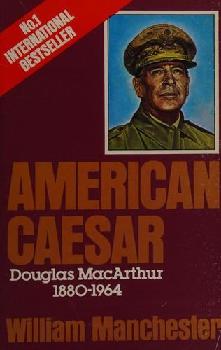

The most dangerous man in America : the making of Douglas MacArthur
At times, even his admirers seemed unsure of what to do with General Douglas MacArthur. Imperious, headstrong, and vain, MacArthur matched an undeniable military genius with a massive ego and a rebellious streak that often seemed to destine him for the dustbin of history. Yet despite his flaws, MacArthur is remembered as a brilliant commander whose combined-arms operation in the Pacificthe first in the history of warfaresecured America's triumph in World War II and changed the course of history. In The Most Dangerous Man in America, celebrated historian Mark Perry examines how this paradox of a man overcame personal and professional challenges to lead his countrymen in their darkest hour. As Perry shows, Franklin Roosevelt and a handful of MacArthur's subordinates made this feat possible, taming MacArthur, making him useful, and finally making him victorious. A gripping, authoritative biography of the Pacific Theater's most celebrated and misunderstood commander, The Most Dangerous Man in America reveals the secrets of Douglas MacArthur's successand the incredible efforts of the men who made it possible.
eBook

MacArthur in Asia
General Douglas MacArthur's storied career is inextricably linked to Asia. His father, Arthur, served as Military Governor of the Philippines while Douglas was a student at West Point, and the younger MacArthur would serve several tours of duty in that country over the next four decades, becoming friends with several influential Filipinos, including the country's future president, Emanuel L. Quezon. In 1935, he became Quezon's military advisor, a post he held after retiring from the U.S. Army and at the time of Japan's invasion of 1941. As Supreme Commander for the Southwest Pacific, MacArthur led American forces throughout the Pacific War. He officially accepted Japan's surrender in 1945 and would later oversee the Allied occupation of Japan from 1945 to 1951. He then led the UN Command in the Korean War from 1950 to 1951, until he was dismissed from his post by President Truman.
InMacArthur in Asia, the distinguished Japanese historian Hiroshi Masuda offers a new perspective on the American icon, focusing on his experiences in the Philippines, Japan, and Korea and highlighting the importance of the general's staff-the famous \"Bataan Boys\" who served alongside MacArthur throughout the Asian arc of his career-to both MacArthur's and the region's history. First published to wide acclaim in Japanese in 2009 and translated into English for the first time, this book uses a wide range of sources-American and Japanese, official records and oral histories-to present a complex view of MacArthur, one that illuminates his military decisions during the Pacific campaign and his administration of the Japanese Occupation.
eBook

Fighting U.S. generals of WWII
\"Read about these American Generals of WW II including Henry H. Arnold, Omar N. Bradley, Dwight D. Eisenhower, Curtis E. LeMay, Douglas MacArthur, George C. Marshall, George S. Patton, Matthew B. Ridgway, Holland M. Smith and Joseph W. Stilwell\"--Provided by publisher.
Book

Thomas Ewing Jr
An Ohio family with roots in the South, the Ewings influenced the course of the Midwest for more than fifty years. Patriarch Thomas Ewing, a former Whig senator and cabinet member who made his fortune as a real estate lawyer, raised four major players in the nation's history—including William Tecumseh \"Cump\" Sherman, taken into the family as a nine-year-old, who went on to marry his foster sister Ellen. Ronald D. Smith now tells of this extraordinary clan that played a role on the national stage through the illustrious career of one of its sons.
In Thomas Ewing Jr.: Frontier Lawyer and Civil War General, Smith introduces us to the Ewing family, little known except among scholars of Sherman, to show that Tom Jr. had a remarkable career of his own: first as a real estate lawyer, judge, soldier, and speculator in Kansas, then as a key figure in national politics. Smith takes readers back to Bleeding Kansas, with its border ruffians and land speculators, reconstructing the rough-and-tumble of its courtrooms to demonstrate that its turmoil was as much about claim-jumping as about slavery. He describes the seat-of-the-pants law practice in which Ewing worked with his brothers Hugh and Charlie and foster brother Cump. He then tells how Tom came to national prominence in the fight over the proslavery Lecompton Constitution, was instrumental in starting up the Union Pacific Railroad, and became the first chief justice of the Kansas Supreme Court.
Ewing obtained a commission in the Union Army—as did his brothers—and raised a regiment that saw significant action in Arkansas and Missouri. After William Quantrill's raid on Lawrence, Kansas, he issued the dramatic General Order No. 11 that expelled residents from sections of western Missouri. Then this confidant of Abraham Lincoln's went on to courageously defend three of the assassination conspirators—including the disingenuous Samuel Mudd—and lobbied the key vote to block the impeachment of Andrew Johnson.
Smith examines Ewing's life in meticulous detail, mining family correspondence for informative quotes and digging deep into legal records to portray lawmaking on the frontier. And while Sherman has been the focus of most previous work on the Ewings, this book fills the gaps in an interlocking family of remarkable people—one that helped shape a nation's development in its courtrooms and business suites. Thomas Ewing Jr.: Frontier Lawyer and Civil War General retells a chapter of Kansas history and opens up a panoramic view of antebellum America, the Civil War, Reconstruction, and the Gilded Age.
eBook


Battles and Leaders of the Civil War
The first four volumes of Battles and Leaders of the Civil War, published in the late nineteenth century, became the best-selling and most frequently cited works ever published on the Civil War. Volume 6 (like Volume 5), assembled by the acclaimed military historian Peter Cozzens, carries on the tradition of its namesake, offering a dazzling new collection of articles written by military and civilian leaders, North and South, on a broad array of war-related topics._x000B__x000B_Sifting carefully through reports from newspapers, magazines, personal memoirs, and letters, Peter Cozzens's Volume 6 brings readers more of the best first-person accounts of marches, encampments, skirmishes, and full-blown battles, as seen by participants on both sides of the conflict. Alongside the experiences of lower-ranking officers and enlisted men are accounts from key personalities including General John Gibbon, General John C. Lee, and seven prominent generals from both sides offering views on \"why the Confederacy failed.\" This volume includes one hundred twenty illustrations, including sixteen previously uncollected maps of battlefields, troop movements, and fortifications. _x000B_
eBook


Commander of all Lincoln's armies : a life of General Henry W. Halleck
In the summer of 1862, President Lincoln called General Henry W. Halleck to Washington, D.C., to take command of all Union armies in the death struggle against the Confederacy. For the next two turbulent years, Halleck was Lincoln's chief war advisor, the man the President deferred to in all military matters. Yet, despite the fact that he was commanding general far longer than his successor, Ulysses S. Grant, he is remembered only as a failed man, ignored by posterity.
In the first comprehensive biography of Halleck, the prize-winning historian John F. Marszalek recreates the life of a man of enormous achievement who bungled his most important mission. When Lincoln summoned him to the nation's capital, Halleck boasted outstanding qualifications as a military theorist, a legal scholar, a brave soldier, and a California entrepreneur. Yet in the thick of battle, he couldn't make essential decisions. Unable to produce victory for the Union forces, he saw his power become subsumed by Grant's emergent leadership, a loss that paved the way for Halleck's path to obscurity.
Harnessing previously unused research, as well as the insights of modern medicine and psychology, Marszalek unearths the seeds of Halleck's fatal wartime indecisiveness in personality traits and health problems. In this brilliant dissection of a rich and disappointed life, we gain new understanding of how the key decisions of the Civil War were taken, as well as insight into the making of effective military leadership.
eBook