
Catalogue Search | MBRL


Are you sure you want to remove the book from the shelf?

{{itemTitle}}
538
result(s) for
"Generations Fiction"
Sort by:
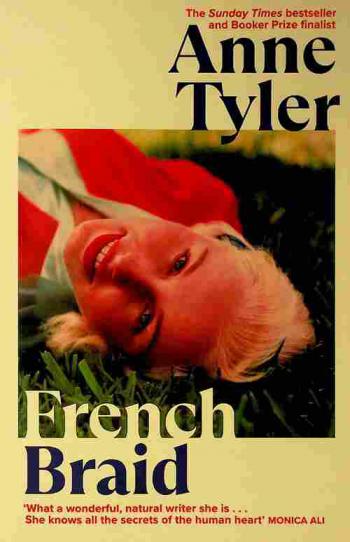
French braid
The Garretts take their first and last family vacation in the summer of 1959. They hardly ever venture beyond Baltimore, but in some ways they have never been farther apart. Mercy has trouble resisting the siren call of her aspirations to be a painter, which means less time keeping house for her husband Robin. Their teenage daughters, steady Alice and boy-crazy Lily, could not have less in common. Their youngest, David, is already intent on escaping his family's orbit, for reasons none of them understands. Yet as these lives advance across decades, the Garretts' influence on one another ripples unmistakably through each generation, much like French-braided hair keeps its waves even after it is undone.

The White Girl
A searing new novel from leading Indigenous storyteller Tony Birch that explores the lengths we will go to in order to save the people we love.Odette Brown has lived her whole life on the fringes of a small country town.
eBook

The kings of cool
\"In Savages, Don Winslow introduced Ben and Chon, twenty-something best friends who risk everything to save the girl they both love, O. Now, in his high-octane prequel, The Kings of Cool, Winslow reaches back in time to tell the story of how Ben, Chon, and O became the people they are. Spanning from 1960s Southern California to the recent past, it is a tale of family in all its forms--fathers and sons, mothers and daughters, friends and lovers. As the younger generation does battle with a cabal of drug dealers and crooked cops, they come to learn that their future is inextricably linked with their parents' history. A series of breakneck twists and turns puts the two generations on a collision course, culminating in a stunning showdown that will ultimately force Ben, Chon, and O to choose between their real families and their love for each other\"--Provided by publisher.
Book
The Town and the City
A quintessential American family is pulled apart by war and the rapidly changing tides of society in Jack Kerouac's captivating first novel Published seven years before his iconic On the Road, Jack Kerouac's debut novel follows the experiences of one family as they navigate the seismic cultural shifts following World War II. Inspired by Kerouac's own New England youth, the eight Martin children enjoy an idyllic upbringing in a small Massachusetts mill-town. Middle son Peter, a budding intellectual and promising athlete, most strongly feels the lure of the future. When war breaks out, the siblings' lives are interrupted by military service; their parents must sell their house after the family business goes bankrupt; and Peter, eager to see the world, voyages overseas as a Merchant Marine. After returning home, Peter is drawn to the kinetic energy of New York City and the progressive, bohemian ideas springing from its denizen young poets, writers, and artists. His new friends are fictionalized versions of Kerouac's contemporaries: Allen Ginsberg (as Leon Levinsky), Lucien Carr (as Kenneth Wood), and William Burroughs (as Will Dennison), and other members of the Beat Generation. Seen by Peter's parents as hoodlums and junkies, the Beats challenge conventional American ideas of everything from authority and religion to marriage and domestic life.
eBook
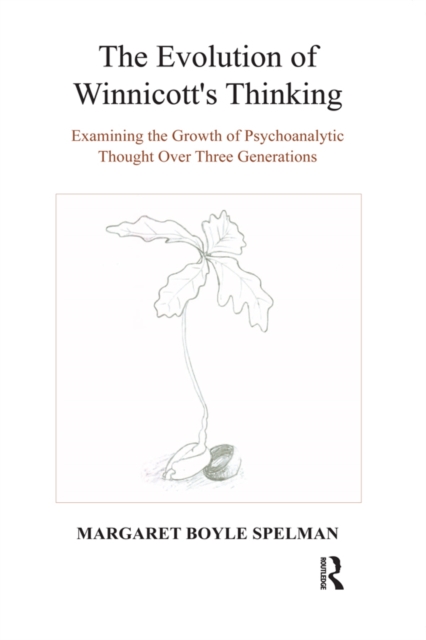
The Evolution of Winnicott's Thinking
What happens to the thinking of a thinker who refuses a discipleship? This book attempts to answer this question in relation to D. W. Winnicott and the evolution of his thinking. He eschewed a following, privileging the independence of his thinking and fostering the same in others. However Winnicott's thinking exerts a growing influence in areas including psychoanalysis, psychology, and human development. This book looks at the nature of Winnicott's thought and its influence. It first examines the development of Winnicott's thinking through his own life time (first generation) and then continues this exploration by viewing the thinking in members of the group with a strong likelihood of influence from him: his analysands (second generation) and their analysands (third generation).
eBook

Devotion
\"An affair with a much older voice teacher leads a young girl into early marriage, leaving behind her Brooklyn family and friends for a new life shadowed by her husband's Old World expectations. Decades later, with her child now pursuing an art career in New York, mother and son come to terms with the quiet intimacy they've both resented and cultivated\"--Page 4 of cover.
Book

The novel of the Greek civil war in the twenty-first century: (post)memory and the weight of the past
Between the years 2000 and 2015 novels on the Greek civil war (1946–9) flooded the Greek literary market. This raises important questions as to why the burden of the civil conflict weighs heavily upon generations with no experiential connection to these events. This article begins by offering an interpretation for the literary upsurge of the civil war since the 2000s. Then it uses Marianne Hirsch's concept of postmemory to illustrate the authors’ ethical commitment to ‘unsilence’ and redress the past through the use of archival evidence and testimonies. The case studies of ThomasSkassis’Ελληνικόσταυρόλɛξο (2000), Nikos Davvetas’ Λɛυκή πɛτσέτα στορινγκ (2006),and SophiaNikolaidou's Χορɛύουνοιɛλέφαντɛς(2012) serve to illustrate my argument.
Journal Article

North woods : a novel
\"When a pair of young lovers abscond from a Puritan colony, little do they know that their humble cabin in the woods will become the home of an extraordinary succession of human and nonhuman characters alike. An English soldier, destined for glory, abandons the battlefields of the New World to devote himself to apples. A pair of spinster twins navigate war and famine, envy and desire. A crime reporter unearths a mass grave--only to discover that the ancient trees refuse to give up their secrets. A lovelorn painter, a sinister conman, a stalking panther, a lusty beetle: As each inhabitant confronts the wonder and mystery around them, they begin to realize that the dark, raucous, beautiful past is very much alive\"-- Provided by publisher.
Book

Reassessing Thematic Crossings between South Africa and Nigeria: Postcolonial Leadership and Power in Mandla Langa’s The Lost Colours of the Chameleon and Helon Habila’s Waiting for an Angel
While Chris Dunton has described Nigeria and South Africa as the two powerhouses of African fiction, their literatures have, for evident historical reasons, followed distinct trajectories. Thus far, little critical attention has been paid to comparing theorisations of contemporary South African and Nigerian novels. This article aims to contribute to re-enlivening the sorely lacking dialogue between the countries’ literatures by providing a comparative reading of Mandla Langa’s The Lost Colours of the Chameleon and Helon Habila’s Waiting for an Angel . I argue that Langa’s allegorical novel dispenses with the idea of South African exceptionalism by exploring the lust for power in the postcolony. In particular, his representation of the postcolonial ruling class establishes an intertextual dialogue with writing from elsewhere on the continent. Waiting for an Angel , while engaging with postcolonial military dictatorships during the mid-1980s and 1990s in Nigeria, is also noteworthy for invoking a sense of placelessness and, therefore, offers itself for a comparative analysis. Relating the novels to their literary antecedents as well as to recent theorisations of third-generation Nigerian fiction and the post-apartheid novel, I suggest that their reflections on postcolonial leadership unsettle the boundaries of national literatures and invoke a sense of continental connectivity.
Journal Article