
Catalogue Search | MBRL


Are you sure you want to remove the book from the shelf?

{{itemTitle}}
1,041
result(s) for
"Genetics Fiction."
Sort by:

The becoming of Noah Shaw
After the murder of his father, Noah Shaw uses his inheritance to move to New York with his girlfriend Mara Dyer and their friends, where they investigate the suicides of other Carriers and their Gifts begin to lead them on diverging paths.
Book

Literary tastes are as heritable as other human phenotypes: Evidence from twins’ library borrowing
Social science research argues that differences in individuals’ literary and cultural tastes originate in social environments. Yet, it might be that these differences are partly associated with genetic differences between individuals. To address this possibility, we use nation-scale registry data on library borrowing among Danish twins ( N = 67,900) to assess the heritability of literary tastes. We measure literary tastes via borrowing of books of different genres (e.g., crime and biographical novels) and formats (physical, digital, and audio) and decompose the total variance in literary tastes into components attributable to shared genes (heritability), shared environments (social environment shared by siblings), and unique environments (social environments not shared by siblings). We find that genetic differences account for 45–70 percent of the total variance in literary tastes, shared environments account for almost none of the variance, and unique environments account for a moderate share. These results suggest that literary tastes are approximately as heritable as other human phenotypes (e.g., physical traits, cognition, and health). Moreover, heritability is higher for socioeconomically disadvantaged groups than for advantaged groups. Overall, our results suggest that research should consider the role of genetic differences in accounting for individual differences in literary and broader cultural tastes.
Journal Article

The Rosie project
Don Tillman, professor of genetics, has never been on a second date. He is a man who can count all his friends on the fingers of one hand, whose lifelong difficulty with social rituals has convinced him that he is simply not wired for romance. So when an acquaintance informs him that he would make a \"wonderful\" husband, his first reaction is shock. Yet he must concede to the statistical probability that there is someone for everyone, and he embarks upon The Wife Project. In the orderly, evidence-based manner with which he approaches all things, Don sets out to find the perfect partner. He sets up a project designed to find him the perfect wife, starting with a questionnaire that has to be adjusted a little as he goes along. She will be punctual and logical, most definitely not a barmaid, a smoker, a drinker, or a late-arriver. Then he meets Rosie Jarman, who is everything he's not looking for in a wife. Rosie is all these things. She is also beguiling, fiery, intelligent, and on a quest of her own. She is looking for her biological father, a search that a certain DNA expert might be able to help her with. Don's Wife Project takes a back burner to the Father Project and an unlikely relationship blooms, forcing the scientifically minded geneticist to confront the spontaneous whirlwind that is Rosie, and the realization that love is not always what looks good on paper.
Book

Vertebrate diapause preserves organisms long term through Polycomb complex members
Suspended animation is an often-used device in science fiction, but it also exists in several forms in nature: hibernation, torpor, and diapause. Hu et al. studied diapause in the African turquoise killifish, a vertebrate model system (see the Perspective by Van Gilst). They found that diapause protects a complex living organism without trade-offs for future growth, fertility, and even life span. Diapause is actively regulated, with a dynamic switch to specific Polycomb complex members. One Polycomb member, CBX7, is critical for the regulation of organ genes and is involved in muscle preservation and diapause maintenance. This work illuminates the mechanisms that underlie suspended life. Science , this issue p. 870 ; see also p. 851 In fish, a type of suspended animation that occurs under extreme environmental conditions involves a Polycomb regulatory mechanism. Diapause is a state of suspended development that helps organisms survive extreme environments. How diapause protects living organisms is largely unknown. Using the African turquoise killifish ( Nothobranchius furzeri ), we show that diapause preserves complex organisms for extremely long periods of time without trade-offs for subsequent adult growth, fertility, and life span. Transcriptome analyses indicate that diapause is an active state, with dynamic regulation of metabolism and organ development genes. The most up-regulated genes in diapause include Polycomb complex members. The chromatin mark regulated by Polycomb, H3K27me3, is maintained at key developmental genes in diapause, and the Polycomb member CBX7 mediates repression of metabolism and muscle genes in diapause. CBX7 is functionally required for muscle preservation and diapause maintenance. Thus, vertebrate diapause is a state of suspended life that is actively maintained by specific chromatin regulators, and this has implications for long-term organism preservation.
Journal Article
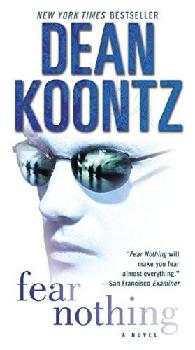
Fear nothing : a novel
While investigating the death of his mother who was a scientist, Chris Snow discovers she was engaged in secret experiments on a nearby military base, experiments which went wrong and which produced monsters. The next he knows, the monsters come visiting and they are not friendly.
Book


BEYOND FACT OR FICTION: On the Materiality of Race in Practice
What is biological race and how is it made relevant by specific practices? How do we address the materiality of biological race without pigeonholing it? And how do we write about it without reifying race as a singular object? This article engages with biological race not by debunking or trivializing it, but by investigating how it is enacted in practice. Discarding two dominant and mutually exclusive notions, race as fact and race as fiction, I follow a praxiographic approach to present three ethnographic cases that show race is a relational object, one that it is simultaneously factual and fictional. I conclude that fiction needs to be taken more seriously as an inherent part of fact making.
Journal Article

The place between breaths
Grace, sixteen, fears that she'll succumb to the schizophrenia that took her mother away, while she and her father work for a genetics lab rushing to find a cure.
Book
