
Catalogue Search | MBRL


Are you sure you want to remove the book from the shelf?

{{itemTitle}}
2,941
result(s) for
"Genocide Prevention."
Sort by:

War on hate : how to stop genocide, fight terrorism, and defend freedom
\"Can genocide and terrorism ever be eliminated? This book says yes. It demonstrates that such atrocities are driven mainly by mass ideological hate incitement. Hence ending the violence requires shutting down the incitement - especially across the Middle East, where a tsunami of hate propaganda drives an epidemic of terrorism\"-- Provided by publisher.
Book

The Responsibility to Protect: Ending Mass Atrocity Crimes Once and For All
After the Holocaust, the world vowed it would never again stand by and permit such heinous crimes against humanity. Yet many subsequent atrocities have gone unchecked, all over the world: from the killing fields of Cambodia, to Rwanda, and to Srebrenica. The bloody list continues to grow, led by the unfolding nightmare in Darfur. How and why were the world's best intentions derailed, and what can be done today to put these efforts back on track? The \"responsibility to protect: - R2P for short - was unanimously embraced at the UN World Summit in 2005. The heart of this new international norm is the belief that if sovereign governments fail to protect their own people from mass atrocity crimes, then responsibility shifts to the wider international community to take whatever action is appropriate, including (in extreme cases) the use of force. The world cannot, and will not, just stand by. Evens spells out the steps needed to make R2P work in practice and clarifies the misunderstandings, real or contrived, which persist about its scope and limits. He emphasizes the need for preventive action, and for preferring assistance and persuasion to coercion, but he also makes clear when it is right to fight. The book is enlivened throughout by real world examples, analyses of current events, and assessments drawn from the author's own vast experience.
eBook


Why Not Kill Them All?
Genocide, mass murder, massacres. The words themselves are chilling, evoking images of the slaughter of countless innocents. What dark impulses lurk in our minds that even today can justify the eradication of thousands and even millions of unarmed human beings caught in the crossfire of political, cultural, or ethnic hostilities? This question lies at the heart of Why Not Kill Them All? Cowritten by historical sociologist Daniel Chirot and psychologist Clark McCauley, the book goes beyond exploring the motives that have provided the psychological underpinnings for genocidal killings. It offers a historical and comparative context that adds up to a causal taxonomy of genocidal events. Rather than suggesting that such horrors are the product of abnormal or criminal minds, the authors emphasize the normality of these horrors: killing by category has occurred on every continent and in every century. But genocide is much less common than the imbalance of power that makes it possible. Throughout history human societies have developed techniques aimed at limiting intergroup violence. Incorporating ethnographic, historical, and current political evidence, this book examines the mechanisms of constraint that human societies have employed to temper partisan passions and reduce carnage. Might an understanding of these mechanisms lead the world of the twenty-first century away from mass murder? Why Not Kill Them All? makes clear that there are no simple solutions, but that progress is most likely to be made through a combination of international pressures, new institutions and laws, and education. If genocide is to become a grisly relic of the past, we must fully comprehend the complex history of violent conflict and the struggle between hatred and tolerance that is waged in the human heart. In a new preface, the authors discuss recent mass violence and reaffirm the importance of education and understanding in the prevention of future genocides.
eBook
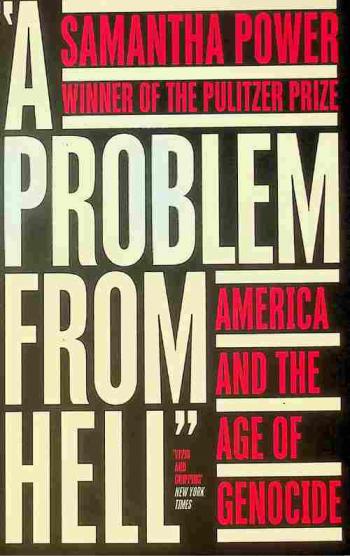
\A problem from hell\ : America and the age of genocide
\"From the Armenian Genocide to the ethnic cleansings of Kosovo and Darfur, modern history is haunted by acts of brutal violence. Yet American leaders who vow 'never again' repeatedly fail to stop genocide. Winner of the Pulitzer Prize and the National Book Critics Circle Award, 'A Problem From Hell' draws upon exclusive interviews with Washington's top policymakers, thousands of once classified documents, and accounts of reporting from the killing fields to show how decent Americans inside and outside government looked away from mass murder. Combining spellbinding history and seasoned political analysis, 'A Problem from Hell' allows readers to hear directly from American decision-makers and dissenters, as well as from victims of genocide, and reveals just what was known and what might have been done while millions perished\"--Publisher's description.
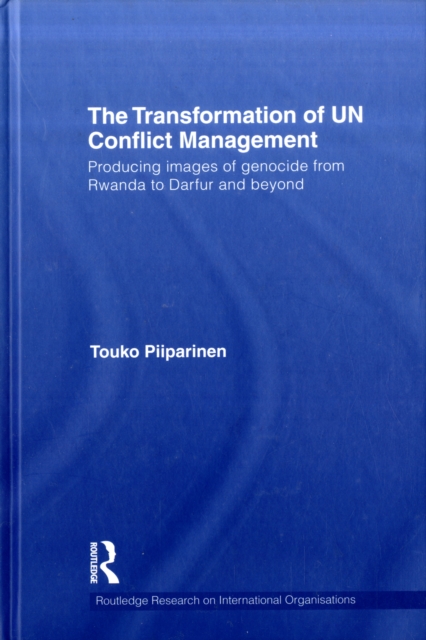
The Transformation of UN Conflict Management
The world has vowed \"Never again\" in memory of the 800,000 Rwandans and other groups slaughtered by génocidaires . Yet, ever since the Holocaust, the international community has repeatedly betrayed its pledge, most notably in 1994 with regard to the Rwandan Tutsi, and again ten years later in Darfur.
This book examines how the UN failed to prevent or halt the Rwandan genocide: the most efficient mass killing in history. It offers a new explanation, focussing on the structure of the UN and four mechanisms which were pertinent to UN conflict management at that time: early warning; bureaucratic rationalisation; organisational learning; and Western normalisation. The author sees the Rwandan case as a ‘child of its time’, or a focal point in which the dysfunctions of the ailing conflict management mechanisms of the 1990s combined with devastating consequences. The book proceeds to examine the transformation of these mechanisms from Rwanda to Darfur - a development which is regarded as indicative of a wider tendency – or direction – in UN conflict management over the past ten years and in the foreseeable future.
This book will be of great interest to students and scholars of political science, international relations, ethnic politics, international organizations and conflict studies.
Touko Piiparinen is currently a Postdoctoral Researcher at the Centre of Excellence in Global Governance Research in Helsinki. He is on leave of absence from the Ministry for Foreign Affairs of Finland, where he has been previously posted in the Unit for UN Affairs and as the Deputy Head of Mission at the Embassy of Finland in Riyadh, Saudi Arabia. He has also worked in the Political Representative of the ISAF operation in Afghanistan, and in the KFOR operation in Kosovo.
Introduction 1. Rwanda, The Genocide of Our Time 2. A Critical Realist Approach to Conflict Management 3. UN Conflict Management of the 1990s 4. Explanatory Theories of the UN’s Failure 5. Early Warning 6. Bureaucratic Mechanisms 7. Future Visions of Conflict Management. Conclusion
eBook

On the Path to Genocide : Armedia and Rwanda Reexamined
\"Why did the Armenian genocide erupt in Turkey in 1915, only seven years after the Armenian minority achieved civil equality for the first time in the history of the Ottoman Empire? How can we explain the Rwandan genocide occurring in 1994, after decades of relative peace and even cooperation between the Hutu majority and the Tutsi minority? Addressing the question of how the risk of genocide develops over time, On the Path to Genocide contributes to a better understand why genocide occurs when it does. It provides a comprehensive and comparative historical analysis of the factors that led to the 1915 Armenian genocide and the 1994 genocide in Rwanda, using fresh sources and perspectives that yield new insights into the history of the Armenian and Rwandan peoples. Finally, it also presents new research into constraints that inhibit genocide, and how they can be utilized to attempt the prevention of genocide in the future.\"--Page 4 of cover.
Book

The Soviet Union and the Gutting of the UN Genocide Convention
After the staggering horrors of World War II and the Holocaust, the United Nations resolved to prevent and punish the crime of genocide throughout the world. The resulting UN Genocide Convention treaty, however, was drafted, contested, and weakened in the midst of Cold War tensions and ideological struggles between the Soviet Union and the West. Based on extensive archival research, Anton Weiss-Wendt reveals in detail how the political aims of the superpowers rendered the convention a weak instrument for addressing abuses against human rights. The Kremlin viewed the genocide treaty as a political document and feared repercussions. What the Soviets wanted most was to keep the subjugation of Eastern Europe and the vast system of forced labor camps out of the genocide discourse. The American Bar Association and Senate Committee on Foreign Relations, in turn, worried that the Convention contained vague formulations that could be used against the United States, especially in relation to the plight of African Americans. Sidelined in the heated discussions, Weiss-Wendt shows, were humanitarian concerns for preventing future genocides.
eBook


Essays on Genocide and Humanitarian Intervention
The essays in this book, written over a span of some twenty years but updated for this publication, discuss episodes of mass murder that are often considered instances of genocide: the large-scale killing of Armenians in Ottoman Turkey during World War I, the near-extinction of North America’s Indian population, the vicious persecution of the “Roma” or Gypsies under the Nazi regime. But in line with Article II of the Genocide Convention of 1948, Lewy stresses the crucial importance of looking closely at the intent of the perpetrators. In contrast to the Holocaust, the killers in the atrocities mentioned above did not seek to destroy an entire people, and so, these three large-scale killings do not deserve the label of genocide.
Lewy argues that affirming the distinctiveness of the Holocaust does not deny, downgrade, or trivialize the suffering of other people. The crimes against the Ottoman Armenians, the American Indians, and the Gypsies—even if they did not reach the threshold of genocide—involved horrendous suffering and a massive loss of life. The genocides of Cambodia and Rwanda that took place in the second half of the twentieth century remind us that man’s inhumanity to man can take many forms and is not the special prerogative of any particular group. The last essay of the collection deals with the complications of humanitarian intervention to prevent genocide. As the recent support of the Libyan rebels by NATO demonstrates, the issues raised here remain topical and controversial.
eBook