
Catalogue Search | MBRL


Are you sure you want to remove the book from the shelf?

{{itemTitle}}
237
result(s) for
"Geologists Biography."
Sort by:

A brief history of geology
Approximately 200 years of the history of the development of the study of geology.
Book
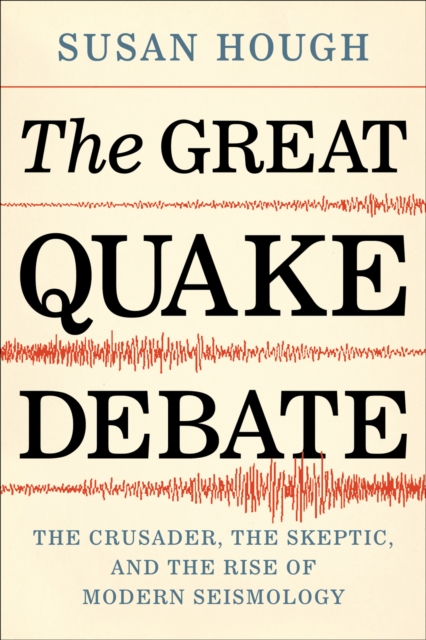
The Great Quake Debate
In the first half of the twentieth century, when seismology was still in in its infancy, renowned geologist Bailey Willis faced off with fellow high-profile scientist Robert T. Hill in a debate with life-or-death consequences for the millions of people migrating west. Their conflict centered on a consequential question: Is southern California earthquake country? These entwined biographies of Hill and Willis offer a lively, accessible account of the ways that politics and financial interests influenced the development of earthquake science. During this period of debate, severe quakes in Santa Barbara (1925) and Long Beach (1933) caused scores of deaths and a significant amount of damage, offering turning points for scientific knowledge and mainstreaming the idea of earthquake safety. The Great Quake Debate sheds light on enduring questions surrounding the environmental hazards of our dynamic planet. What challenges face scientists bearing bad news in the public arena? How do we balance risk and the need to sustain communities and cities? And how well has California come to grips with its many faults?
eBook


Bootstrap Geologist
In Bootstrap Geologist Shinn enthusiastically shares the highs and lows of his remarkable life. Taking readers around the globe as well as below the ocean, he recounts the painstaking process of data gathering that can lead to paradigm-breaking discoveries. He emphasizes the importance of field science and pointedly addresses the use and abuse of scientific research and the emergence of market-funded research.
eBook


Grove Karl Gilbert
As Stephen Pyne reveals in his biography, few other scientists can match Grove Karl Gilbert's range of talents. A premier explorer of the American West who made major contributions to the cascade of new discoveries about the earth, Gilbert described two novel forms of mountain building, invented the concept of the graded stream, inaugurated modern theories of lunar origin, helped found the science of geomorphology, and added to the canon of conservation literature.Gilbert knew most of geology's grand figures--including John Wesley Powell, Clarence Dutton, and Clarence King--and Pyne's chronicle of the imperturbable, quietly unconventional Gilbert is couterpointed with sketches of these prominent scientists. The man who wrote that \"happiness is sitting under a tent with walls uplifted, just after a brief shower,\", created answers to the larger questions of the earth in ways that have become classics of his science.
eBook


Maclure of New Harmony
Maclure of New Harmony follows the twists and turns of William Maclure's
intriguing life. A native Scotsman, Maclure (1763--1840) became a merchant, made a
fortune, and retired in his early thirties. Then his life became interesting.
Fascinated by the study of geology, Maclure did fieldwork throughout Europe before
traveling to the United States, where he completed the first geological survey of
his adopted nation and published a detailed, color geological map -- one reason he
is known as the Father of American Geology. Maclure's travels
sharpened his convictions about social justice and led him to a life of social
radicalism. He founded progressive schools to educate the children of the working
classes and, in 1820, he joined forces with Robert Owen to found New Harmony -- the
utopian community in Indiana. Ever restless, Maclure later moved to Mexico, where he
watched his hopes for the new republic founder.
eBook

The last volcano : a man, a romance, and the quest to understand nature's most magnificent fury
Documents the fifty-year career of Thomas Jaggar, the Harvard-educated volcano science pioneer who founded the Hawaiian Volcano Observatory, to share insights into his findings about massive volcanoes in such regions as Yellowstone, Alaska, and Hawaii-- Source other than Library of Congress.
Book

The man who found time : James Hutton and the discovery of the earth's antiquity
There are three men whose life's work helped free science from the strait-jacket of religion. Two of the threeNicolaus Copernicus and Charles Darwinare widely heralded for their breakthroughs. The third, James Hutton, is comparatively unknown, yet he profoundly changed our understanding of the earth, its age, and its dynamic forces. A Scottish gentleman farmer, Hutton's observations on his small tract of land led him to a theory that directly contradicted biblical claims that the Earth was only 6,000 years old. This expertly crafted narrative tells the story not only of Hutton, but also of Scotland and the Scottish Enlightenment, including many of the greatest thinkers of the age, such as David Hume and Adam Smith.
eBook