
Catalogue Search | MBRL


Are you sure you want to remove the book from the shelf?

{{itemTitle}}
13,671
result(s) for
"George II"
Sort by:


Bombast and Broadsides
Presents the first coherent picture of George Johnstone, a controversial naval commander and governor of West Florida George Johnstone has never received the scholarly attention he fully merits.Historians have assessed him, usually briefly, as governor of West Florida, or as naval commander, or as a member of parliament.
eBook


Revisiting the polite and commercial people : essays in Georgian politics, society, and culture in honour of professor Paul Langford
\"For some time before his death in July 2015, former colleagues and students of Paul Langford had discussed the possibility of organising a festschrift to celebrate his remarkable contribution to eighteenth-century history. It was planned for 2019 to commemorate the thirtieth anniversary of the appearance of his seminal A Polite and Commercial People, the opening volume in the New Oxford History of England series, Paul's best-known and most influential publication. He was delighted to hear of these plans and the tragic news of his death only made the contributors more determined to see the project through to completion. 0The importance of A Polite and Commercial People within its own time is unquestionable. Not only did it provide a powerful new vision of eighteenth-century Britain, but it also played a vital part in reviving interest in, and expanding ways of thinking about, Georgian history. As the thirteen contributors to this volume amply testify, any review of the field from the 1980s onwards cannot ignore the profound effect Paul's research had on the social and political publications in his field. This collection of essays combines reflection on the impact of Paul's work with further engagement with the central questions he posed. In particular, it serves to re-connect various recent avenues of Georgian studies, bringing together diverse themes present in Paul's scholarship, but which are often studied independently of each other. As such, it aims to provide a fitting tribute to Paul's work and impact, and a wider reassessment of the current direction of eighteenth-century studies\"--Dust jacket.
Book

The Jacobite Campaigns: The British State at War
The military aspects of the Jacobite campaigns in eighteenth-century Britain are considered in this study. Taken from the viewpoint of those loyal to the Hanoverian Crown, the three mainland campaigns of 1715–6, 1719 and 1745–6 are examined, using research based on primary sources: memoirs, diaries, letters, newspapers and State papers.
eBook

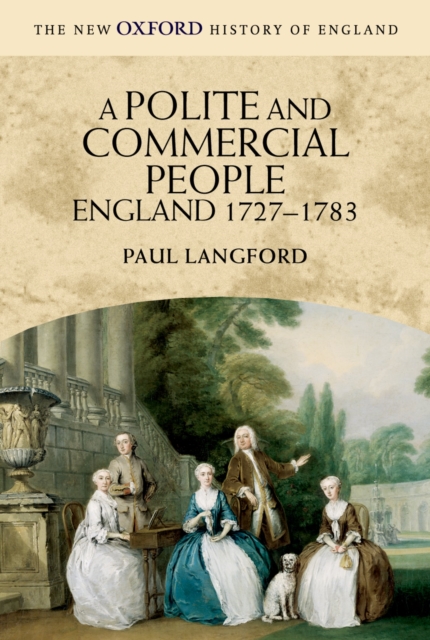
A Polite and Commercial People
This book, the first volume of the `New Oxford History of England' to appear, offers the most authoritative, comprehensive general history of England between the accession of George II and the loss of America. Though conventionally seen as static and politically stable, the eighteenth century was an age of extraordinary vitality and variety, o.
eBook


THE PROVISION OF SWORDS TO THE CAVALRY OF THE ARMY OF GEORGE II
Cormack discusses the provision of swords to the cavalry of the army of George II. Uniquely among the brief mentions of the provision of swords or blades, that of 2nd December 1729 relates to a part of what would later be referred to as the Household Cavalry. It records that Richard Boyle, 2nd Viscount Shannon, who was described as Captain-General of His Majesty's Troop of Horse Guards, was allowed to import 178 sword blades from Hamburg and that the Treasury provided a warrant to the Commissioners of the Customs for them to pass into the country, doubtless by way of London, without being charged import duty. These blades represented a complete re-armament for the 4th Troop of Horse Guards of which Shannon was the Commanding Officer.
Journal Article