
Catalogue Search | MBRL


Are you sure you want to remove the book from the shelf?

{{itemTitle}}
22,955
result(s) for
"Geothermal engineering."
Sort by:

Geothermal power
Explains the science behind geothermal energy, from where it originates to how it can be utilized to generate electricity.
Book
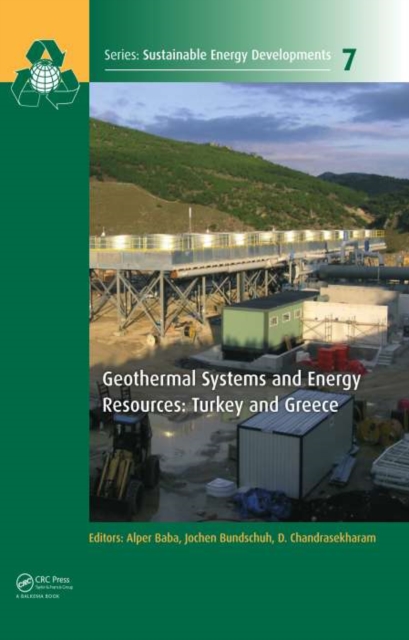
Geothermal Systems and Energy Resources
This book discusses geochemical evolution of the thermal waters and thermal gases in terms of the current volcano-tectonic setting and associated geological framework that makes the region very important to the geothermal scientific community. The book explains, in a didactic way, the possible applications, depending on local conditions and scales, and it presents new and stimulating ideas for future developments of this energy source. Additionally, the book discusses the role(s) of possible physicochemical processes in deep hydrothermal systems, the volatile provenance and relative contributions of mantle and crustal components to total volatile inventories. It provides the reader with a thorough understanding of the geothermal system of the Aegean Regions and identifies the most suitable solutions for specific tasks and needs at other places of the world.
eBook


Potential for heat production by retrofitting abandoned gas wells into geothermal wells
Using abandoned gas wells as geothermal resources for energy production is an effective way to extract geothermal energy from geological formations. These abandoned wells have the potential to significantly contribute in the rising global demand for energy without requiring the land disruption resulting from deep drilling or digging, processes necessary for energy extraction from geological formations via more traditional methods. In this paper, a method to extract geothermal energy from abandoned gas wells is proposed. The method offers an efficient, economical, and environmentally-conscious way to generate electricity. A mathematical model of a thermal and hydraulic coupling process is constructed, and a 3D numerical model is generated to study the process of geothermal energy extraction by retrofitting an abandoned gas reservoir into a geothermal reservoir. Using the model, heat extraction and fluid flow are analyzed over a period of 50 years. The heat production, electricity generation, and thermal recovery over the lifetime of the reservoir indicate that a commercially viable geothermal dual well system can produce geothermal energy effectively. Dual-well systems contain at least one injection well and one production well. They are composed of a two-way flow system in which the fluid flows into the reservoir via an injection well and returns from the production well having absorbed thermal energy from the surrounding rocks. Sensitivity analysis of the main parameters controlling the average outlet temperature of the fluid from the sedimentary geothermal system reveals that abandoned gas wells are a suitable source of geothermal energy. This energy can be harvested via a method whose use of reservoir fluids differs from that of the traditional method of closed-loop circulation via a borehole heat exchanger. Here, it is demonstrated that abandoned oil and gas fields can be repurposed to be geothermal energy sources that provide low-cost electricity and are economically sustainable.
Journal Article

Impacts of Shallow Geothermal Energy on Groundwater Quality
The use of shallow geothermal energy (SGE) systems to acclimatize buildings has increased exponentially in the Netherlands and worldwide. In certain areas, SGE systems are constructed in aquifers also used for drinking water supply raising the question of potential groundwater quality impact. Impacts of Shallow Geothermal Energy on Groundwater Quality provides a hydrochemical and geomicrobial overview of the effects of ground source heat pumps and aquifer thermal energy storage. The area is investigated with field and laboratory experiments, and reactive transport models, showing that shallow geothermal energy systems can influence groundwater quality in a number of ways. Most prominent in open ground source heating systems operating at low temperature (<20°C) is the physical mixing of deep and shallow groundwater of different quality distorting the natural water quality stratification in aquifers. At a temperature of 25°C and beyond certain trace elements were observed to mobilize in laboratory experiments, and beyond 40°C redox conditions change significantly while the microbial community shift towards a thermophilic community. Based on the results of this research, guidelines are presented for monitoring and permitting of SGE systems. The book is a useful resource for regulators of these systems, water companies and installers of the SGE systems. Author: Matthijs Bonte, Amsterdam, The Netherlands
eBook

Energy from Earth's core : geothermal energy
\"Beneath Earth's surface is a boundless source of energy-- geothermal energy. Heated by our planet's red-hot core, hot water and hot rock below the ground on which we walk already provides energy in many parts of the world, from Alaska to Hawaii. Discover the different forms geothermal energy, how people are harnessing and using this rich supply, and how it could be an important part of our energy future.\"-- Provided by publisher.
BOOK
Geothermal Heating: A Handbook of Engineering Economics
To date all books on geothermics have emphasized its use for generating electricity, with applications of lower grade resources for direct heating meriting only a brief chapter. This book brings together research from a range of scientific journals and 'grey' literature to produce the first comprehensive text on geothermal heating. Economics form an important part of the book. It provides a step by step analysis of the various ways in which thermal waters can be used to provide space heating and of the advantages and disadvantages of different approaches. The final section of the book provides case studies of 31 geothermal heating schemes in France, USA and Iceland.
eBook

Give Me an Experiment and I Will Raise a Laboratory
Bruno Latour once argued that science laboratories actively modify the wider society by displacing crucial actors outside the laboratory into the \"field.\" This article turns this idea on its head by using the case of geothermal energy utilization to demonstrate that in many cases it is the experimental setup outside the laboratory that is there first, with the activities normally associated with a laboratory setting only being decided upon and implemented post hoc. As soon as the actors involved perceive unknowns and uncertainties, these are relocated to various kinds of closed laboratories to be dealt with in a more controlled environment. This is done, for instance, by inviting stakeholders to laboratory-like settings or by analyzing the geochemical composition of fluids in laboratories. Thus, the risk-laden production of new knowledge by means of real-world experimentation amounts to a practice of relocating the context of discovery in society to laboratories of justification sometimes defined as such post hoc. Experimental processes in society can then be conceptualized as \"real\" experiments and laboratory activities as merely temporarily subordinated components of the larger experiment.
Journal Article

A Surrogate Model-Based Optimization Approach for Geothermal Well-Doublet Placement Using a Regularized LSTM-CNN Model and Grey Wolf Optimizer
The placement of a well doublet plays a significant role in geothermal resource sustainable production. The normal well placement optimization method of numerical simulation-based faces a higher computational load with the increasing precision demand. This study proposes a surrogate model-based optimization approach that searches the economically optimal injection well location using the Grey Wolf Optimizer (GWO). The surrogate models trained by the novel Multi-layer Regularized Long Short-Term Memory–Convolution Neural Network concatenation model (MR LSTM-CNN) will relieve the computation load and save the simulation time during the simulation–optimization process. The results showed that surrogate models in a homogenous reservoir and heterogenous reservoir can predict the pressure–temperature evolution time series with the accuracy of 99.80% and 94.03%. Additionally, the optimization result fitted the real economic cost distribution in both reservoir situations. Further comparison figured out that the regularization and convolution process help the Long Short-Term Memory neural network (LSTM) perform better overall than random forest. And GWO owned faster search speed and higher optimization quality than a widely used Genetic Algorithm (GA). The surrogate model-based approach shows the good performance of MR LSTM-CNN and the feasibility in the well placement optimization of GWO, which provides a reliable reference for future study and engineering practice.
Journal Article