
Catalogue Search | MBRL


Are you sure you want to remove the book from the shelf?

{{itemTitle}}
3,929
result(s) for
"Geriatric Nursing - methods"
Sort by:


Wii-Hab for Pre-Frail Older Adults
Purpose To examine the effectiveness of a novel intervention aimed at decreasing indices related to frailty through systematic, Progressive Functional Rehabilitation (PFR). Methods Pre‐frail volunteers were recruited to participate in a 15 week exercise intervention or control group. Those who met study criteria and consented were randomized into one of three groups: control, seated exercise, or Wii®‐fit. Test measures were completed before and after the 15 week intervention period on all participants. Measures included: Senior Fitness Test, Body Weight, Balance Efficacy Scale, CHAMPS, Late‐Life Function and Disability Index, MOS SF‐36. Attendance was also recorded. Results There were improvements on several of the measures included in the Senior Fitness Test including chair stands, arm curls, step 2, six minute walk, sit and reach, and the timed up and go. A few participants did lose weight. All of the differences reflected improved physical functional status in the seated exercise or Wii‐fit groups compared with the control group. Discussion Increased physical activity was beneficial for all who participated. There were improvements in physical performance scores on several of the measures on the senior fitness test in both the seated exercise and Wii‐fit groups. Participants in the Wii‐fit group also showed improvement in their reported caloric expenditure and balance confidence. Conclusion This pilot study suggests a rehabilitation effect that was similar to the effect of community based senior fitness classes. A home video game console system with weight vest could be an effective alternative for pre‐frail senior adults to group exercise classes.
Journal Article

Nursing care of the hospitalized older patient
Nursing Care for the Hospitalized Older Patient is a comprehensive, quick-reference resource for registered and advanced practice nurses working with older patients in a hospital setting. Organized in user-friendly format, the book provides vital information on all aspects of hospital care and the full range of health issues encountered by elderly patients.The book is organized into four major sections. The first section provides an overview of the aging patient, including demographics, normal aging changes, and the general impact of hospitalization. The second section covers proper health assessment, providing guidance on history taking and evaluating laboratory values. The third section is the largest part of the book and is made up of short, similarly-structured chapters dedicated to individual clinical issues ranging from burns to depression. These chapters are organized by body system to maximize ease of use. The book concludes with a section on special considerations that cross common clinical areas, such as palliative care, pain management, fall prevention, and discharge planning.
eBook

Gerioperative nursing care
This timely volume introduces gerioperative care, a new model of surgical care for the elderly designed to improve surgical outcomes and prevent complications through a focus on communication and relationship-centered care. It is the only book to specifically address the care of older adults undergoing surgery, providing practitioners with critical, practical, and theoretical information from the initial decision to have surgery through the first follow-up visit post-discharge. The text includes the anatomy and physiology of aging, preoperative care, intraoperative and post-anesthesia care, postoperative care, returning home, risk appraisal, education, prevention, early intervention, multidisciplinary team collaboration, and effective communication across all systems of care. Gerioperative Nursing Care is an essential resource for students and practitioners of surgical, critical/acute care, and geriatric nursing, along with clinical and case managers. The tools presented help to sustain and enhance quality nursing care for older adults considering surgery, undergoing surgery, and during post-surgery visits.
eBook

CONNECT for quality: protocol of a cluster randomized controlled trial to improve fall prevention in nursing homes
Background
Quality improvement (QI) programs focused on mastery of content by individual staff members are the current standard to improve resident outcomes in nursing homes. However, complexity science suggests that learning is a social process that occurs within the context of relationships and interactions among individuals. Thus, QI programs will not result in optimal changes in staff behavior unless the context for social learning is present. Accordingly, we developed CONNECT, an intervention to foster systematic use of management practices, which we propose will enhance effectiveness of a nursing home Falls QI program by strengthening the staff-to-staff interactions necessary for clinical problem-solving about complex problems such as falls. The study aims are to compare the impact of the CONNECT intervention, plus a falls reduction QI intervention (CONNECT + FALLS), to the falls reduction QI intervention alone (FALLS), on fall-related process measures, fall rates, and staff interaction measures.
Methods/design
Sixteen nursing homes will be randomized to one of two study arms, CONNECT + FALLS or FALLS alone. Subjects (staff and residents) are clustered within nursing homes because the intervention addresses social processes and thus must be delivered within the social context, rather than to individuals. Nursing homes randomized to CONNECT + FALLS will receive three months of CONNECT first, followed by three months of FALLS. Nursing homes randomized to FALLS alone receive three months of FALLs QI and are offered CONNECT after data collection is completed. Complexity science measures, which reflect staff perceptions of communication, safety climate, and care quality, will be collected from staff at baseline, three months after, and six months after baseline to evaluate immediate and sustained impacts. FALLS measures including quality indicators (process measures) and fall rates will be collected for the six months prior to baseline and the six months after the end of the intervention. Analysis will use a three-level mixed model.
Discussion
By focusing on improving local interactions, CONNECT is expected to maximize staff's ability to implement content learned in a falls QI program and integrate it into knowledge and action. Our previous pilot work shows that CONNECT is feasible, acceptable and appropriate.
Trial Registration
ClinicalTrials.gov:
NCT00636675
Journal Article

Prompted Voiding Offers Long-Term Benefits to Nursing Home Residents
Prompted voiding is a commonly used behavioral treatment for people who have urinary incontinence, a common problem in nursing homes. A new study of five Hong Kong nursing homes examined the effectiveness of a prompted voiding intervention delivered by nursing home staff over a six-month period. At six months, the patients in the intervention group had significantly fewer wet episodes, a lower incontinence rate, and more total continent toileting episodes per day. The mean incontinence rate per day decreased from 61.6% to 52.9% in the intervention group and increased from 61.8% to 71.4% in the control group. Prompted voiding is a sustainable, noninvasive behavioral intervention that can improve well-being in nursing home residents, the authors conclude.
Journal Article

Labors of Love
pEvery day for the next twenty years, more than 10,000 people in the United States will turn 65. With life expectancies increasing as well, many of these Americans will eventually require round-the-clock attention—and we have only begun to prepare for the challenge of caring for them. In Labors of Love, Jason Rodriquez examines the world of the fast-growing elder care industry, providing a nuanced and balanced portrait of the day-to-day lives of the people and organizations that devote their time to supporting America’s aging population. Through extensive ethnographic research, interviews with staff and management, and analysis of internal documents, Rodriquez explores the inner workings of two different nursing homes—one for-profit and one non-profit—to understand the connections among the administrative regulations, the professional requirements, and the type of care provided in both types of facilities. He reveals a variety of challenges that nursing home care workers face day to day: battles over the budget; the administrative hurdles of Medicaid and Medicare; the employees’ struggle to balance financial stability and compassionate care for residents. Yet, Rodriquez argues, nursing home workers give meaning and dignity to their work by building emotional attachments to residents and their care. An unprecedented study, Labors of Love brings new insight into the underlying structures of a crucial and expanding sector of the American health care system./p
eBook

Psychosocial group intervention to enhance self-management skills of people with dementia and their caregivers: study protocol for a randomized controlled trial
Background
After diagnosis of a dementing illness, patients and their spouses have many concerns related to the disease and their future. This often leads to poor psychological well-being and reduced health-related quality of life (HRQoL) of the family. Support for self-management skills has been proven to be an effective method to improve prognosis of asthma, heart failure and osteoarthritis. However, self-management interventions have not been studied in dementia. Therefore, our aim was to examine, in an objective-oriented group intervention, the efficacy of self-management support program (SMP) on the HRQoL of dementia patients and their spousal caregivers as well as on the sense of competence and psychological well-being of caregivers.
Methods
During the years 2011 to 12, 160 dementia patients and their spouses will be recruited from memory clinics and randomized into two arms: 80 patients for group-based SMP sessions including topics selected by the participants, 80 patients will serve as controls in usual community care. Sessions may include topics on dementia, community services, active lifestyle and prevention for cognitive decline, spousal relationship, future planning and emotional well-being. The patients and spouses will have their separate group sessions (ten participants per group) once a week for eight weeks. Main outcome measures will be patients’ HRQoL (15D) and spousal caregivers’ HRQoL (RAND-36), and sense of competence (SCQ). Secondary measures will be caregivers’ psychological well-being (GHQ-12) and coping resources, patients’ depression, cognition and signs of frailty. Data concerning admissions to institutional care and the use and costs of health and social services will be collected during a two-year follow-up.
Discussion
This is a ‘proof-of-concept’ study to explore the efficacy of group support for self-management skills among dementia families. It will also provide data on cost-effectiveness of the intervention.
Trial registration
ACTRN12611001173987
Journal Article
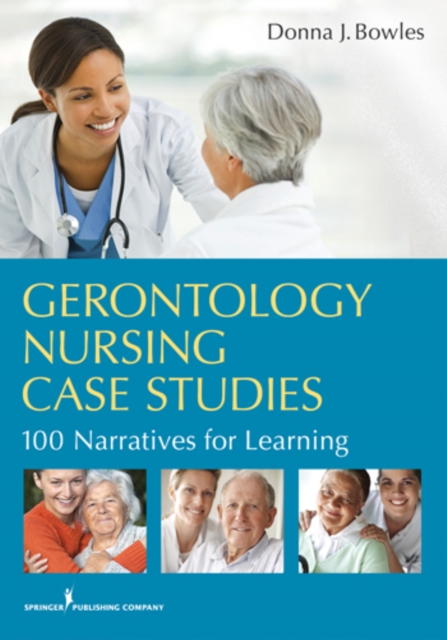
Gerontology nursing case studies
This is an excellent teaching guide and resource manual for instructors, gerontological nursing students, and practicing nurses and social workers who wish to learn more about geriatric concerns and care. It will be kept by nursing students long after they graduate as a guide to resources that will be valuable throughout their nursing careers. As a home care nurse working mainly with the geriatric community, I found the resources helpful in my practice. As an instructor, I found the book to be a very useful guide for teaching geriatrics. Score: 90, 4 Stars.-Doody's Medical Reviews The case narrative approach of this book promotes active learning that is more meaningful to students (and practicing nurses) and more likely to increase the transfer of evidence into practice. An excellent resource for faculty (staff educators) to facilitate critical learning skills. Liz Capezuti, PhD, RN, FAAN Dr. John W. Rowe Professor in Successful AgingCo-Director, Hartford Institute for Geriatric Nursing New York University College of Nursing This is a terrific text that provides nurses and other health care providers [with] good basic information about clinical problems and challenges we face in providing care to older adults. It should be considered required reading in all undergraduate programs. From the foreword byBarbara Resnick, PhD, CRNP, FAAN, FAANPProfessor, University of Maryland School of Nursing Sonya Ziporkin Gershowitz Chair in Gerontology At the heart of this unique volume are 100 case studies of older adults that address nearly every issue-physical, mental, and psychosocial-that may confront health care providers who work with the aging population. These case studies, culled from contributors with several centuries' worth of combined nursing expertise, are designed to guide nursing students in the development of interventions that encompass both complementary and alternative health strategies. Exercises interspersed throughout each case study are designed to foster critical thinking and decision-making skills. These case narratives provide a holistic approach to problem solving in regard to political, ethical, and legal issues; loss and end-of-life issues; elder abuse; depression, addiction and suicide; self-esteem and family relationships; sexuality; age-related health issues; cognitive impairment; cultural diversity as it relates to aging; pain management; and sleep disturbances. The volume also addresses such contemporary psychosocial issues as gambling addiction, hoarding behavior, emergency preparedness, the aging driver, and long-distance caregiving. Key Features: Provides 100 evidence-based case studies Cultivates development of critical thinking and decision-making Features realistic, contemporary scenarios Designed for use across the gerontology nursing curriculum Geared for AACN and NLN Accreditation Organized according to the needs of actual clinical settings
eBook

Caring for Depression in Older Home Health Patients
Depression is common in older home health patients and increases their risk of adverse outcomes. Depression screening is required by Medicare's Outcome and Assessment Information Set. The Depression Care for Patients at Home (CAREPATH) was developed as a feasible strategy for home health nurses to manage depression in their patients. The protocol builds on nurses' existing clinical skills and is designed to fit within routine home visits. Major components include ongoing clinical assessment, care coordination, medication management, education, and goal setting. In a randomized trial, Depression CAREPATH patients had greater improvement in depressive symptoms compared to usual care. The difference between groups was significant at 3 months, growing larger and more clinically meaningful over 1 year. The intervention had no impact on patient length of stay, number of home visits, or duration of visits. Thus, nurses can play a pivotal role in the long-term course and outcomes of patients with depression. [Depression is common in older home health patients and increases their risk of adverse outcomes. Depression screening is required by Medicare's Outcome and Assessment Information Set. The Depression Care for Patients at Home (CAREPATH) was developed as a feasible strategy for home health nurses to manage depression in their patients. The protocol builds on nurses' existing clinical skills and is designed to fit within routine home visits. Major components include ongoing clinical assessment, care coordination, medication management, education, and goal setting. In a randomized trial, Depression CAREPATH patients had greater improvement in depressive symptoms compared to usual care. The difference between groups was significant at 3 months, growing larger and more clinically meaningful over 1 year. The intervention had no impact on patient length of stay, number of home visits, or duration of visits. Thus, nurses can play a pivotal role in the long-term course and outcomes of patients with depression. [
Journal of Psychosocial Nursing and Mental Health Services, 53
(11), 25–30.]
Journal Article