
Catalogue Search | MBRL


Are you sure you want to remove the book from the shelf?

{{itemTitle}}
122
result(s) for
"German American soldiers"
Sort by:


Chancellorsville and the Germans
Often called Lee's greatest triumph, the battle of Chancellorsville decimated the Union Eleventh Corps, composed of large numbers of German-speaking volunteers. Poorly deployed, the unit was routed by StonewallJackson and became the scapegoat for the Northern defeat, blamed by many on the flightof German immigrant troops. The impact on America's large German community was devastating. But there is much more to the story than that. Drawing for the first time on German-language newspapers, soldiers' letters, memoirs, and regimental records, Christian Keller reconstructs the battle and its aftermath from the German-American perspective, military and civilian. He offers a fascinating window into a misunderstood past, one where the German soldiers' valor has been either minimized or dismissed as cowardly. He critically analyzes the performance of the German regiments and documents the impact of nativism on Anglo-American and German-American reactions-and on German self-perceptions as patriots and Americans. For German-Americans, the ghost of Chancellorsville lingered long, and Keller traces its effects not only on ethnic identity, but also on the dynamics of inclusion andassimilation in American life.
eBook

Allies
It is June 6, 1944, D-Day, and Dee Carpenter (true name Dietrich Zimmermann), an underage private in the United States Army, is headed for Omaha Beach, seeking revenge for his uncle, who was arrested by Nazis when Dee was a little boy; meanwhile, Samira Zidano, an eleven-year old French-Algerian girl is looking for the French resistance, desperate to deliver the message that the invasion is about to begin, and get their help in freeing her mother--this is the most important day of the twentieth century, and both children want to fight, and survive.
Book

I Must be a Part of this War
Kurt Frank Korf's story is one of the most unusual to come out of World War II. Although German-Americans were America's largest ethnic group, and German-Americans-including thousands of native-born Germans-fought bravely in all theaters, there are few full first-person accounts by German- Americans of their experiences during the 1930s and 1940s.Drawing on his correspondence and on oral histories and interviews with Korf, Patricia Kollander paints a fascinating portrait of a privileged young man forced to flee Nazi Germany in 1937 because the infamous Nuremburg Laws had relegated him to the status of second-degree mixed breed(Korf had one Jewish grandparent).Settling in New York City, Korf became an FBI informant, watching pro-Nazi leaders like Fritz Kuhn and the German-American Bund as they moved among the city's large German immigrant community. Soon after, he enlisted in the U.S. Army, serving in Germany as an intelligence officer during the Battle of the Bulge, and as a prisoner of war camp administrator. After the war, Korf stayed on as a U.S. government attorney in Berlin and Munich, working to hunt down war criminals, and lent his expertise in the effort to determine the authenticity of Joseph Goebbels's diaries. Kurt Frank Korf died in 2000.Kollander not only draws a detailed portrait of this unique figure; she also provides a rich context for exploring responses to Nazism in Germany, the German-American position before and during the war, the community's later response to Nazism and its crimes, and the broader issues of ethnicity, religion, political ideology, and patriotism in 20th-century America. Patricia Kollander is Associate Professor of History at Florida Atlantic University. She is the author of Frederick III: Germany's Liberal Emperor. I Must Be a Part of This Waris part of her ongoing research into the experiences of some fifteen thousand native-born Germans who served in the U.S. Army in World War II. John O'Sullivan was Professor of History at Florida Atlantic University.
eBook

Yankee Warhorse
A German-born Union officer in the American Civil War, Maj. Gen. Peter Osterhaus served from the first clash in the western theater until the final surrender of the war. Osterhaus made a name for himself within the army as an energetic and resourceful commander who led his men from the front. He was one of the last surviving Union major general and military governor of Mississippi in the early days of Reconstruction.
This first full-length study of the officer documents how, despite his meteoric military career, his accomplishments were underreported even in his own day and often misrepresented in the historical record. Mary Bobbitt Townsend corrects previous errors about his life and offers new insights into his contributions to major turning points in the war at Vicksburg, Chattanooga, and Atlanta, as well as other battles.
Townsend draws on battle reports not found in the Official Records, on personal papers, and on other nonpublished material to examine Osterhaus's part in the major battles in the West as well as in minor engagements. She tells how he came into his own in the Vicksburg campaign and proved himself through skill with artillery, expertise in intelligence gathering, and taking the lead in hostile territory—blazing the trail down the west side of the river for the entire Union army and then covering Grant's back for a month during the siege. At Chattanooga, Osterhaus helped Joe Hooker strategize the rout at Lookout Mountain; at Atlanta, he led the Fifteenth Corps, the largest of the four corps making Sherman's March to the Sea. Townsend also documents his contributions in the battles of Wilson's Creek, Pea Ridge, Arkansas Post, Port Gibson, Ringgold Gap, and Resaca and shows that he played a crucial role in Canby's Mobile Bay operations at the end of the war.
In addition to reporting Osterhaus's wartime experiences, Townsend describes his experiences as a leader in the 1848–1849 Rebellion in his native Germany, his frustration during his term as Mississippi's governor, and his stint as U.S. consul to France during the Franco-Prussian War.
Osterhaus stood out from other volunteer officers in his understanding of tactics and logistics, even though his careful field preparation led to criticism by historians that he was unduly cautious in battle. Yankee Warhorse sets the record straight on this important Civil War general as it opens a new window on the war in the West.
eBook
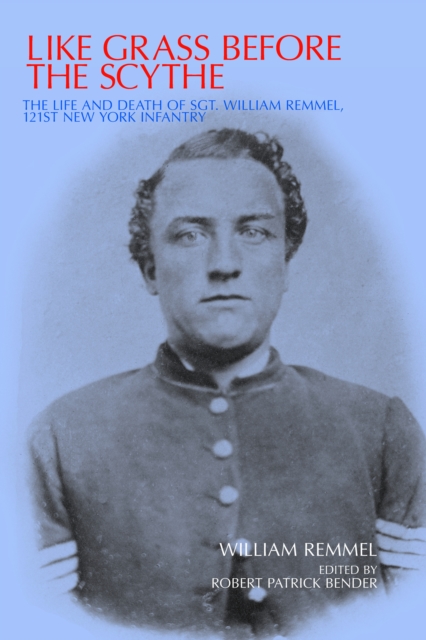
Like Grass before the Scythe
Uncommonly articulate letters from a young
German-American soldier with the Union forces Sergeant
William Remmel was a German immigrant who had settled with his
parents and family in far upstate New York. His letters collected
in
Like Grass before the Scythe cover more than two full
years of his service and provide details on military and social
history in the eastern theater of operations and on the
experience of the home front in upstate New York among a largely
immigrant, working-class family and community. Remmel wrote in
English and apparently his parents responded in German. In
addition to the important material on an immigrant family’s
experience, Remmel also deals with the question of slavery,
illness and hospital care (when he was wounded), the problem of
hard war/total war, as well as the campaigns of Chancellorsville,
Gettysburg, and the Shenandoah Valley in 1864.
eBook

Yankee Dutchmen under Fire
Life and death, pride and prejudice, and combat in an ethnic Civil War regiment
Thousands of volumes of Civil War letters are available, but little more than a dozen contain collections written by native Germans fighting in this great American conflict. Yankee Dutchmen under Fire presents a fascinating collection of sixty-one letters written by immigrants who served in the 82nd Illinois Volunteer Infantry Regiment. The 82nd Illinois was one of the thirty or so predominantly \"German Regiments\" in the Union army, and one of only two Federal regiments containing a Jewish company. Fighting alongside the Germans was a company of Scandinavians, plus a scattering of immigrants from many other countries.
The letters span nearly three years of war and include firsthand accounts of major battles: Chancellorsville and Gettysburg in the East and Missionary Ridge, Resaca, New Hope Church, and Kolb's Farm in the West. The soldiers of the 82nd Illinois also describe campaigning in East Tennessee, Sherman's Atlanta campaign and his March to the Sea, and the Carolinas campaign (including the Battle of Bentonville).
The majority of the letters originally appeared in wartime issues of German American newspapers and kept the German community informed of the regiment's marches, camps, battles, and casualties. Lt. (later Capt.) Rudolph Müller, an idealistic and highly critical commentator, wrote twenty-one of the twenty-nine private letters to his close friend and confidant Col. Friedrich Hecker. Müller cautioned the colonel not to make his letters public because they often contained highly critical comments about commanders, fellow officers, public figures, Anglo-Americans, and American society.
Besides providing details of military life and combat, the documents reveal how the German-born writers viewed the war, American officers and enlisted men, other immigrant soldiers, and the enemy. They shed light on the ethnic dimensions of the war, including ethnic identity, ethnic pride and prejudice, and ethnic solidarity, and they reflect the overarching political climate in which the war was fought. Yankee Dutchmen under Fire is a valuable addition to Civil War studies and will also be welcomed by those interested in ethnicity and immigration.
eBook

Jews and the Military
Jews and the Militaryis the first comprehensive and comparative look at Jews' involvement in the military and their attitudes toward war from the 1600s until the creation of the state of Israel in 1948. Derek Penslar shows that although Jews have often been described as people who shun the army, in fact they have frequently been willing, even eager, to do military service, and only a minuscule minority have been pacifists. Penslar demonstrates that Israel's military ethos did not emerge from a vacuum and that long before the state's establishment, Jews had a vested interest in military affairs.
Spanning Europe, North America, and the Middle East, Penslar discusses the myths and realities of Jewish draft dodging, how Jews reacted to facing their coreligionists in battle, the careers of Jewish officers and their reception in the Jewish community, the effects of World War I on Jewish veterans, and Jewish participation in the Spanish Civil War and World War II. Penslar culminates with a study of Israel's War of Independence as a Jewish world war, which drew on the military expertise and financial support of a mobilized, global Jewish community. He considers how military service was a central issue in debates about Jewish emancipation and a primary indicator of the position of Jews in any given society.
Deconstructing old stereotypes,Jews and the Militaryradically transforms our understanding of Jews' historic relationship to war and military power.
eBook

Mutiny at Fort Jackson
New Orleans was the largest city--and one of the richest--in the
Confederacy, protected in part by Fort Jackson, which was just
sixty-five miles down the Mississippi River. On April 27, 1862,
Confederate soldiers at Fort Jackson rose up in mutiny against
their commanding officers. New Orleans fell to Union forces soon
thereafter. Although the Fort Jackson mutiny marked a critical
turning point in the Union's campaign to regain control of this
vital Confederate financial and industrial center, it has received
surprisingly little attention from historians. Michael Pierson
examines newly uncovered archival sources to determine why the
soldiers rebelled at such a decisive moment. The mutineers were
soldiers primarily recruited from New Orleans's large German and
Irish immigrant populations. Pierson shows that the new nation had
done nothing to encourage poor white men to feel they had a place
of honor in the southern republic. He argues that the mutineers
actively sought to help the Union cause. In a major reassessment of
the Union administration of New Orleans that followed, Pierson
demonstrates that Benjamin \"Beast\" Butler enjoyed the support of
many white Unionists in the city. Pierson adds an urban
working-class element to debates over the effects of white
Unionists in Confederate states. With the personal stories of
soldiers appearing throughout, Mutiny at Fort Jackson
presents the Civil War from a new perspective, revealing the
complexities of New Orleans society and the Confederate experience.
eBook

“Speak the Language of Your Flag”: Speech, Language, and Oralism During the First World War
With the United States’ entrance into the First World War, linguistic and cultural cohesiveness became imperative, compelling everyone—from immigrants with foreign accents to people with speech problems and hearing loss—to “sound American” by fluently speaking the language of their flag. This article examines lip-reading, speech, and auricular training prescribed to deaf and hard-of-hearing children as well as for servicemen deafened in the war to demonstrate how World War I demanded all Americans to contribute to and participate in shared national soundscapes, regardless of their hearing status. Use of American Sign Language was considered a conspicuous sign of one’s failure to integrate into hearing society, and it shared parallels with immigrants who failed to learn English and fully assimilate into American culture. Indeed, rehabilitation of deafened soldiers of the First World War through speech training and lip-reading instruction at Hospital No. 11 at Cape May, New Jersey, coincided with broader national efforts to improve Americans’ speech and language use, and in turn, their patriotism and productivity.
Journal Article