
Catalogue Search | MBRL


Are you sure you want to remove the book from the shelf?

{{itemTitle}}
1,984
result(s) for
"Germany Armed Forces."
Sort by:

Last Ride of the Valkyries : The Rise and Fall of the Wehrmachthelferinnenkorps During WWII
\"This is the first major work in the English language devoted entirely to the uniforms, insignia, and history of the female auxiliaries that served in the German armed forces during WWII. Using wartime photographs and references, along with contemporary sources and examples, the author presents an in-depth look at the contributions of female auxiliaries to Germany's war effort. Interrogations of German prisoners who were familiar with the evolution of the Wehrmachthelferinnenkorps served as the foundation for this work, presenting a unique perspective on the subject.\"--Jacket.
Book

Hitler's Wehrmacht, 1935--1945
Since the end of World War II, Germans have struggled with the legacy of the Wehrmacht -- the unified armed forces mobilized by Adolf Hitler in 1935 to ensure the domination of the Third Reich in perpetuity. Historians have vigorously debated whether the Wehrmacht's atrocities represented a break with the past or a continuation of Germany's military traditions. Now available for the first time in English, this meticulously researched yet accessible overview by eminent historian Rolf-Dieter Müller provides the most comprehensive analysis of the organization to date, illuminating its role in a complex, horrific era.
Müller examines the Wehrmacht's leadership principles, organization, equipment, and training, as well as the front-line experiences of soldiers, airmen, Waffen SS, foreign legionnaires, and volunteers. He skillfully demonstrates how state-directed propaganda and terror influenced the extent to which the militarizedVolksgemeinschaft(national community) was transformed under the pressure of total mobilization. Finally, he evaluates the army's conduct of the war, from blitzkrieg to the final surrender and charges of war crimes. Brief acts of resistance, such as an officers' \"rebellion of conscience\" in July 1944, embody the repressed, principled humanity of Germany's soldiers, but ultimately, Müller concludes, the Wehrmacht became the \"steel guarantor\" of the criminal Nazi regime.
eBook

Comrades : the Wehrmacht from within
Comrades' is a new history of the mentalities of ordinary Wehrmacht soldiers, based on recently discovered intelligence records from the American interrogation camp Fort Hunt near Washington, where German prisoners of war were interned and secretly listened in on during the Second World War. US Military Intelligence captured tens of thousands of open conversations between Wehrmacht soldiers and recorded them in verbatim transcripts. The resulting collection offers new insights into the thinking and worldviews of ordinary members of Hitler's armed forces - their attitudes towards National Socialism and the 'Fuhrer', their views of the war and their experiences during the fighting, and their knowledge of and participation in war crimes and the Holocaust. The0accompanying biographical information reveals how their mindsets were connected to their individual paths through the Third Reich, the Wehrmacht, and the war. The book offers a nuanced and realistic account of life in the Wehrmacht, based on unique source material, which allows us to see the Second World War through the eyes of the protagonists.
Book
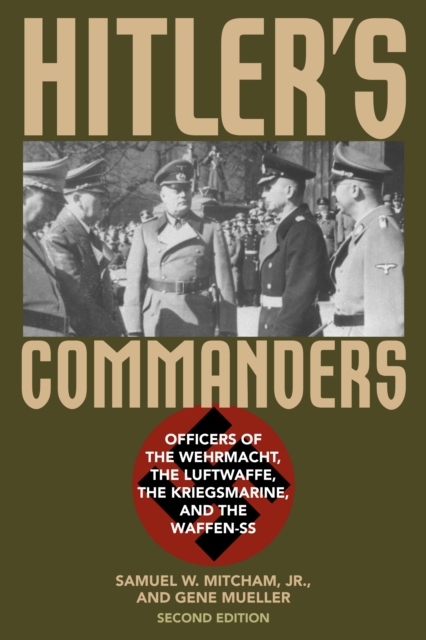
Hitler's Commanders
Now in an expanded edition that includes biographies of the generals of Stalingrad and a new chapter on the panzer commanders, this book offers rare insight into the men who ran Nazi Germany's war machine. Going beyond common stereotypes, Samuel W. Mitcham and Gene Mueller recount the compelling lives of a varied group of army, navy, Luftwaffe, and SS men. Weaving in dramatic stories of tank commanders, fighter pilots in aerial combat, and U-Boat aces, the authors bring the battlefields of World War II to life.
eBook

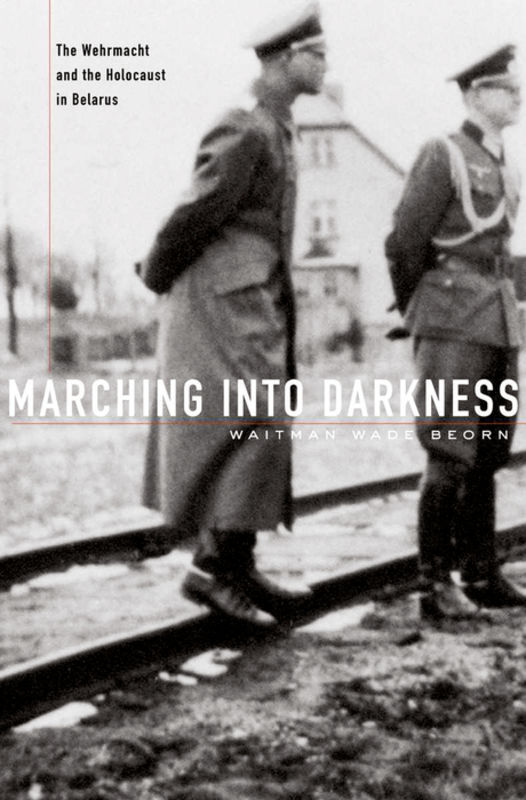
Marching into darkness : the Wehrmacht and the Holocaust in Belarus
On October 10, 1941, the entire Jewish population of the Belarusian village of Krucha was rounded up and shot.While Nazi death squads routinely carried out mass executions on the Eastern Front, this particular atrocity was not the work of the SS but was committed by a regular German army unit acting on its own initiative.
eBook

Antisemitism in the German military community and the Jewish response, 1914-1938
Antisemitism in the German Military Community and the Jewish Response, 1914–1938 explores how German World War I veterans from different social and political backgrounds contributed to antisemitic politics during the Weimar Republic. The book compares how the military, right-wing veterans, and Jewish veterans chose to remember their war experiences and translate these memories into a political reality in the postwar world. Antisemitism addresses several neglected issues. First, there is relatively little scholarship discussing antisemitism in the imperial German army and the impact former imperial officers had on the antisemitic predilections of veteran associations. This subject deserves attention given that veteran politics during the Weimar Republic were of tremendous significance to the collapse of democracy and the rise of National Socialism, and that the primary architects of the Third Reich and the “Final Solution” were either World War I veterans or had been members of paramilitary organizations in the interwar period. The second issue addressed is how veterans influenced the definition of “Aryan” identity, or how race came to be perceived through the prism of war and political violence. Since German Jews had to fight both accusations of shirking military service and the perception of the “Jew” as effeminate, the manner in which these veterans tried to reforge Jewish identity and their relationship with their former comrades is an extraordinarily important issue. The third issue concerns situational antisemitism, or the process by which an organization expressed an opinion or policy concerning Jews in response to internal dissension and external influences.
eBook

Unlikely diplomats : the Canadian brigade in Germany, 1951-64
In 1951, Canada sent troops to western Europe to support its NATO allies. The brigade helped Canada establish its international status. In private, however, Canadian officials and military leaders expressed grave doubts about NATO's strategies and operational plans. Despite these reservations, they sent military families overseas and implemented personnel policies that permanently changed the distribution of the defence budget and the character of the Canadian Army. By exposing the hidden agendas that pushed NATO's members in different directions even as they presented a united front, this original account of the evolution of the Canadian Army - from a small training cadre to a truly national force - offers a new perspective on military policy and diplomacy in the Cold War era.
Book

Rearming Germany
This book provides a comprehensive view of trhe reamament of Germany after World War II. The book centers on the debate on German rearmament inside Germany and in the international context. The issues of military planning and economic effects of German rearmament are discussed, as well as the rearmament of the East German State.
eBook