
Catalogue Search | MBRL


Are you sure you want to remove the book from the shelf?

{{itemTitle}}
520
result(s) for
"Germany Civilization"
Sort by:

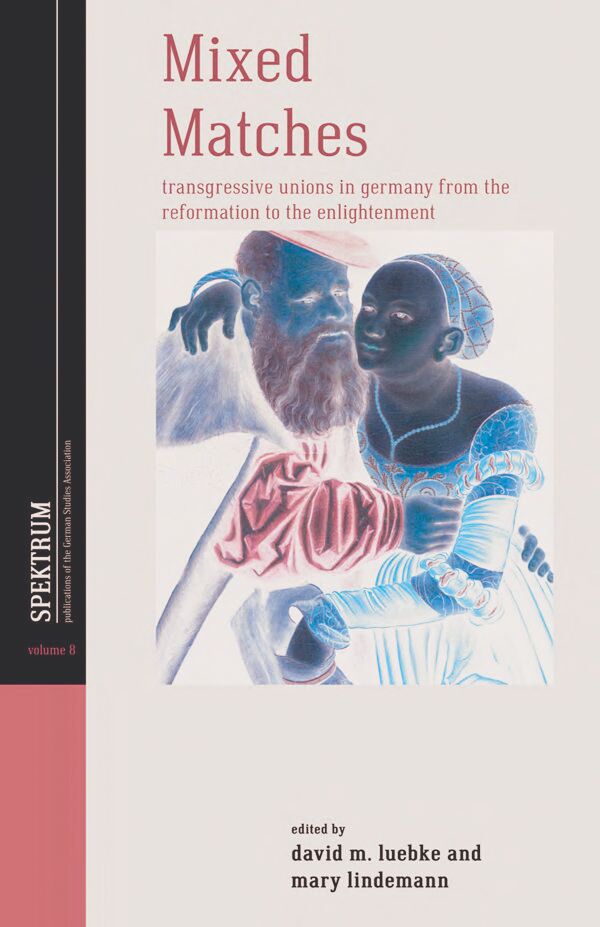
Mixed matches : transgressive unions in Germany from the Reformation to the Enlightenment
The significant changes in early modern German marriage practices included many unions that violated some taboo. That taboo could be theological and involve the marriage of monks and nuns, or refer to social misalliances as when commoners and princes (or princesses) wed. Equally transgressive were unions that crossed religious boundaries, such as marriages between Catholics and Protestants, those that violated ethnic or racial barriers, and those that broke kin-related rules. Taking as a point of departure Martin Luther's redefinition of marriage, the contributors to this volume spin out the multiple ways that the Reformers' attempts to simplify and clarify marriage affected education, philosophy, literature, high politics, diplomacy, and law. Ranging from the Reformation, through the ages of confessionalization, to the Enlightenment, Mixed Matches addresses the historical complexity of the socio-cultural institution of marriage.
eBook


Failure of American and Soviet Cultural Imperialism in German Universities, 1945-1990
In this book, Natalia Tsvetkova describes the American and Soviet policies in German universities during the Cold War. In both parts of divided Germany the conservative professorate resisted both the American and Soviet policies of reforms in universities. Whether these policies can be considered cases of cultural imperialism will be discussed in this book. As well as how and why both American and Soviet policies of the transformation of German universities eventually failed.
eBook
Germany : memories of a nation
Neil MacGregor guides us through the complex history, culture and identity of Germany by telling the stories behind 30 objects in his uniquely magical way. Beginning with the 15th-century invention of the Gutenberg press, he ventures beyond the usual sticking point of the Second World War to get to the heart of a nation that has given us Luther and Hitler, the Beetle and Brecht - and remade our world again and again. This is a view of Germany like no other.
Book

Localism, Landscape and the Ambiguities of Place
These essays do not assume the primacy of national allegiance. Instead, by using the ?sense of place? as a prism to look at German identity in new ways, they examine a sense of ?Germanness? that was neither self-evident nor unchanging.
eBook

The German genius : Europe's third renaissance, the second scientific revolution, and the twentieth century
\"A virtuosic cultural history of German ideas and influence, from 1750 to the present day\"-- Provided by publisher.
Book

Brill's Companion to the Classics, Fascist Italy and Nazi Germany
Brill's Companion to the Classics, Fascist Italy and Nazi Germany explores how political propaganda constantly manipulated and reinvented the legacy of ancient Greece and Rome in order to create consensus and historical legitimation for the Fascist and National Socialist dictatorships.
eBook
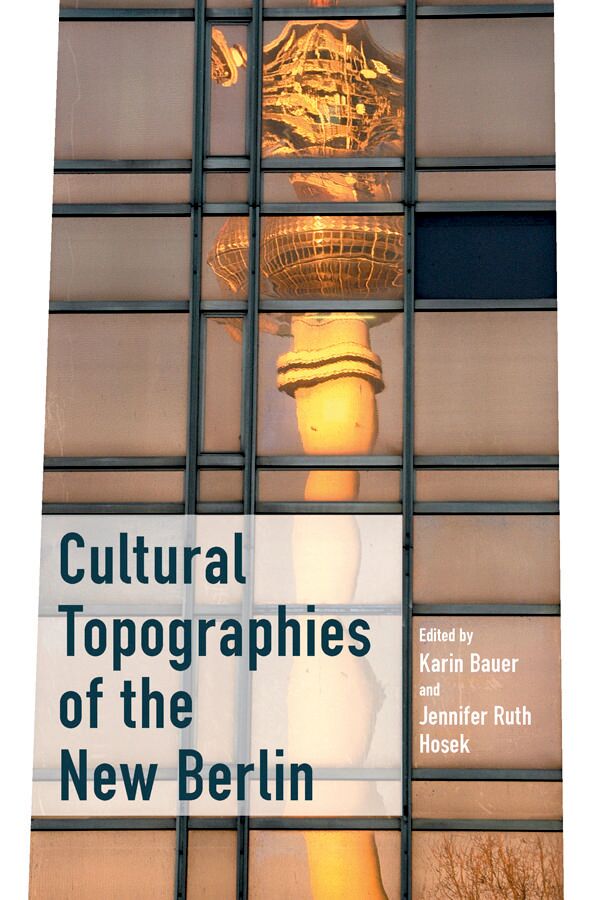
Cultural topographies of the new Berlin
Since Unification and the end of the Cold War, Berlin has witnessed a series of uncommonly intense social, political, and cultural transformations. While positioning itself as a creative center populated by young and cosmopolitan global citizens, the \"New Berlin\" is at the same time a rich site of historical memory, defined inescapably by its past even as it articulates German and European hopes for the future. Cultural Topographies of the New Berlin presents a fascinating cross-section of life in Germany's largest city, revealing the complex ways in which globalization, ethnicity, economics, memory, and national identity inflect how its urban spaces are inhabited and depicted.
eBook