
Catalogue Search | MBRL


Are you sure you want to remove the book from the shelf?

{{itemTitle}}
233
result(s) for
"Germany History Fiction."
Sort by:

In another time : a novel
In 1931 Germany, bookshop owner Max meets concert violinist Hanna and fall in love, but Hanna is Jewish and Hitler is coming to power; in 1946 outside Berlin, Hanna wakes up in a field with no memory of the past ten years.
Book

Legal Tender
At first glance, romance seems an improbable angle from which to write a cultural history of the German Democratic Republic. By most accounts the GDR was among the most dour and disciplined of socialist states, so devoted to the rigors of Stalinist aesthetics that the notion of an East German romantic comedy was more likely to generate punch lines than lines at the box office. But in fact, as John Urang shows in Legal Tender, love was freighted as a privileged site for the negotiation and reorganization of a surprising array of issues in East German public culture between 1949 and 1989. Through close readings of a diverse selection of films and novels from the former GDR, Urang offers an eye-opening account of the ideological stakes of love stories in East German culture. Throughout its forty-year existence the East German state was plagued with an ongoing problem of legitimacy. The love story's unique and unpredictable mix of stabilizing and subversive effects gave it a peculiar status in the cultural sphere. Urang shows how love stories could mediate the problem of social stratification, providing a language with which to discuss the experience of class antagonism without undermining the Party's legitimacy. But for the Party there was danger in borrowing legitimacy from the romantic plot: the love story's destabilizing influences of desire and drive could just as easily disrupt as reconcile. A unique contribution to German studies, Legal Tender offers remarkable insights into the uses and capacities of romance in modern Western culture.
eBook

Ashes
In 1932 Berlin, Gaby Schramm witnesses the beginning of Hitler's rise to power, as soldiers become ubiquitous and the family's friend, Albert Einstein, leaves the country while Gaby's parents bury his books and papers in their small yard.
Book

Legal Tender
At first glance, romance seems an improbable angle from which to write a cultural history of the German Democratic Republic. By most accounts the GDR was among the most dour and disciplined of socialist states, so devoted to the rigors of Stalinist aesthetics that the notion of an East German romantic comedy was more likely to generate punch lines than lines at the box office. But in fact, as John Urang shows in Legal Tender, love was freighted as a privileged site for the negotiation and reorganization of a surprising array of issues in East German public culture between 1949 and 1989. Through close readings of a diverse selection of films and novels from the former GDR, Urang offers an eye-opening account of the ideological stakes of love stories in East German culture. Throughout its forty-year existence the East German state was plagued with an ongoing problem of legitimacy. The love story's unique and unpredictable mix of stabilizing and subversive effects gave it a peculiar status in the cultural sphere. Urang shows how love stories could mediate the problem of social stratification, providing a language with which to discuss the experience of class antagonism without undermining the Party's legitimacy. But for the Party there was danger in borrowing legitimacy from the romantic plot: the love story's destabilizing influences of desire and drive could just as easily disrupt as reconcile. A unique contribution to German studies, Legal Tender offers remarkable insights into the uses and capacities of romance in modern Western culture.At first glance, romance seems an improbable angle from which to write a cultural history of the German Democratic Republic. By most accounts the GDR was among the most dour and disciplined of socialist states, so devoted to the rigors of Stalinist aesthetics that the notion of an East German romantic comedy was more likely to generate punch lines than lines at the box office.But in fact, as John Urang shows in Legal Tender, love was freighted as a privileged site for the negotiation and reorganization of a surprising array of issues in East German public culture between 1949 and 1989. Through close readings of a diverse selection of films and novels from the former GDR, Urang offers an eye-opening account of the ideological stakes of love stories in East German culture. Throughout its forty-year existence the East German state was plagued with an ongoing problem of legitimacy. The love story's unique and unpredictable mix of stabilizing and subversive effects gave it a peculiar status in the cultural sphere.Urang shows how love stories could mediate the problem of social stratification, providing a language with which to discuss the experience of class antagonism without undermining the Party's legitimacy. But for the Party there was danger in borrowing legitimacy from the romantic plot: the love story's destabilizing influences of desire and drive could just as easily disrupt as reconcile. A unique contribution to German studies, Legal Tender offers remarkable insights into the uses and capacities of romance in modern Western culture.
eBook


The German Student Movement and the Literary Imagination
Through a close reading of novels by Ulrike Kolb, Irmtraud Morgner, Emine Sevgi Ozdamar, Bernhard Schlink, Peter Schneider, and Uwe Timm, this book traces the cultural memory of the 1960s student movement in German fiction, revealing layers of remembering and forgetting that go beyond conventional boundaries of time and space. These novels engage this contestation by constructing a palimpsest of memories that reshape readers' understanding of the 1960s with respect to the end of the Cold War, the legacy of the Third Reich, and the Holocaust. Topographically, these novels refute assertions that East Germans were isolated from the political upheaval that took place in the late 1960s and 1970s. Through their aesthetic appropriations and subversions, these multicultural contributions challenge conventional understandings of German identity and at the same time lay down claims of belonging within a German society that is more openly diverse than ever before.
eBook

The aftermath : a novel
Hamburg, 1946. In the British Occupied Zone, thousands of Germans are wandering the rubble, lost and homeless and Colonel Lewis Morgan is charge with overseeing the rebuilding of their devastated city. He is stationed in a grand house on the River Elbe; his wife and their only surviving son will soon be joining him there. But when Lewis meets the German owners of the house, he cannot bring himself to throw them out into the streets. Instead, he insists that the two families live together. In this charged atmosphere, parents and children alike will be forced to confront their true selves as enmity and grief give way to passion and betrayal, their deepest desires, their fiercest loyalties, and the transforming power of forgiveness.
Book

English Modernism, National Identity and the Germans, 1890-1950
This is the first systematic study to trace the way representations of 'Germanness' in modernist British literature from 1890 to 1950 contributed to the development of English identity. Petra Rau examines the shift in attitudes towards Germany and Germans, from suspicious competitiveness in the late Victorian period to the aggressive hostility of the First World War and the curious inconsistencies of the 1930s and 1940s. These shifts were no simple response to political change but the result of an anxious negotiation of modernity in which specific aspects of Englishness were projected onto representations of Germans and Germany in English literature and culture. While this incisive argument clarifies and deepens our understanding of cultural and national politics in the first half of the twentieth century, it also complicates current debates surrounding race and 'otherness' in cultural studies. Authors discussed include major figures such as Conrad, Woolf, Lawrence, Ford, Forster and Bowen, as well as popular or less familiar writers such as Saki, Graham Greene, and Stevie Smith. Accessibly written and convincingly argued, Rau's study will not only be an important book for scholars but will serve as a valuable guide to undergraduates working in modernism, literary history, and European cultural relations.
eBook
The hiding game
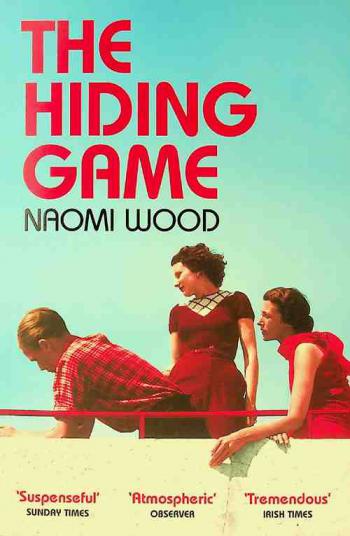
In 1922, Paul Beckermann arrives at the Bauhaus art school and is immediately seduced by both the charismatic teaching and his fellow students. Eccentric and alluring, the more time Paul spends with his new friends the closer they become, and the deeper he falls in love with the mesmerising Charlotte. But Paul is not the only one vying for her affections, and soon an insidious rivalry takes root. As political tensions escalate in Germany, the Bauhaus finds itself under threat, and the group begins to disintegrate under the pressure of its own betrayals and love affairs. Decades later, in the wake of an unthinkable tragedy, Paul is haunted by a secret. When an old friend from the Bauhaus resurfaces, he must finally break his silence. Beautifully written, powerful and suspenseful, Naomi Wood's The Hiding Game is a novel about the dangerously fine line between love and obsession, set against the most turbulent era of our recent past.

Jewish Pasts, German Fictions
Jewish Pasts, German Fictions is the first comprehensive study of how German-Jewish writers used images from the Spanish-Jewish past to define their place in German culture and society. Jonathan Skolnik argues that Jewish historical fiction was a form of cultural memory that functioned as a parallel to the modern, demythologizing project of secular Jewish history writing.
What did it imply for a minority to imagine its history in the majority language? Skolnik makes the case that the answer lies in the creation of a German-Jewish minority culture in which historical fiction played a central role. After Hitler's rise to power in 1933, Jewish writers and artists, both in Nazi Germany and in exile, employed images from the Sephardic past to grapple with the nature of fascism, the predicament of exile, and the destruction of European Jewry in the Holocaust. The book goes on to show that this past not only helped Jews to make sense of the nonsense, but served also as a window into the hopes for integration and fears about assimilation that preoccupied German-Jewish writers throughout most of the nineteenth century. Ultimately, Skolnik positions the Jewish embrace of German culture not as an act of assimilation but rather a reinvention of Jewish identity and historical memory.
eBook