
Catalogue Search | MBRL


Are you sure you want to remove the book from the shelf?

{{itemTitle}}
9,619
result(s) for
"Germany In art."
Sort by:
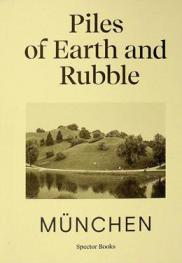
Piles of earth and rubble : München
\"German artist Ina Kwon pictures human interventions into the land as political symbols in South Korea and Germany, where artificial hills have been deployed to construct and rewrite history. This publication consists of two sections & x2014 ; on Gyeongju and Munich & x2014 ; which can be read from either direction.\"--Provided by distributor.

Rage and Denials
In Rage and Denials, philosopher and architectural historian Branko Mitrovi? examines in detail the historiography of art and architecture in the twentieth century, with a focus on the debate between the understanding of society as a set of individuals and the understanding of individuals as mere manifestations of the collectives to which they belong. The conflict between these two views constitutes a core methodological problem of the philosophy of history and was intensely debated by twentieth-century art historians—one of the few art-historical debates with a wide range of implications for the entire field of the humanities. Mitrovi? presents the most significant positions and arguments in this dispute as they were articulated in the art- and architectural-historical discourse as well as in the wider context of the historiography and philosophy of history of the era. He explores the philosophical content of scholarship engaged in these debates, examining the authors' positions, the intricacies and implications of their arguments, and the rise and dominance of collectivist art historiography after the 1890s. He centers his study on the key art-historical figures Erwin Panofsky, Ernst Gombrich, and Hans Sedlmayr while drawing attention to the writings of the less well known Vasiliy Pavlovich Zubov. Rage and Denials offers a valuable window onto how key aspects of modern research in the humanities took shape over the course of the twentieth century.
eBook


From Archive to Print
Abstract Monica Petzal is an artist, curator and writer with a particular interest in her German-Jewish background. Trained as a painter and art historian, she became a printmaker in mid-career, enabling her to explore more fully a rich family archive of images, texts and objects. In this article she explores the connection between the writing of Victor Klemperer and her maternal family in Dresden before the Second World War, her family archive and the artwork produced for two exhibitions, Indelible Marks – The Dresden Project in 2013–14 and Dissent and Displacement in 2020.
Journal Article


Kinaesthetic Knowing
Is all knowledge the product of thought? Or can the physical interactions of the body with the world produce reliable knowledge? In late-nineteenth-century Europe, scientists, artists, and other intellectuals theorized the latter as a new way of knowing, which Zeynep Çelik Alexander here dubs \"kinaesthetic knowing.\"
In this book, Alexander offers the first major intellectual history of kinaesthetic knowing and its influence on the formation of modern art and architecture and especially modern design education. Focusing in particular on Germany and tracing the story up to the start of World War II, Alexander reveals the tension between intellectual meditation and immediate experience to be at the heart of the modern discourse of aesthetics, playing a major part in the artistic and teaching practices of numerous key figures of the period, including Heinrich Wölfflin, Hermann Obrist, August Endell, László Moholy-Nagy, and many others. Ultimately, she shows, kinaesthetic knowing did not become the foundation of the human sciences, as some of its advocates had hoped, but it did lay the groundwork—at such institutions as the Bauhaus—for modern art and architecture in the twentieth century.
eBook


Berlin : the symphony continues : orchestrating architectural, social, and artistic change in Germany's new capital
The sudden fall of the Berlin Wall is one of the defining images of the late twentieth century.The subsequent unification of Germany and the decision to return Berlin to its status as capital has made the constant changes within the city a matter of public interest.
eBook