
Catalogue Search | MBRL


Are you sure you want to remove the book from the shelf?

{{itemTitle}}
88
result(s) for
"Geronimo (1829-1909)"
Sort by:

Apache Chief Geronimo
\"Learn about this Apache warrior and why he lead thrilling fights against American and Mexican soldiers\"--Provided by publisher.
Book
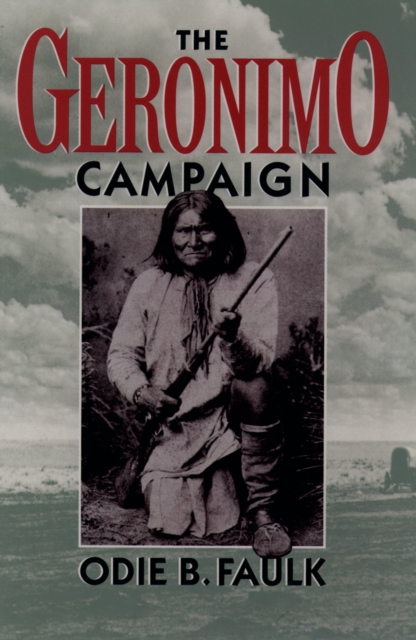
The Geronimo Campaign
On August 25 1886, the Apache chief, Geronimo, surrendered to the US army, ending a long and bloody struggle. This book draws on fresh evidence to examine the ironies, dangers, and vicissitudes of that campaign. Based on the papers collected by Lt. Charles B. Gatewood—the one white man Geronimo trusted—including depositions from old soldiers and scouts, official documents, articles, letters, and photographs, the book shows that it was essentially a war no one won—the Apaches (like the Sioux, Comanche, and Nez Perce before them), losing their land and lifestyle, the Americans losing all that the tribes might have contributed to the union and more than a measure of national self-respect. The author is especially concerned with the campaign's wider historical setting and significance, and with the sad record of betrayal of the Native American by the US Government.
eBook


Imagining Geronimo
His face has appeared on T-shirts, postage stamps, jigsaw puzzles, posters, and an Andy Warhol print. A celebrity and a tourist attraction who attended three World’s Fairs and rode in President Theodore Roosevelt’s inaugural parade, he is a character in such classic westerns as Stagecoach and Broken Arrow . His name was used in the daring military operation that killed Osama bin Laden in 2011, and rumors about the location of his skull at a Yale University club have circulated for a century. These are just a few of the ways that the Apache shaman and war leader known to Anglo-Americans as Geronimo has remained alive in the mainstream American imagination and beyond.
Clements’s study samples the repertoire of Geronimo stories and examines Americans’ changing sense of Geronimo in terms of traditional patterns—trickster social bandit, patriot chief, sage elder, and culture hero. He looks at the ways in which Geronimo tried with mixed results to maintain control of his own image during more than twenty years in which he was a prisoner of war. Also examined are Geronimo’s ostensible conversion to Christianity and his image in photography and literature.
eBook

Henry Ware Lawton : Union infantryman, frontier soldier, charismatic warrior
\"Lawton served the country nearly uninterrupted from the day he enlisted at age 18--soon after President Lincoln's first call for volunteers to fight in the Civil War, where he earned a Medal of Honor-to his death at age 56, a major general in the Philippine War. In between, he fought in the Indian Wars in Texas, the Northern Plains and the Arizona Territory. It was during this time that he rose to national prominence as the man who captured Geronimo following a grueling, nonstop, four-month pursuit deep into Mexico.\"--Jacket.
Book
Las Guerras Apaches
Las Guerras Apaches fueron el conflicto más largo librado por Estados Unidos, que se prolongó durante un cuarto de siglo y marcó la historia del suroeste americano y el norte de México. Una tierra de frontera inhóspita y desolada, infestada de bandoleros, donde cada planta tenía una púa, cada insecto un aguijón, cada pájaro una garra y cada reptil un colmillo: la Apachería. Durante más de dos décadas, los guerreros apaches, duros como su tierra, fogueados por siglos de lucha contra los españoles, pelearon contra los intentos mexicanos y estadounidenses por acabar con su forma de vida. Su conocimiento del terreno, su movilidad y una cultura guerrera que no conocía la misericordia, les convirtieron en un enemigo terrible y formidable. En Las Guerras Apaches. Polvo y sangre en la última frontera del salvaje Oeste , Paul Andrew Hutton relata este legendario conflicto, tan presente en el imaginario popular, tan pleno de heroísmo como de brutalidad, con un pulso que consigue trasladar la intensidad del drama y ponerse en la piel de ambos bandos, haciendo justicia a los nombres legendarios de Gerónimo, Mangas Coloradas, Cochise o Victorio. Como hilo vertebrador, Hutton revive la experiencia de individuos cuya vida discurrió a medio camino entre los dos mundos, como el legendario explorador y cazarrecompensas tuerto Micky Free o como Apache Kid, el último indio libre. Cuando el humo de la pólvora se disipó y Gerónimo se entregó, resignado a una vida en la reserva, para acabar siendo expuesto como una atracción en la Exposición Universal de San Luis en 1904, la mítica era del salvaje Oeste había terminado.
eBook

Geronimo
\"Geronimo (1829-1909), was a warrior of the Chiricahua Apache. He defended his land and people against attacks by settlers and soldiers in Mexico and the southwestern United States during the 1870's and 1880's.\" (World Book Student) Read more about Geronimo.
Reference
