
Catalogue Search | MBRL


Are you sure you want to remove the book from the shelf?

{{itemTitle}}
160
result(s) for
"Geschlechterbeziehung."
Sort by:


A grand gender convergence
The converging roles of men and women are among the grandest advances in society and the economy in the last century. These aspects of the grand gender convergence are figurative chapters in a history of gender roles. But what must the \"last\" chapter contain for there to be equality in the labor market? The answer may come as a surprise. The solution does not (necessarily) have to involve government intervention and it need not make men more responsible in the home (although that wouldn't hurt). But it must involve changes in the labor market; especially how jobs are structured and remunerated to enhance temporal flexibility. The gender gap in pay would be considerably reduced and might vanish altogether if firms did not have an incentive to disproportionately reward individuals who labored long hours and worked particular hours. Such change has taken off in various sectors, such as technology, science, and health, but is less apparent in the corporate, financial, and legal worlds.
Journal Article

Professional role confidence and gendered persistence in engineering
\"Social psychological research on gendered persistence in science, technology, engineering, and mathematics (STEM) professions is dominated by two explanations: women leave because they perceive their family plans to be at odds with demands of STEM careers, and women leave due to low self-assessment of their skills in STEM's intellectual tasks, net of their performance. This study uses original panel data to examine behavioral and intentional persistence among students who enter an engineering major in college. Surprisingly, family plans do not contribute to women's attrition during college but are negatively associated with men's intentions to pursue an engineering career. Additionally, math self-assessment does not predict behavioral or intentional persistence once students enroll in a STEM major. This study introduces professional role confidence -- individuals' confidence in their ability to successfully fulfill the roles, competencies, and identity features of a profession -- and argues that women's lack of this confidence, compared to men, reduces their likelihood of remaining in engineering majors and careers. We find that professional role confidence predicts behavioral and intentional persistence, and that women's relative lack of this confidence contributes to their attrition.\" (Author's abstract, IAB-Doku). Die Untersuchung enthält quantitative Daten. Forschungsmethode: empirisch-quantitativ; empirisch; Längsschnitt. Die Untersuchung bezieht sich auf den Zeitraum 2003 bis 2007.
Journal Article

A Courtship after Marriage
From about seven children per woman in 1960, the fertility rate in Mexico has dropped to about 2.6. Such changes are part of a larger transformation explored in this book, a richly detailed ethnographic study of generational and migration-related redefinitions of gender, marriage, and sexuality in rural Mexico and among Mexicans in Atlanta.
eBook

Maternal gender role attitudes, human capital investment, and labour supply of sons and daughters
Recent studies have shown that beliefs, preferences, and attitudes are important pathways for the intergenerational transmission of economic outcomes. We contribute to this literature by documenting the importance of gender role attitudes with data from the 1970 British Cohort Study. We find that mothers' and children's gender role attitudes, measured 25 years apart, are strongly correlated, equally so for sons and daughters. We also find that daughters and sons' wives/partners have greater human capital and labour supply if their mothers held nontraditional attitudes. A fixed effect analysis shows that the female labour supply effects are particularly large following childbirth. Importantly, sons' human capital and labour supply are unaffected, suggesting the results are not driven by unobserved heterogeneity. All these findings imply that the intergenerational transmission of gender role attitudes explains a substantive part of gender inequalities.
Journal Article
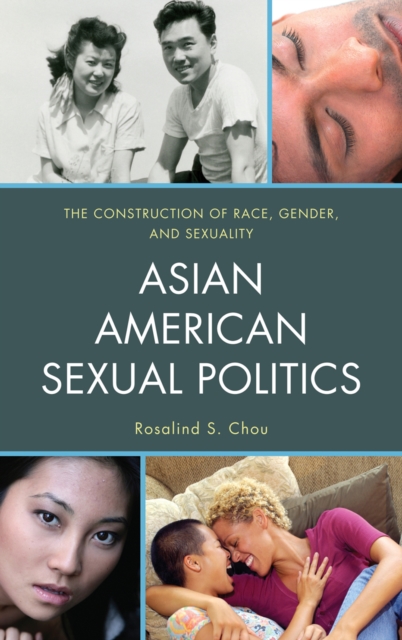
Asian American sexual politics
Asian American Sexual Politics explores the topics of beauty, self-esteem, and sexual attraction among Asian Americans. The book draws on sixty in-depth interviews to show how constructions of Asian American gender and sexuality tend to reinforce the social and political dominance for whites, particularly white males, even in the supposed “post-racial” United States. Drawing on established scholarship on the intersection of race, gender, and sexuality, Asian American Sexual Politics shows how power dynamics shape the lives of young Asian Americans today. Asian American women are often constructed as hyper-sexual docile bodies, while Asian American men are often racially “castrated.” The book’s interview excerpts show the range of frames through which Asian Americans approach the world, as well as the counter-frames they construct. In the final chapter, author Rosalind S. Chou offers strategies for countering racialized and sexualized oppression. This provocative book shows how persistent racism affects Asian American body image, self-esteem, and intimate relationships.
eBook

Unmarriages
The Middle Ages are often viewed as a repository of tradition, yet what we think of as traditional marriage was far from the only available alternative to the single state in medieval Europe. Many people lived together in long-term, quasimarital heterosexual relationships, unable to marry if one was in holy orders or if the partners were of different religions. Social norms militated against the marriage of master to slave or between individuals of very different classes, or when the couple was so poor that they could not establish an independent household. Such unions, where the protections that medieval law furnished to wives (and their children) were absent, were fraught with danger for women in particular, but they also provided a degree of flexibility and demonstrate the adaptability of social customs in the face of slowly changing religious doctrine.Unmarriagesdraws on a wide range of sources from across Europe and the entire medieval millennium in order to investigate structures and relations that medieval authors and record keepers did not address directly, either in order to minimize them or because they were so common as not to be worth mentioning. Author Ruth Mazo Karras pays particular attention to the ways women and men experienced forms of opposite-sex union differently and to the implications for power relations between the genders. She treats legal and theological discussions that applied to all of Europe and presents a vivid series of case studies of how unions operated in specific circumstances to illustrate concretely what we can conclude, how far we can speculate, and what we can never know.
eBook

Love, Intimacy and Power
Through an analysis of the correspondence of over one hundred couples from the Scottish elites across the seventeenth to nineteenth centuries, this book explores how ideas around the nature of emotional intimacy, love, and friendship within marriage adapted to a modernising economy and society. Patriarchy continued to be the central model for marriage across the period and as a result, women found spaces to hold power within the family, but could not translate it to power beyond the household. Comparing the Scottish experience to that across Europe and North America, Barclay shows that throughout the eighteenth-century, far from being a side-note in European history, Scottish ideas about gender and marriage became culturally dominant. This book will be vital to those studying and teaching Scottish social history, and those interested in the history of marriage and gender. It will also appeal to feminists interested in the history of patriarchy.
eBook

Love in the Time of AIDS
In some parts of South Africa, more than one in three people are HIV positive. Love in the Time of AIDS explores transformations in notions of gender and intimacy to try to understand the roots of this virulent epidemic. By living in an informal settlement and collecting love letters, cell phone text messages, oral histories, and archival materials, Mark Hunter details the everyday social inequalities that have resulted in untimely deaths. Hunter shows how first apartheid and then chronic unemployment have become entangled with ideas about femininity, masculinity, love, and sex and have created an economy of exchange that perpetuates the transmission of HIV/AIDS. This sobering ethnography challenges conventional understandings of HIV/AIDS in South Africa.
eBook
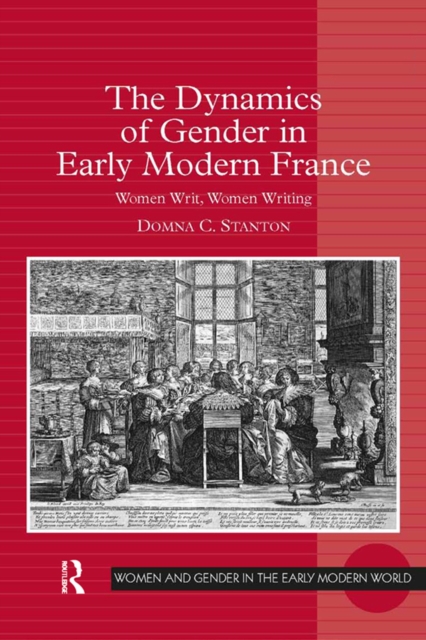
The Dynamics of Gender in Early Modern France
In its six case studies, The Dynamics of Gender in Early Modern France works out a model for (early modern) gender, which is articulated in the introduction. The book comprises essays on the construction of women: three in texts by male and three by female writers, including Racine, Fénelon, Poulain de la Barre, in the first part; La Guette, La Fayette and Sévigné, in the second. These studies thus also take up different genres: satire, tragedy and treatise; memoir, novella and letter-writing. Since gender is a relational construct, each chapter considers as well specific textual and contextual representations of men. In every instance, Stanton looks for signs of conformity to-and deviations from-normative gender scripts. The Dynamics of Gender adds a new dimension to early modern French literary and cultural studies: it incorporates a dynamic (shifting) theory of gender, and it engages both contemporary critical theory and literary historical readings of primary texts and established concepts in the field. This book emphasizes the central importance of historical context and close reading from a feminist perspective, which it also interrogates as a practice. The Afterword examines some of the meanings of reading-as-a-feminist.
eBook