
Catalogue Search | MBRL


Are you sure you want to remove the book from the shelf?

{{itemTitle}}
100
result(s) for
"Gifted children Fiction."
Sort by:

Maizon at Blue Hill
After winning a scholarship to an academically challenging boarding school, Maizon finds herself one of only five blacks there and wonders if she will ever fit in. Sequel to \"Last Summer with Maizon.\"
Book
FROM THE EDITOR
The article concludes that while students may be aware of the need to check the information they read, they lack the information literacy Skills to do so. * Noni Harrison's article, Drawing on Meaning: Al-supported Drawing Tasks to Enhance Reading Comprehension and Student Engagement, explores her primary students' use of Gen Al drawing tools to convey subtleties in their understandings of characters in fiction. * Lara Curtis' article Literacy and Science: а High Potential and Gifted Education (HPGE) Collaboration, in her school, Cheltenham Girls High, in Sydney. The result was 'in equal parts, hilarious and impressive', according to the Science teacher! * Anna Bodle's research paper, Building Morale in the Teacher Librarian Sector: A Research Paper, is essentially a literature review about this topic. Raising Awareness About Authentic Representation of Diversity in Children's Literature - Martha ltzcovitz and Kate Foster.
Journal Article
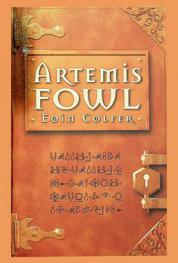
Artemis Fowl
Twelve-year-old Artemis Fowl is a brilliant criminal mastermind. But even Artemis doesn't know what he's taken on when he kidnaps a fairy, Captain Holly Short of the LEPrecon Unit. These aren't the fairies of bedtime stories. These fairies are armed and they're dangerous. Artmeis thinks he's got them just where he wants them, but then they stop playing by the rules ...
Book

The Importance of Reading in Earnest
Until recently, reading instruction for early grades has focused on fiction. However, the Common Core State Standards and the Next Generation Science Standards both emphasize the reading of nonfiction texts to gain specific skill sets for analyzing information. Research has shown that gifted students and children with culturally/linguistically diverse backgrounds may find nonfiction texts more engaging to their interests than fiction. Nonfiction can activate prior learning and encourage students to learn to categorize and synthesize information, especially when combined with scientific inquiry. In this article, the authors explore the new standards-based emphasis on reading nonfiction, the skills built by students’ reading nonfiction with a focus on gifted students from culturally/linguistically different and economically disadvantaged families, and we share one approach to including nonfiction in elementary classrooms through the U-STARS~PLUS Science & Nonfiction Connections, a program for recognizing and supporting underrepresented gifted populations.
Journal Article

The Zanna function
Starting her first year at St. Pommeroy's School for Gifted Children, fourteen-year-old Zanna discovers she can manipulate the basic scientific functions of the universe, such as velocity, gravity, and chemical reactions.
Book

A Cage of Butterflies
We're like a new toy ... or a new energy source, and they're just playing with us, experimenting. Working out what we can do. What they can do with us.\" Mikki and the others live at \"the farm\", an advanced learning facility, a think-tank for a bunch of young people with very high IQs. But what is really going on at the farm? And what about the five much younger children known as the Babies, frail as butterflies? Brian Caswell's new novel explores the power of love . and presents readers with an intriguing jigsaw puzzle of suspense.
eBook

Pennybaker School is revolting
Strange things are happening at Pennybaker School for the Uniquely Gifted, and sixth-grader Thomas Fallgrout must stage a revolution to set them right.
Book

Alfonso Jones Matters
Medina shares how he constructed a protagonist for his graphic novel, I Am Alfonso Jones, that encapsulates the quest for justice at the heart of the Black Lives Matter movement. In the book, he created a relatable protagonist where the past and the present collide, thrusting him into the afterlife in order to bear witness to his own death at the hands of the police. In so doing, he attempted to go beyond the overwhelming statistics of victims of police violence and the stockpile of Black bodies, beyond the hashtags and 24-hour exploitative news loops, to have a seminal Black character who testifies on his own behalf. His intention was to interrogate the interiority of a thriving Black boy who is suddenly--and literally--yanked from his life by fear that sometimes manifests in racism, leading to poor judgment, aggressive policing, and, unfortunately, injury and/or death.
Journal Article

The Asterisk war
The school-city of Rokka, also known as \"Asterisk,\" is where boys and girls of the Starpulse Generation all compete in the Seibusai, the \"star battle festival,\" fighting for glory on the greatest combat entertainment stage of the world.
BOOK

Help! I Think My Baby is Gifted... Now What Should I Do?
Once a member, families have access to national and members-only resources specific to families that are experiencing similar cheers and challenges.] This is important. Because these youngsters are not yet in school, it presents a variety of challenges in terms of identification and knowledge-gathering.Why? [...]again because this young group has not yet entered formal schooling, they are not exposed to standardized curriculum. [...]allow your young scholar exposure to engage in activities of interest. Exposure and experience are key; everything is new! [...]they see or read about or experience astronomy or zebras or magnetism, your child will not know that this interest can develop into skills, strengths, and vocations.
Journal Article