
Catalogue Search | MBRL


Are you sure you want to remove the book from the shelf?

{{itemTitle}}
1,122
result(s) for
"Girls in mass media."
Sort by:


From the dance hall to Facebook : teen girls, mass media, and moral panic in the United States, 1905-2010
From the days of the penny press to the contemporary world of social media, journalistic accounts of teen girls in trouble have been a mainstay of the U.S. news media. Often the stories represent these girls as either victims or whores (and sometimes both), using journalistic storytelling devices and news-gathering practices that question girls’ ability to perform femininity properly, especially as they act in public recreational space. These media accounts of supposed misbehavior can lead to moral panics that then further silence the voices of teenagers and young women.
In From the Dance Hall to Facebook, Shayla Thiel-Stern takes a close look at several historical snapshots, including working-class girls in dance halls of the early 1900s; girls’ track and field teams in the 1920s to 1940s; Elvis Presley fans in the mid-1950s; punk rockers in the late 1970s and early 1980s; and girls using the Internet in the early twenty-first century. In each case, issues of gender, socioeconomic status, and race are explored within their historical context. The book argues that by marginalizing and stereotyping teen girls over the past century, mass media have perpetuated a pattern of gendered crisis that ultimately limits the cultural and political power of the young women it covers.
eBook

The fangirl's guide to the galaxy : a handbook for geek girls
\"Fanfic, cosplay, cons, books, memes, podcasts, vlogs, OTPs and RPGs and MMOs and more - it's never been a better time to be a girl geek. The Fangirl's Guide to the Galaxy is the ultimate handbook for ladies living the nerdy life, a fun and feminist take on the often male-dominated world of geekdom. With delightful illustrations and an unabashed love for all the in(ternet)s and outs of geek culture, this book is packed with tips, playthroughs, and cheat codes, including how to make nerdy friends, rock awesome cosplay, write fanfic with feels, defeat Internet trolls, and attend your first con. Plus, insightful interviews with fangirl faves, like Jane Espenson, Erin Morgenstern, Kate Beaton, Ashley Eckstein, Laura Vandervoort, Beth Revis, Kate Leth, and many others\"--Adapted from distributor's description.
Book
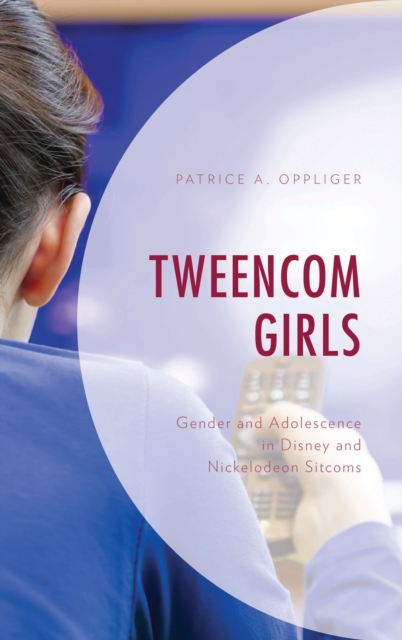
Tweencom Girls
Tweencom Girls analyzes the different ways character tropes are portrayed in media targeted at eight- to twelve-year-olds, particularly female characters, over the last twenty-five years.The book focuses particularly on sitcoms produced by the cable giants Disney Channel and Nickelodeon because of their popularity and ubiquity.
eBook

Girls, moral panic, and news media : troublesome bodies
\"In this book, Sharon Mazzarella examines the representational politics behind journalistic constructions of US girls and girlhood through a series of contemporary in-depth case studies which work to document a wider cultural moral panic about the troublesome nature of girls' bodies. The public concern and media fascination with youth so evident in the United States today is a century-old phenomenon. From the flappers of the 1920s to the bobbysoxers of the 1950s, from the hippies of the 1960s and on to the ever-present pregnant teens, this fascination has played out in the media and has consistently focused on (primarily White, middle-class, heterosexual) girls. A growing body of research, for example, has revealed the manner in which journalistic practice constructs such girls as problems. Girls, Moral Panic, and News Media takes a broad look at U.S. news media constructions of girls, girlhoods, and girl's bodies/sexualities through a series of contemporary in-depth case studies including, but not limited to news coverage of the 2008 Gloucester (MA) High School \"pregnancy pact,\" teen gun control activist Emma Gonzâalez, and the sexualization of \"early puberty.\" In general, the news media constructs girls' bodies as troublesome and in need of adult surveillance and policing. Taken as a whole these case studies document a cultural obsession with girls' bodies-an obsession that often approaches moral panic. This book will be key reading for researchers and instructors in a wide range of disciplines. While the primary audience will be those in the area of the rapidly growing international and interdisciplinary field of Girls' Studies, scholars and students of Media Studies, Cultural Studies, Women's/Gender/Sexuality Studies, Communication and Journalism will also find this an important study\"-- Provided by publisher.
Book

Building character: the paid parenting methodology for counteracting sexualization effects in youth
The purpose of this study was to examine how the PAID curriculum would increase parental communication skills, behavioral engagement, and discussion of age-appropriate sex-education. The goal of the PAID curriculum is to help counteract the effects of sexualization and objectification in youth through parental activism. Sexualization and objectification of young girls and women impacts their mental, physical, and relational health by increasing depression, anxiety, body image dissatisfaction, disordered eating habits, sexual dysfunctions, and problems in academic and athletic performance. The PAID curriculum provides an innovative solution to address negative media influence. It was hypothesized that parents have insufficient knowledge of topics covered in the PAID curriculum, discuss sex-education less with younger children, religious parents are less likely to discuss sex-education, older parents engage in more measured behaviors (e.g. volunteering with their children), and that there is a positive relationship between communication skills, behavioral habits, and discussion of sex-education. Results from surveys completed by parents indicate that they would benefit from attending the PAID course. Parents have limited knowledge of the curriculum content (59.3%) and tend to delay discussing sex-education until their children enter late adolescence (10-13 year olds, M=13.97; SD=6.59 and 14-17 year olds, M=22.23; SD=8.37; t(76)=-4.7, p<0.001, two-tailed). A moderate positive relationship exists between connectedness (r(79)=.39, p<.001), communication ( r(79)=.32, p=.005), and behavioral engagement between parents and their children (r(79)=.32, p=.005, two-tailed). Along with a review of this research, implications for psychologists and proposals for future research are provided.
Dissertation
MTV and teen pregnancy
In 2009, 16 and Pregnant premiered on MTV, closely followed by the spinoffs Teen Mom and Teen Mom 2. Because of their controversial portrayals of teenage mothers, the shows have received ongoing media attention. While some argue that the programs could play a factor in reducing the number of teen pregnancies, others claim the shows exploit young women and glamorize their situations. Among these debates, there have been surprisingly few in-depth discourses that discuss the roles such shows have on teenage audiences. In MTV and Teen Pregnancy: Critical Essays on 16 and Pregnant and Teen Mom, contributors from a variety of backgrounds and expertise offer potent essays about these programs. Divided into four parts, the book tackles the controversial representations of teen pregnancy from various disciplines. Part I explores gendered social norms and the shows’ roles as either educational resources or idealized depictions of teenage motherhood. Part II prompts readers to consider the intersections of race, class, gender, and the social and cultural power structures often glossed over in these programs. Part III focuses on teenage fathers, the portrayal of masculinity, and “good” vs. “bad” parents. Part IV draws from TVs representations of reality to discuss the impact of these shows on the viewing audience. This section includes a narrative from a teen mother who argues that the shows do not accurately reflect the life she leads. As the debates about 16 and Pregnant and Teen Mom continue, this collection provides a valuable critical discourse to be used both inside and outside the classroom. Those engaged in courses on gender and women’s studies, as well as media studies, social work, and family and childhood development, will find MTV and Teen Pregnancy especially insightful—as will those involved in community outreach programs, not to mention teens and young mothers themselves.
eBook

From the Dance Hall to Fac
From the days of the penny press to the contemporary world of social media, journalistic accounts of teen girls in trouble have been a mainstay of the U.S.news media.Often the stories represent these girls as either victims or whores (and sometimes both), using journalistic storytelling devices and news-gathering practices that question girls'.
eBook
From the Dance Hall to Facebook
From the days of the penny press to the contemporary world of social media, journalistic accounts of teen girls in trouble have been a mainstay of the U.S. news media. Often the stories represent these girls as either victims or whores (and sometimes both), using journalistic storytelling devices and newsgathering practices that question girls’ ability to perform femininity properly, especially as they act in public recreational space. These media accounts of supposed misbehavior can lead to moral panics that then further silence the voices of teenagers and young women. In From the Dance Hall to Facebook, Shayla ThielStern takes a close look at several historical snapshots, including workingclass girls in dance halls of the early 1900s; girls’ track and field teams in the 1920s to 1940s; Elvis Presley fans in the mid1950s; punk rockers in the late 1970s and early 1980s; and girls using the Internet in the early twentyfirst century. In each case, issues of gender, socioeconomic status, and race are explored within their historical context. The book argues that by marginalizing and stereotyping teen girls over the past century, mass media have perpetuated a pattern of gendered crisis that ultimately limits the cultural and political power of the young women it covers.
eBook

Branding Black womanhood : media citizenship from Black power to Black girl magic
CaShawn Thompson crafted Black Girls Are Magic as a proclamation of Black women's resilience in 2013. Less than five years later, it had been repurposed as a gateway to an attractive niche market. Branding Black Womanhood: Media Citizenship from Black Power to Black Girl Magic examines the commercial infrastructure that absorbed Thompson's mantra. While the terminology may have changed over the years, mainstream brands and mass media companies have consistently sought to acknowledge Black women's possession of a distinct magic or power when it suits their profit agendas.
Beginning with the inception of the Essence brand in the late 1960s, Timeka N. Tounsel examines the individuals and institutions that have reconfigured Black women's empowerment as a business enterprise. Ultimately, these commercial gatekeepers have constructed an image economy that operates as both a sacred space for Black women and an easy hunting ground for their dollars.
eBook