
Catalogue Search | MBRL


Are you sure you want to remove the book from the shelf?

{{itemTitle}}
37
result(s) for
"Glacial epoch North America."
Sort by:

Atlas of a lost world : travels in ice age America
\"Scientists squabble over the locations and dates for human arrival in the New World. The first explorers were few, encampments fleeting. At some point in time, between twenty and forty thousand years ago, sea levels were low enough that a vast land bridge was exposed between Asia and North America. But the land bridge was not the only way across. This book upends our notions of where these people came from and who they were. The unpeopled continent they reached was inhabited by megafauna--mastodons, sloths, mammoths, saber-toothed cats, lions, bison, and bears. The First People were not docile--Paleolithic spear points are still encrusted with the protein of their prey--but they were wildly outnumbered and many were prey to the much larger animals. This is a chronicle of the last millennia of the Ice Age, the gradual oscillations and retreat of glaciers, the clues and traces that document the first encounters of early humans, and the animals whose presence governed the humans' chances for survival\"-- Provided by publisher.
Book

First peoples in a new world
More than 12,000 years ago, in one of the greatest triumphs of prehistory, humans colonized North America, a continent that was then truly a new world. Just when and how they did so has been one of the most perplexing and controversial questions in archaeology. This dazzling, cutting-edge synthesis, written for a wide audience by an archaeologist who has long been at the center of these debates, tells the scientific story of the first Americans: where they came from, when they arrived, and how they met the challenges of moving across the vast, unknown landscapes of Ice Age North America. David J. Meltzer pulls together the latest ideas from archaeology, geology, linguistics, skeletal biology, genetics, and other fields to trace the breakthroughs that have revolutionized our understanding in recent years. Among many other topics, he explores disputes over the hemisphere's oldest and most controversial sites and considers how the first Americans coped with changing global climates. He also confronts some radical claims: that the Americas were colonized from Europe or that a crashing comet obliterated the Pleistocene megafauna. Full of entertaining descriptions of on-site encounters, personalities, and controversies, this is a compelling behind-the-scenes account of how science is illuminating our past.
eBook


Across Atlantic ice
Who were the first humans to inhabit North America? According to the now familiar story, mammal hunters entered the continent some 12,000 years ago via a land bridge that spanned the Bering Sea. Distinctive stone tools belonging to the Clovis culture established the presence of these early New World people. But are the Clovis tools Asian in origin? Drawing from original archaeological analysis, paleoclimatic research, and genetic studies, noted archaeologists Dennis J. Stanford and Bruce A. Bradley challenge the old narrative and, in the process, counter traditional—and often subjective—approaches to archaeological testing for historical relatedness. The authors apply rigorous scholarship to a hypothesis that places the technological antecedents of Clovis in Europe and posits that the first Americans crossed the Atlantic by boat and arrived earlier than previously thought. Supplying archaeological and oceanographic evidence to support this assertion, the book dismantles the old paradigm while persuasively linking Clovis technology with the culture of the Solutrean people who occupied France and Spain more than 20,000 years ago.
eBook

After the Ice Age
The fascinating story of how a harsh terrain that resembled modern Antarctica has been transformed gradually into the forests, grasslands, and wetlands we know today.
eBook
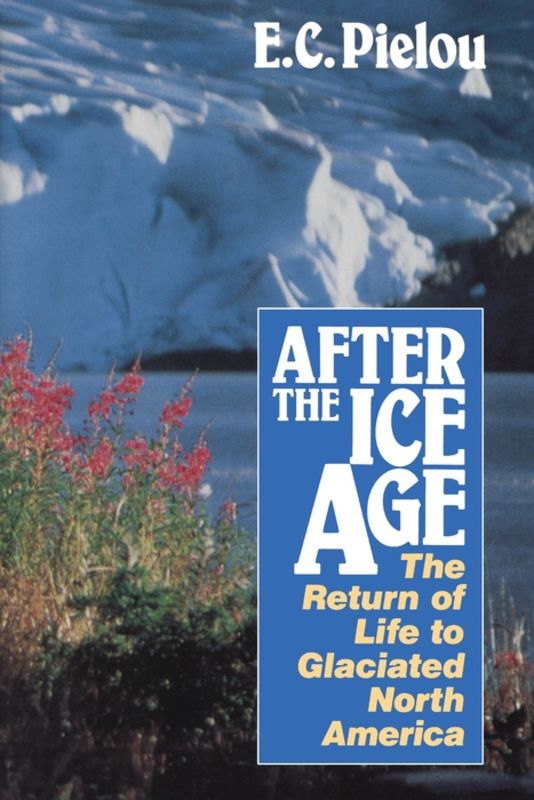
After the Ice Age
The fascinating story of how a harsh terrain that resembled modern Antarctica has been transformed gradually into the forests, grasslands, and wetlands we know today.
eBook


Patterns and dynamics of European vegetation change over the last 15,000 years
Aim: Palaeoecological reconstructions document past vegetation change, with estimates of fast shifts in species distributions. The resulting rates of plant spread are often not matched by model simulations of climate-driven vegetation dynamics. Genetic surveys of extant plant populations document directions of the post-glacial spread of trees, challenging traditional interpretations. Our aim is to examine an updated continental pollen data set from Europe in the light of the new ideas about vegetation dynamics emerging from genetic research and vegetation modelling studies. Location Europe. Methods: We use pollen data from the European Pollen Database (EPD) to construct interpolated maps of pollen percentages documenting changes in the distribution and abundance of major plant genera and the grass family in Europe over the last 15,000 years. Results: Our analyses confirm high rates of post-glacial spread with at least 1000 m year⁻¹ for Corylus, Ulmus and Alnus and average rates of 400 m year⁻¹ for Tilia, Quercus, Fagus and Carpinus. The late Holocene expansions of Picea and Fagus populations in many European regions cannot be explained by migrational lag. Both taxa shift their population centres towards the Atlantic coast suggesting that climate may have played a role in the timing of their expansions. The slowest rates of spread were reconstructed for Abies. Main conclusions: The calculated rates of post-glacial plant spread are higher in Europe than those from North America, which may be due to more rapid shifts in climate mediated by the Gulf Stream and westerly winds. Late Holocene anthropogenic land use practices in Europe had major effects on individual taxa, which in combination with climate change contributed to shifts in areas of abundance and dominance. The high rates of spread calculated from the European pollen data are consistent with rapid tracking of early Holocene climate change by common tree species, documenting that plants can spread fast tracing their climate space, regardless of their dispersal strategy.
Journal Article

The Great Basin
Covering a large swath of the American West, the Great Basin, centered in Nevada and including parts of California, Utah, and Oregon, is named for the unusual fact that none of its rivers or streams flow into the sea. This fascinating illustrated journey through deep time is the definitive environmental and human history of this beautiful and little traveled region, home to Death Valley, the Great Salt Lake, Lake Tahoe, and the Bonneville Salt Flats. Donald K. Grayson synthesizes what we now know about the past 25,000 years in the Great Basin—its climate, lakes, glaciers, plants, animals, and peoples—based on information gleaned from the region’s exquisite natural archives in such repositories as lake cores, packrat middens, tree rings, and archaeological sites. A perfect guide for students, scholars, travelers, and general readers alike, the book weaves together history, archaeology, botany, geology, biogeography, and other disciplines into one compelling panorama across a truly unique American landscape.
eBook