
Catalogue Search | MBRL


Are you sure you want to remove the book from the shelf?

{{itemTitle}}
4
result(s) for
"Glassware, Roman Catalogs."
Sort by:


Word Becomes Image
Presents a diachronic investigation providing a rich case study as well as an approach tracing the contours of a category of Roman material culture defined by the Roman period technique of openwork carving. This work shows how openwork vessels are a reflection of a wide-reaching Roman cultural aesthetic.
eBook

Verres Incolores de l'antiquité Romaine en Gaule et Aux Marges de la Gaule
Colourless glass became prominent between the middle of the 1st century AD and the beginning of the 4th century. This book reflects the diversity of glass and is designed as a practical manual divided into three parts: Assemblages, Typological Catalogue, Chemical Analyses.
eBook
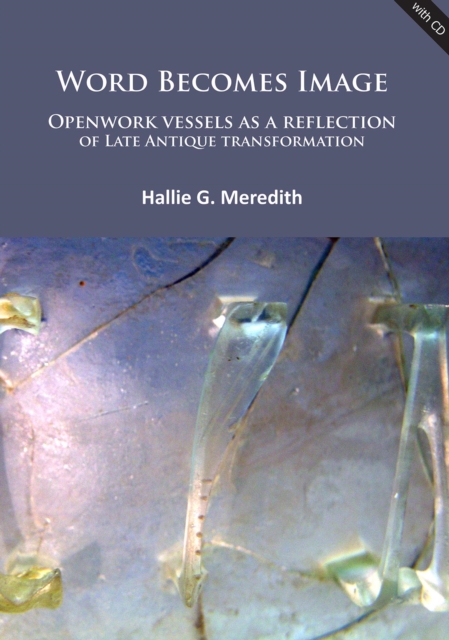
Word Becomes Image
Transformationpresents a diachronic investigation providing a rich case study as well as an approach tracing the contours of a category of Roman material culture defined by the Roman period technique of openwork carving. As the first comprehensive assemblage of openwork vessels from Classical to late Antiquity, this work offers primary evidence documenting a key example of the fundamental shift from naturalism to abstraction in which inscriptions are transformed and word becomes image. A glass blower herself, Hallie Meredith poses questions about process, tactility and reception providing a clear picture of the original contexts of production and reception demonstrated by the Roman technique of openwork carving. In an in-depth analysis of the corpus as a whole, typologies (old and new), imagery, geometric patterning and inscriptions as the major divisions among openwork decorative elements, basic design principles are identified, non openwork carving and its relation to openwork decoration are discussed, as are the function, handling, display, movement and provenance of openwork vessels throughout the Roman Empire. Art historians and archaeologists working on the transition from Classical to late Antiquity, as well as scholars focusing on these and later periods of study, can fruitfully apply this approach to visual culture. This work shows how openwork vessels are a reflection of a wide-reaching Roman cultural aesthetic.
eBook