
Catalogue Search | MBRL


Are you sure you want to remove the book from the shelf?

{{itemTitle}}
87,583
result(s) for
"Glaucoma"
Sort by:


Simplifying \target\ intraocular pressure for different stages of primary open-angle glaucoma and primary angle-closure glaucoma
Lowering of intraocular pressure is currently the only therapeutic measure for Glaucoma management. Many longterm, randomized trials have shown the efficacy of lowering IOP, either by a percentage of baseline, or to a specified level. This has lead to the concept of 'Target\" IOP, a range of IOP on therapy, that would stabilize the Glaucoma/prevent further visual field loss, without significantly affecting a patient's quality of life. A clinical staging of Glaucoma by optic nerve head evaluation and perimetric parameters, allows a patient's eye to be categorized as having - mild, moderate or severe Glaucomatous damage. An initial attempt should be made to achieve the following IOP range for both POAG or PACG after an iridotomy. In mild glaucoma the initial target IOP range could be kept as 15-17 mmHg, for moderate glaucoma 12-15 mmHg and in the severe stage of glaucomatous damage 10-12 mmHg. Factoring in baseline IOP, age, vascular perfusion parameters, and change on perimetry or imaging during follow up, this range may be reassessed over 6 months to a year. \"Target\" IOP requires further lowering when the patient continues to progress or develops a systemic disease such as a TIA. Conversely, in the event of a very elderly or sick patient with stable nerve and visual field over time, the target IOP could be raised and medications reduced. An appropriate use of medications/laser/surgery to achieve such a \"Target\" IOP range in POAG or PACG can maintain visual fields and quality of life, preventing Glaucoma blindness.
Journal Article
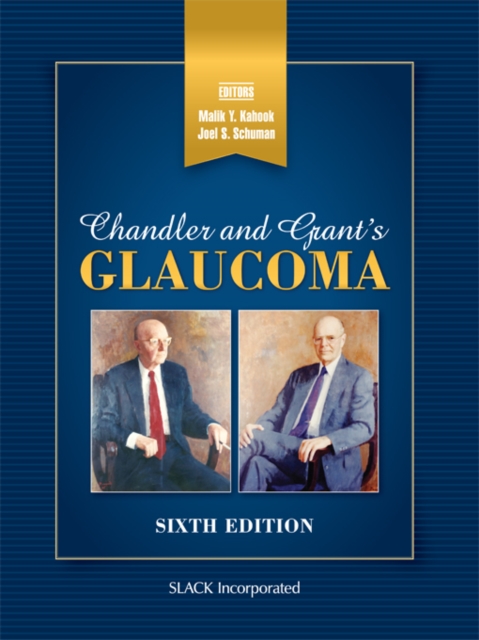
Chandler and Grant's Glaucoma: Sixth Edition
Chandler and Grant's Glaucoma-one of the field's seminal texts on the medical practice and surgical management of glaucoma, now in its Sixth Edition-includes the latest updates in an area that is currently experiencing a surge of innovation. Edited by Drs. Malik Y. Kahook and Joel S. Schuman and with teachings from the late Dr. David L. Epstein and more than 80 contributors, Chandler and Grant's Glaucoma, Sixth Edition brings together the experience of world-class glaucoma experts who belong to a long line of surgeons trained using the teachings of the original authors of this classic work. Each chapter has been meticulously edited and updated from the previous edition, while maintaining the well-established historical teachings of Drs. Paul A. Chandler and W. Morton Grant. New chapters on medical therapy as well as thorough updates on novel and minimally invasive approaches for the surgical management of glaucoma have been added. New topics and features in the Sixth Edition include: Advances in imaging of the optic nerve and retina, Rho-associated protein kinase (ROCK) inhibitors, Glaucoma and cerebrospinal fluid pressure and The US Food and Drug Administration's role in the development of new diagnostic and surgical devices for patients with glaucoma. Chandler and Grant's Glaucoma has been the most relevant and invaluable reference on glaucoma for generations of ophthalmologists.
eBook

Evaluating the long-term efficacy of short-duration 0.1 mg/ml and 0.2 mg/ml MMC in primary trabeculectomy for primary adult glaucoma
Objective
To evaluate safety and efficacy of 0.1 mg/ml versus 0.2 mg/ml mitomycin-C (MMC), applied for 1 min subconjunctivally, during trabeculectomy for primary adult glaucoma in previously un-operated eyes.
Materials and methods
This is a randomised controlled, non-inferior, clinical trial consisting of 50 consecutive POAG or CPACG patients uncontrolled on maximal hypotensive therapy, meeting all inclusion criteria. Patients were randomized into two groups and underwent a standard limbus-based trabeculectomy with MMC: Group I, 0.1 mg/ml and Group II, 0.2 mg/ml. The pre-operative and post-operative intraocular pressure (IOP), bleb morphology, and visual acuity were recorded every 6 months for 2 years. Complete success (primary outcome) was defined as IOP ≤ 15 mmHg without any additional medications at the end of 2 years.
Results
The average age of patients was 62.6 ± 9.8 years and 61.2 ± 8.1 years in Group 1 and 2, respectively;
p
= 0.57. The mean preoperative IOP was 22.5 ± 1.4 mmHg and 23.3 ± 1.8 mmHg;
p
= 0.10. The mean IOP at 2 years was 11.1 ± 1.6 mmHg and 10.8 ± 2.8 mmHg, a mean reduction in IOP of 50.6 ± 1.23 %, and 53.7 ± 2.25 % in Group I and II, respectively. The complete success was 92.0 % and 91.7 % in the two groups, respectively (
p
= 0.99), and there was one failure (Group II, post trauma). A wider bleb extent and larger areas of thin, transparent conjunctiva over the bleb were seen with the 0.2 mg/ml MMC group (
p
< 0.001) and in PACG eyes;
p
< 0.04.
Conclusion
A 1-min subconjunctival application of low dose 0.1 mg/ml MMC is non-inferior to 0.2 mg/ml and is probably a safer alternative, as thinning of the bleb is significantly less frequent in the long term.
Journal Article

European Glaucoma Society Terminology and Guidelines for Glaucoma, 5th Edition
ForewordThe only time is now. Every “now” is unique. Responsible persons ask themselves, “How can I act well now?” The answers will differ for every person, because just as every situation is unique, so is every person different from every other person. But surely there must be some algorithm that will assist us in coming to the right answer. Unfortunately, no, for there is no right answer. There is only an answer that is as appropriate as we can conclude at that moment in that situation. No written guidelines can apply appropriately to every unique situation.Unfortunately we physicians have been suckled on a fallacy: “What’s good for the goose is good for the gander.” Phrased in medical terms, “normal findings are good, and abnormal findings are bad.” This is too simple, and often wrong.Good clinicians know that care must be personalized for it to be optimal. So-called normal findings give rough guidance, sometimes applicable to groups, but frequently wrong for individuals. Consider intraocular pressure (IOP). A normal IOP of 15 mmHg good for some and bad for others, and an abnormal IOP of 30 mmHg is good for some and bad for others. We are so bombarded by the myth of the sanctity of the standard distribution curve that it is hard to think independently and specifically. Also, unfortunately, doctors are prone to decide for patients, often on the basis of normative data that is not relevant or important for the particular patient. That we do this is not surprising, as we want to help, and so we default to what seems to be the easy, safe (non-thinking) way, in which we do not have to hold ourselves accountable for the outcome.Somebody HAS to decide, or else we would be living in an anarchical world. Also true. And because none of us knows as much as we need to know to act appropriately, we seek advice from so-called “experts.”For us to care for people well it is essential that we consider what others recommend. So we look to experts, as we should. However, experts are sometimes right and sometimes wrong. Remember that von Graefe in 1860 recommended surgical iridectomy for all glaucoma, Elliot recommended mustard plaster between the shoulders for glaucoma, Becker based treatment on tonographic findings, Weve reported 100% success with penetrating cyclodiathermy in glaucoma, Lichter advised against laser trabeculoplasty, many thought Cypass was great, and the investigators in the Advanced Glaucoma Intervention Study indicated that an IOP usually around 12 mmHg was better than one usually around 20 mmHg. All wrong. What the authors of these guidelines have done excellently, is to provide a general framework on which ophthalmologists can hang pieces of evidence, so as to be able to evaluate the validity and the importance of that evidence. In doing this meticulously they have provided a valuable service to all ophthalmologists, none of whom individually have either the time or the skill to be fully informed. In their own practices the authors consider whether valid information is relevant for the particular person being considered. That process of considering relevance is essential, always. And relevance is based on the particular unique patient, unique doctor and unique situation. The only guideline the authors can provide in this regard is to remind us all to consider relevance with all patients in all situations, and from the patient’s perspective. Even more important than the service to ophthalmologists is the benefit to patients that will result from thoughtful use of these guidelines.We need, also, to remember that diagnoses are generic, and that within every diagnosis there are differences. For example what does a diagnosis of primary open angle mean? Some of those affected will rapidly go blind despite the most thoughtful treatment and others will keep their sight even without treatment. What does a diagnosis of Chandler’s Syndrome mean? In some, surgery works well, and, in others, poorly. So one never directs diagnosis and treatment at a condition, but rather at the person, the objective being the wellness of that person.The previous European Glaucoma Society Guidelines are used internationally. It is good that the EGS is again providing updated, useful information.The Guidelines are a practical, inspirational contribution.George L. Spaeth, BA, MD.Esposito Research Professor, Wills Eye Hospital/Sidney Kimmel Medical College/Thomas Jefferson Universitywww.eugs.orgThe Guidelines writers, authors and contributorsAugusto Azuara-Blanco (Editor)Luca BagnascoAlessandro BagnisJoao Barbosa BredaChiara BonzanoAndrei BrezhnevAlain BronCarlo A. CutoloBarbara CvenkelStefano GandolfiTed Garway HeathIlmira GazizovaGus GazzardFranz GrehnAnders HeijlCornelia HirnGábor HollóAnton HommerMichele IesterIngrida JanulevicieneGauti JóhannessonMiriam KolkoTianjing LiJosé Martínez de la CasaFrances Meier-GibbonsMaria MusolinoMarta PazosNorbert PfeifferSergey PetrovLuis Abegao PintoRiccardo ScottoIngeborg StalmansGordana SunaricMégevandErnst TammJohn ThygesenFotis TopouzisMarc Töteberg-HarmsCarlo E. Traverso (Editor)Anja TuulonenZoya VeselovskayaAnanth ViswanathanIlgaz YalvacThierry ZeyenGuidelines CommitteeAugusto Azuara-Blanco (Chair)Carlo E. Traverso (Co-chair)Manuele Michelessi (NGP Co-chair)Luis Abegao PintoMichele IesterJoao BredaCarlo A. CutoloPanayiota FountiGerhard GarhoeferAndreas KatsanosMiriam KolkoFrancesco OddoneMarta PazosVerena Prokosch-WillingCedric SchweitzerAndrew TathamMarc Toteberg-HarmsAcknowledgementsAnja TuulonenTed Garway HeathRichard WormaldTianjing LiManuele MichelessiJenny BurrAzuara-Blanco for their methodological oversight.Tianjing Li and Riaz Qureshi (US Cochrane Eye and Vision Group) and Manuele Michelessi (EGS) for leading the evidence review.Manuele MichelessiGianni VirgiliJoao Barbosa BredaCarlo A. CutoloMarta PazosAndreas KatsanosGerhard GarhoferMiriam KolkoVerena ProkoschPanayota FountiFrancesco OddoneAli Ahmed Al RajhiTianjing LiRiaz Qureshi and Azuara-Blanco for their contribution to the evidence review.Karen Osborn and Joanna Bradley from Glaucoma UK charity for their contribution to the section: ‘What matters to patients’ (https://glaucoma.uk)Additional contributions were made by the following people on specific topicsEleftherios AnastasopoulosPanayiota FountiGus GazzardFranz GrehnAnders HeijlGábor HollóFotis TopouzisAnja TuulonenAnanth ViswanathamThe team of Clinica Oculistica of the University of Genoa for medical editing and illustrationsLuca BagnascoAlessandro BagnisChiara BonzanoCarlo A. CutoloMichele LesterMaria MusolinoRoberta ParodiRiccardo ScottoWe would like to thank the following colleagues for their help in reviewing/editing section I.7. Landmark randomised controlled trials for glaucomaJoe CaprioliTed Garway Heath Gus Gazzard Divakar Gupta Anders Heijl Michael Kass Stefano Miglior David Musch Norbert Pfeiffer Thierry ZeyenExternal reviewsWe would like to thank the following societies and experts:World Glaucoma Association:Parul IchhpujaniMonisha NongpiurTanuj DadaSola OlawoyeJayme ViannaMin Hee SuhFarouk GarbaSimon SkalickyAlex HuangFarouk GarbaPradeep RamuluVerena ProkoschCarolina Gracitelli;American Glaucoma Society:Josh Stein;and Latin-American Glaucoma Society:Daniel GrigeraWe would like to thank the external reviewers whose comments are listed on https://www.eugs.org/eng/guidelines.aspThe EGS executive committeeTed Garway Heath (President)Fotis Topouzis (Vice President)Ingeborg Stalmans (Treasurer)Anja Tuulonen (Past President)Luis Abegao PintoAndrei BrezhnevAlain BronGauti JóhannessonNorbert PfeifferThe board of the European Glaucoma Society FoundationCarlo E. Traverso (Chair)Fotis Topouzis (Vice Chair)Franz GrehnAnders HeijlJohn ThygesenThierry ZeyenGlossary5-FU 5-fluorouracilAAC Acute angle closureACG Angle closure glaucomaAGIS Advanced glaucoma intervention studyAH Aqueous humourAI Artificial intelligenceALT Argon laser trabeculoplastyBAC Benzalkalonium chlorideCCT Central corneal thicknessCDR Cup to disc ratioCIGTS Initial glaucoma treatment studyCNTGS Collaborative normal tension glaucoma studyDCT Dynamic contour tonometryEAGLE Effectiveness of early lens extraction for the treatment of primary angle closure glaucomaEGPS European glaucoma prevention studyEGS European glaucoma societyEMA The european medicines agencyEMGT Early manifest glaucoma trialFC Flow chartFDT Frequency doubling technologyFC Fixed combinationFL Fixation lossesFN False negativesFP False positiveGAT Goldmann applanation tonometryGHT The glaucoma hemifield testGRADE Grading of recommendations, assessment, development and evaluationsHRT Heidelberg retina tomographyICE Irido-corneal endothelial syndromeIOL Intraocular lensIOP Intraocular pressureITC Iridotrabecular contactIV IntravenousLIGHT Laser in glaucoma and ocular hypertension trialLPI Laser peripheral iridotomyLV Loss varianceMD Mean defect or mean deviationMMC Mitomycin CNCT Non-contact tonometryNd:YAG Neodymium-doped yttrium aluminum garnetNTG Normal tension glaucomaOAG Open angle glaucomaOCT Optical coherence tomographyOHT Ocular hypertensionOHTS The ocular hypertension treatment studyONH Optic nerve headORA Ocular response analyserOSD Ocular surface diseasePAC Primary angle closurePACG Primary angle closure glaucomaPACS Primary angle closure suspectPAS Peripheral anterior synechiaePCG Primary congenital glaucomaPDS Pigment dispersion syndromePGA Prostaglandin analoguePOAG Primary open angle glaucomaPG Pigmentary glaucomaPSD Pattern standard deviationPXF Pseudoexfoliation syndromePXFG Pseudoexfoliation glaucomaRCT Randomised controlled trialRNFL Retinal nerve fiber layerRoP Rate of progressionSAP Standard automated perimetrySITA Swedish interactive threshold algorithmSLT Selective laser trabeculoplastySWAP Short-wavelength automated perimetryTLPI Thermal laser peripheral iridoplastyTM Trabecular meshworkUBM Ultrasound biomicroscopyUGH Uveitis-glaucoma-hyphema syndromeUKGTS United Kingdom glaucoma treatment studyVEGF Vascular endothelial grow
Journal Article

A Review of Neovascular Glaucoma: Etiology, Pathogenesis, Diagnosis, and Treatment
Neovascular glaucoma (NVG) is a rare, aggressive, blinding secondary glaucoma, which is characterized by neovascularization of the anterior segment of the eye and leading to elevation of the intraocular pressure (IOP). The main etiological factor is retinal ischemia leading to an impaired homeostatic balance between the angiogenic and antiangiogenic factors. High concentrations of vasogenic substances such as vascular endothelial growth factor (VEGF) induce neovascularization of the iris (NVI) and neovascularization of the angle (NVA) that limits the outflow of aqueous humor from the anterior chamber and increases the IOP. NVG clinical, if untreated, progresses from secondary open-angle glaucoma to angle-closure glaucoma, leading to irreversible blindness. It is an urgent ophthalmic condition; early diagnosis and treatment are necessary to preserve vision and prevent eye loss. The management of NVG requires the cooperation of retinal and glaucoma specialists. The treatment of NVG includes both control of the underlying disease and management of IOP. The main goal is the prevention of angle-closure glaucoma by combining panretinal photocoagulation (PRP) and antiangiogenic therapy. The aim of this review is to summarize the current available knowledge about the etiology, pathogenesis, and symptoms of NVG and determine the most effective treatment methods.
Journal Article

ECR-Paper-04 Genotype-phenotype correlation of CYP1B1 variants
Mutations in the CYP1B1 gene cause autosomal recessive primary congenital glaucoma (PCG) and are the most frequently identified genetic cause of PCG with a prevalence of up to 86% in some populations. Biallelic pathogenic variants in CYP1B1 are also associated with juvenile and adult-onset glaucoma, Peters anomaly, Axenfeld-Rieger syndrome and other anterior segment dysgeneses (ASD).We identified 21 unique CYP1B1 variants among a cohort of 17 unrelated families at a single tertiary referral centre in the UK. Of these, three were novel variants. These were combined with 213 additional coding variants reported in the literature for further analysis.Of 234 variants, 60.3% are associated with PCG alone, 7.7% are associated with juvenile and/or adult-onset glaucoma and 1.7% are associated with ASD alone. The other 30.3% are associated with multiple different phenotypes. All frameshift and nonsense variants are associated with either PCG or ASD; juvenile and adult-onset glaucoma are associated with more missense variants (24.4%) than those causing premature termination codons (8.6%). Peters anomaly was associated with 14 unique CYP1B1 variants, more than any other ocular developmental condition. There is phenotypic variation within families with the same CYP1B1 genotype, indicating that other modulating factors contribute to the development of CYP1B1-related disease. Further work is needed to elicit the mechanisms by which these modulating factors act, to enhance the development of targeted treatments for these sight-threatening conditions.
Journal Article