
Catalogue Search | MBRL


Are you sure you want to remove the book from the shelf?

{{itemTitle}}
268,663
result(s) for
"Globalization"
Sort by:


All Politics Is Global
Has globalization diluted the power of national governments to regulate their own economies? Are international governmental and nongovernmental organizations weakening the hold of nation-states on global regulatory agendas? Many observers think so. But in All Politics Is Global, Daniel Drezner argues that this view is wrong. Despite globalization, states--especially the great powers--still dominate international regulatory regimes, and the regulatory goals of states are driven by their domestic interests. As Drezner shows, state size still matters. The great powers--the United States and the European Union--remain the key players in writing global regulations, and their power is due to the size of their internal economic markets. If they agree, there will be effective global governance. If they don't agree, governance will be fragmented or ineffective. And, paradoxically, the most powerful sources of great-power preferences are the least globalized elements of their economies. Testing this revisionist model of global regulatory governance on an unusually wide variety of cases, including the Internet, finance, genetically modified organisms, and intellectual property rights, Drezner shows why there is such disparity in the strength of international regulations.
eBook


Globalisation: The physics landscape today
This paper discusses how physics has become globalised in the context of the Oxford Department of Physics and its permanent academic staff over the period from 1987 to 2017. Modern émigrés move to new institutions for scientific opportunities and a physicist will typically work in several over the course of their career.
Journal Article
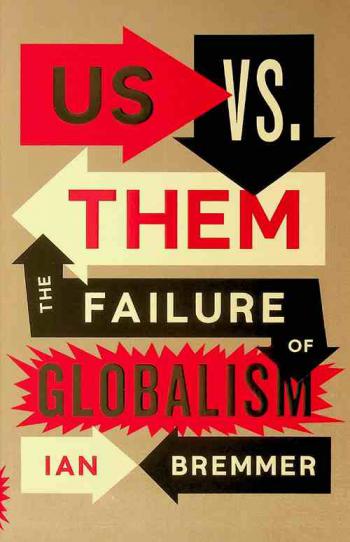
Us vs. them : the failure of globalism
\"From bestselling author and TIME Magazine columnist Ian Bremmer, a definitive guide to understanding the global wave of populist nationalism. From political upheaval in Europe and the United States to an explosion of anger in the developing world, social and political turmoil has dominated recent headlines. What explains public rejection of the entire political establishment in country after country? What does this mean for the future of the United States? For the European Union? How will rising powers like China, India, and Russia manage the building pressures? How high will this wave rise before it crashes? Globalism has winners and losers, and today's globalist administrations have failed to listen to the losers. Those who have seen their jobs disappear as a result of increased immigration and relatively open trade are understandably unsympathetic to the claims that globalism is good for everyone. And now that technology gives the losers a glimpse of the winners' slice of the pie, the losers are pushing for a more equal share. Some governments will respond to these pressures with digital-age tools of repression. Others will find creative new ways to rewrite the contract that binds citizens and the state. What does this all mean for democracy, free trade, and the future of the international order? No one is better suited to explore these questions than Ian Bremmer, who has built his career on assessing global risk and explaining complex political dynamics in accessible terms. Bremmer argues that the globalists have failed to respond to the real concerns of their critics and that there is no chance for a do-over; Public demand for political transformation is inevitable. Citizens, the state, and the private sector in some parts of the world will invent and adapt. Other nations will fail. This book offers a guide to navigating the shifting political landscape and weathering the growing storm\"-- Provided by publisher.
Book


Globalization : what it is and how it works
\"Describes the concept of globalization and how it affects people's lives today and in the future\"-- Provided by publisher.
Book

ECONOMIC GLOBALIZATION – DIMENSIONS AND HISTORICAL PERSPECTIVES
In this paper, we approach a chronological analysis of globalization from an economic dimension. We know this term of globalization has become increasingly used since the 1990s. The phenomenon of globalization as well as its effects are subject to many analyzes quantifying both the socio-economic advantages and disadvantages. However, far fewer have focused on a historical analysis of economic globalization. Starting from the definition of globalization - a process by which economies become more and more interconnected and interdependent – can we assert that globalization has its origins in the mists of history with the occurrence and development of the silk road? Although there are many opinions about when globalization began, we believe that based on the arguments presented in this research, the trade routes created during the Silk Road represent an important moment in the history and beginnings of globalization. Throughout history, socio-economic events such as the first industrial revolution and the current digital revolution have led to the evolution of trade routes and the emergence of new technologies that have transformed the nature of trade.
Journal Article

