
Catalogue Search | MBRL


Are you sure you want to remove the book from the shelf?

{{itemTitle}}
14,753
result(s) for
"Globalization - History"
Sort by:
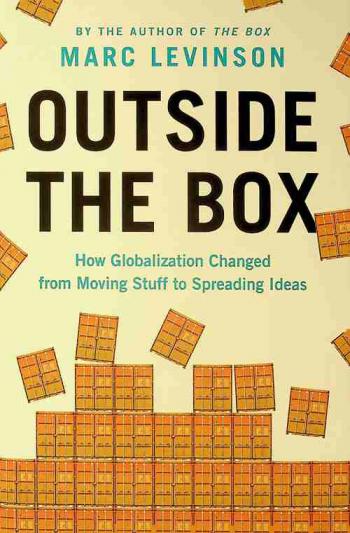
Outside the box : how globalization changed from moving stuff to spreading ideas
\"Marc Levinson offers a brief history of globalization through the stories of the fascinating people and companies that built global supply chains. In Small World he will follow the thread of the balance between people in the private sector pursuing new ways to make goods and do business and governments eliminating barriers. These two spheres-the private sector and government-did not go global in tandem, and many developments in one sphere were far more impactful in the other than imagined at the time. The book will narrate the development of global supply chains in response to trends in both, telling stories ranging from a Prussian-born trader in New Jersey in the 1760s who dreamed of building a vertically-integrated metals empire, to new megaships too big to call on most of the world's ports leaving half empty, as globalization entered a new stage in its history around 2006. Bringing the story up to the present, Levinson engagingly illustrates how we're not experiencing the end of globalization, only its transformation. As one type of globalization is declining, a new one is on the rise\"-- Provided by publisher.

Biennials, Triennials, and documenta : the exhibitions that created contemporary art
This innovative new history examines in-depth how the growing popularity of large-scale international survey exhibitions, or 'biennials', has influenced global contemporary art since the 1950s.
* Provides a comprehensive global history of biennialization from the rise of the European star-curator in the 1970s to the emergence of mega-exhibitions in Asia in the 1990s
* Introduces a global array of case studies to illustrate the trajectory of biennials and their growing influence on artistic expression, from the Biennale de la Méditerranée in Alexandria, Egypt in 1955, the second Havana Biennial of 1986, New York's Whitney Biennial in 1993, and the 2002 Documenta11 in Kassel, to the Gwangju Biennale of 2014
* Explores the evolving curatorial approaches to biennials, including analysis of the roles of sponsors, philanthropists and biennial directors and their re-shaping of the contemporary art scene
* Uses the history of biennials as a means of illustrating and inciting further discussions of globalization in contemporary art
eBook


Contemporary Art and the Cosmopolitan Imagination
Contemporary Art and the Cosmopolitan Imagination explores the role of art in conceiving and reconfiguring the political, ethical and social landscape of our time. Understanding art as a vital form of articulation, Meskimmon argues that artworks do more than simply reflect and represent the processes of transnational and transcultural exchange typical of the global economy. Rather, art can change the way we imagine, understand and engage with the world and with others very different than ourselves. In this sense, art participates in a critical dialogue between cosmopolitan imagination, embodied ethics and locational identity.
The development of a cosmopolitan imagination is crucial to engendering a global sense of ethical and political responsibility. By materialising concepts and meanings beyond the limits of a narrow individualism, art plays an important role in this development, enabling us to encounter difference, imagine change and make possible the new. This book asks what it means to inhabit a globalized world – how we might literally and figuratively make ourselves cosmopolitans, ‘at home’ everywhere. Contemporary art provides a space for this enquiry.
Contemporary Art and the Cosmopolitan Imagination is structured and written through four ‘architectonic figurations’ – foundation, threshold, passage and landing – which simultaneously reference the built environment and the transformative structure of knowledge-systems. It offers a challenging new direction in the current literature on cosmopolitanism, globalisation and art.
List of Illustrations List of Plates Introduction. Contemporary art: at home in a global world Chapter 1. Foundation – dynamic ground Chapter 2. Threshold – infinite generosity Chapter 3. Passage – transitive affects Chapter 4. Landing – imaginative engagement Afterword On Affirmative Criticality Selected Bibliography Index
Dr. Marsha Meskimmon is Professor of Modern and Contemporary Art History and Theory at the University of Loughborough, UK. Her research centres on the work of women artists and expanded theoretical and critical perspectives on aesthetics, history and gendered subjectivity. She has authored a number of books and journal articles, including Women Making Art: History, Subjectivity, Aesthetics (2003) and We Weren’t Modern Enough: Women Artists and the Limits of German Modernism (1999).
eBook

The nation state and beyond : governing globalization processes in the nineteenth and early twentieth centuries
This book show that looking at the nation state from the perspective of global entanglements allows its interpretation as a dynamic and multi-layered structure that takes part in globalization processes, and plays various and at times even contradictory roles.
Book

Global Inequality and American Foreign Policy in the 1970s
In Global Inequality and American
Foreign Policy in the 1970s , Michael
Franczak demonstrates how Third World solidarity around the New
International Economic Order (NIEO) forced US presidents from
Richard Nixon to Ronald Reagan to consolidate American hegemony
over an international economic order under attack abroad and
lacking support at home. The goal of the nations that
supported NIEO was to negotiate a redistribution of money and power
from the global North to the global South. Their weapon was control
over the major commodities-in particular oil-that undergirded the
prosperity of the United States and Europe after World War II.
Using newly available archival sources, as well as interviews
with key administration officials, Franczak reveals how the NIEO
and \"North-South dialogue\" negotiations brought global inequality
to the forefront of US national security. The challenges posed by
NIEO became an inflection point for some of the greatest economic,
political, and moral crises of 1970s America, including the end of
golden age liberalism and the return of the market, the splintering
of the Democratic Party and the building of the Reagan coalition,
and the rise of human rights in US foreign policy in the wake of
the Vietnam War. The policy debates and decisions toward the NIEO
were pivotal moments in the histories of three ideological
trends-neoliberalism, neoconservatism, and human rights-that formed
the core of America's post-Cold War foreign policy.
eBook

Explorations in history and globalization
\"Considers the ways in which the 'global turn' is changing the theory and practice of historical disciplines and engages with the concept and methodology of globalization\"--Provided by the publisher.
Book

The great interwar crisis and the collapse of globalization
Challenging the standard narrative of Interwar International History, this account establishes the causal relationship between the global political and economic crises of the period, and offers a radically new look at the role of ideology, racism and the leading liberal powers in the events between the First and Second World Wars.
eBook

A movable feast : ten millennia of food globalization
\"This book, based largely on The Cambridge World History of Food, provides a look at the globalization of food from the days of the hunter-gatherers to present-day genetically modified plants and animals. The establishment of agriculture and the domestication of animals in Eurasia, Africa, the Pacific, and the Americas are all treated in some detail along with the subsequent diffusion of farming cultures through the activities of monks, missionaries, migrants, imperialists, explorers, traders, and raiders.\"--BOOK JACKET.
Book

Civilizing nature
National parks are one of the most important and successful institutions in global environmentalism. Since their first designation in the United States in the 1860s and 1870s they have become a global phenomenon. The development of these ecological and political systems cannot be understood as a simple reaction to mounting environmental problems, nor can it be explained by the spread of environmental sensibilities. Shifting the focus from the usual emphasis on national parks in the United States, this volume adopts an historical and transnational perspective on the global geography of protected areas and its changes over time. It focuses especially on the actors, networks, mechanisms, arenas, and institutions responsible for the global spread of the national park and the associated utilization and mobilization of asymmetrical relationships of power and knowledge, contributing to scholarly discussions of globalization and the emergence of global environmental institutions and governance.
eBook