
Catalogue Search | MBRL


Are you sure you want to remove the book from the shelf?

{{itemTitle}}
494
result(s) for
"Globalization -- Social aspects -- China"
Sort by:


Walking Between Slums and Skyscrapers
The book is concerned with the effects of globalization on living space (I.e. the space of everyday life), focusing specifically on East Asian metropolises, such as Hong Kong, Tokyo, and Shanghai. Globalization has given rise to accessible catch-phrases s
eBook

China's dream : the culture of Chinese communism and the secret sources of its power
\"The Communist Party of China is one of the great political forces of modern times. In charge of the destiny of a fifth of humanity, it survives despite the collapse of similar systems elsewhere. Few however understand the sources of this resilience, or, for that matter, what the Party itself stands for is the first book to explore the Communist Party as a cultural, rather than a political, entity. It looks at the narratives the Party has created to recount its own history, with the moral story about national rejuvenation and renaissance that these encode. It does not shy away from the thorny issue of how a Party under Mao Zedong, one associated with self-sacrifice, collectivist effort and anti-individualism, came to pragmatically embrace market capitalism and a new ethics. Here self-development and the space we now call Deep China, the China of individual Chinese people's lives outside the bounds of politics, sit beside the maintenance of state and party control over key areas of public life. The tensions to which this gives rise have resulted in a crisis of values, which is now being addressed - with very mixed results - by the CCP. Drawing on his extensive knowledge of contemporary China, Kerry Brown takes us on a unique and fascinating journey through the least understood aspect of China today - not the great economic revolution in the material world, but the deep cultural revolution already underway in Chinese people's daily lives\"-- Provided by publisher.
Book

Shanghai Rising
This collection places Shanghai’s unprecedented rise in a rare comparative examination of U.S. cities, as well as with Asian megacities Singapore and Hong Kong, providing a nuanced account of how Shanghai’s politics, economy, society, and space have been transformed by macro- and micro-level forces.
eBook

Communication, public opinion, and globalization in urban China
\"As China is increasingly integrated into the processes of economic, political, social, and cultural globalization, important questions arise about how Chinese people perceive and evaluate such processes. At the same time, international communication scholars have long been interested in how local, national, and transnational media communications shape people's attitudes and values. Combining these two concerns, this book examines a range of questions pertinent to public opinion toward globalization in urban China: To what degree are the urban residents in China exposed to the influences from the outside world? How many transnational social connections does a typical urban Chinese citizen have? How often do they consume foreign media? To what extent are they aware of the notion of globalization, and what do they think about it? Do they believe that globalization is beneficial to China, to the city where they live, and to them personally? How do people's social connections and communication activities shape their views toward globalization and the outside world? This book tackles these and other questions systematically by analyzing a four-city comparative survey of urban Chinese residents, demonstrating the complexities of public opinion in China. Media consumption does relate, though by no means straightforwardly, to people's attitudes and beliefs, and this book provides much needed information and insights about Chinese public opinion on globalization. It also develops fresh conceptual and empirical insights on issues such as public opinion toward US-China relations, Chinese people's nationalistic sentiments, and approaches to analyze attitudes toward globalization\"-- Provided by publisher.
Book
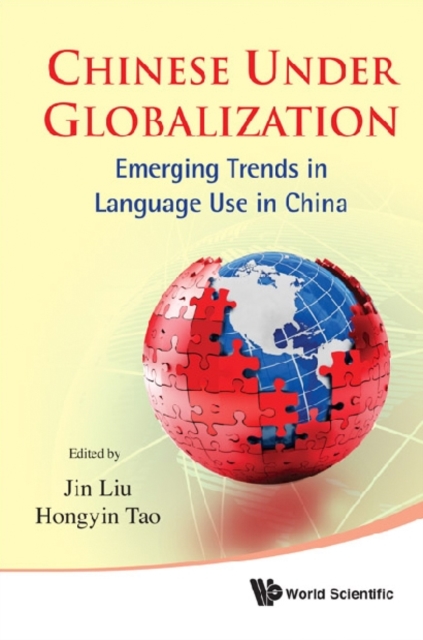
Chinese under globalization
As China experiences tremendous economic and social transformation in the reform years, language use in China has also undergone remarkable changes in the past couple decades: the national obsession with learning the global English, which becomes both a resource for modernization and a source of contention; the expanding use of local languages and dialects in mass media, where standard Mandarin is promoted and legally prescribed as the principal language; the emergence of the Internet language that has become a creative source for constructing a distinct youth identity; the Cantonese writing movement that challenges the hegemony of the Chinese writing system, which is traditionally based on northern Mandarin, to name a few. The nine papers collected in this volume examine recent trends in language use in mainland China, and the associated social, economic, political, and cultural manifestations. Drawing on their backgrounds and expertise in sociolinguistics, cognitive linguistics, linguistic anthropology, and cultural studies, the authors offer interdisciplinary, insightful, and critical analysis of linguistic struggles and linguistic politics in contemporary China.
eBook

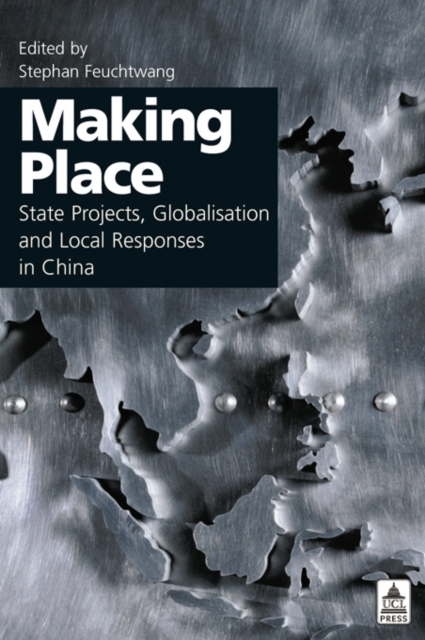
Making Place
To make a place is to create a location where its creators can feel they belong. Processes of place-making are still very much ongoing today. Geographers, sociologists, political scientists and philosophers of advanced capitalism have said that place is a localisation of the global. However, the creation of a place is not legible from such grand perspectives. It is also much more creative than can be predicted by translating large-scale processes into local cultures.
Anthropologists have been sensitive to the intimate, tragic and lyrical senses of local place. But their theorising has been too much bound up with cosmology and insufficiently with the intermediate scales of state and local state.
In this book, Stephan Feuchtwang and his contributors offer a set of historical, anthropological and scale-mediated studies from China - a country that includes a subcontinental variety of cultures and landscapes. In the twentieth century it experienced collapse in civil war and was then reasserted as a particularly strong state. Now it is managing the fastest growing capitalist economy in the world. These intriguing Chinese studies contribute to the anthropology of place and space, providing an historical perspective on processes of change and of accommodation to disruption.
The stories they tell are fascinating in their own right, but in addition, the result is a critical reformulation of previous theories of place that geographers, philosophers, historians, and anthropologists will find of great interest.
eBook

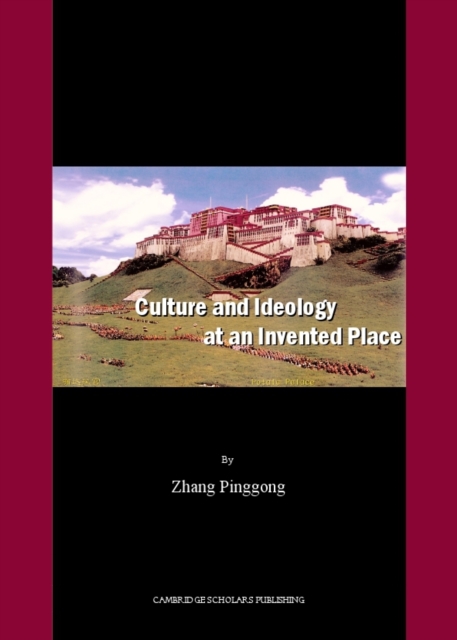
Culture and Ideology at an Invented Place
Being a special kind of landscape, the theme park has become one of major subjects in interdisciplinary studies and received increasing scholarly attention in the past few decades. Perspectives have varied from American approaches which treat the theme park as the production base of the American Dream to various interpretation of the tourist space in semiotic, structural and post-modernistic approaches. Other studies of the theme park have been conducted in a practical way with a focus in eco.
eBook