
Catalogue Search | MBRL


Are you sure you want to remove the book from the shelf?

{{itemTitle}}
586
result(s) for
"Globalization Economic aspects China."
Sort by:


China's Regulatory State
Today's China is governed by a new economic model that marks a radical break from the Mao and Deng eras; it departs fundamentally from both the East Asian developmental state and its own Communist past. It has not, however, adopted a liberal economic model. China has retained elements of statist control even though it has liberalized foreign direct investment more than any other developing country in recent years. This mode of global economic integration reveals much about China's state capacity and development strategy, which is based on retaining government control over critical sectors while meeting commitments made to the World Trade Organization.
InChina's Regulatory State, Roselyn Hsueh demonstrates that China only appears to be a more liberal state; even as it introduces competition and devolves economic decisionmaking, the state has selectively imposed new regulations at the sectoral level, asserting and even tightening control over industry and market development, to achieve state goals. By investigating in depth how China implemented its economic policies between 1978 and 2010, Hsueh gives the most complete picture yet of China's regulatory state, particularly as it has shaped the telecommunications and textiles industries.
Hsueh contends that a logic of strategic value explains how the state, with its different levels of authority and maze of bureaucracies, interacts with new economic stakeholders to enhance its control in certain economic sectors while relinquishing control in others. Sectoral characteristics determine policy specifics although the organization of institutions and boom-bust cycles influence how the state reformulates old rules and creates new ones to maximize benefits and minimize costs after an initial phase of liberalization. This pathbreaking analysis of state goals, government-business relations, and methods of governance across industries in China also considers Japan's, South Korea's, and Taiwan's manifestly different approaches to globalization.
eBook


Contagious capitalism
One of the core assumptions of recent American foreign policy is that China's post-1978 policy of \"reform and openness\" will lead to political liberalization. This book challenges that assumption and the general relationship between economic liberalization and democratization. Moreover, it analyzes the effect of foreign direct investment (FDI) liberalization on Chinese labor politics.
eBook


Marginalisation in China
Economic transition in China has witnessed (re)centralization of resources from the margin to the core in economic, social and political senses. This book employs a marginalization lens to reveal, delineate and better understand the processes, patterns, trends, multiple dimensions and dynamics of the phenomenon, and the consequences and implications for development and well-being in the country. Bringing together a wide range of domestic and international experts and disciplinary perspectives, the book combines empirical research and conceptual analysis to provide an insightful overview of China's recent development. It contributes to the debate over marginalization and its interactions with globalization and transition in China, and has significance for various domestic and international policy arenas in respect of tackling marginalization, poverty and social exclusion effectively while striving for the achievement of the UN Millennium Development Goals in China and beyond.
eBook

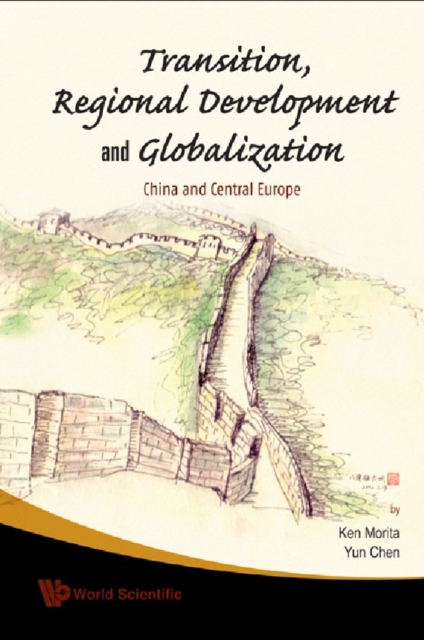
Transition, regional development and globalization
Since the end of the Cold War, developing a better framework to correctly recognize which direction globalization and the transition will take us has been necessary. The transition economies of China and Central Europe, in particular, hold significant implications for East Asian integration and EU enlargement, respectively. This book examines the processes of transition, regional development and globalization, focusing on China and Central Europe, and seeks to identify a new and stable international framework with improved outcomes for all.
eBook

The end of copycat China : the rise of creativity, innovation, and individualism in Asia
The End of Copycat China helps business executives and investors understand how China's economy is shifting from one based on heavy investment to one on services and consumption by providing insight that help shape effective strategy. Drawing from over 50,000 interviews with entrepreneurs, venture capitalists, private equity investors, private Chinese companies, and multinationals, this book describes how Chinese firms are increasingly focused on innovation rather than copying what worked in America and how consumers are evolving with their hopes, dreams and aspirations. China's growth model of the last three decades is becoming increasingly ineffective, as relying on heavy investment and exports is becoming less and less feasible. Fifty percent of China's growth in 2013 stemmed from consumption, the government is establishing a Free Trade zone in Shanghai and ending the dominance of state-owned enterprises. This book provides a roadmap for companies and investors looking to navigate these changes and capture emerging trends, with deep insight and practical guidance on what innovation looks like in the new China.
Book
The end of copycat China
The End of Copycat China helps business executives and investors understand how China's economy is shifting from one based on heavy investment to one on services and consumption by providing insight that help shape effective strategy. Drawing from over 50,000 interviews with entrepreneurs, venture capitalists, private equity investors, private Chinese companies, and multinationals, this book describes how Chinese firms are increasingly focused on innovation rather than copying what worked in America and how consumers are evolving with their hopes, dreams and aspirations. China's growth model of the last three decades is becoming increasingly ineffective, as relying on heavy investment and exports is becoming less and less feasible. Fifty percent of China's growth in 2013 stemmed from consumption, the government is establishing a Free Trade zone in Shanghai and ending the dominance of state-owned enterprises. This book provides a roadmap for companies and investors looking to navigate these changes and capture emerging trends, with deep insight and practical guidance on what innovation looks like in the new China
eBook