
Catalogue Search | MBRL


Are you sure you want to remove the book from the shelf?

{{itemTitle}}
4,267
result(s) for
"Glue"
Sort by:

Ultimate slime : totally borax free!
The Instagram star presents Borax-free recipes for making slime that feature a variety of color and textures, including bubbly, soft serve, gem, glitter, and jiggly slime.
Book

SEM Analysis of Glued Joints of Thermally Modified Wood Bonded with PUR and PVAc Glues
This study deals with the scanning electron microscopy (SEM) analyses of the phase interfaces in the glued joints between Norway spruce wood elements thermally modified at 160, 180, 200, and 220 °C/4 h and polyurethane (PUR) and polyvinyl acetate (PVAc) glues with the aim of evaluating various anatomical influences of wood on the quality of joints. Due to cracked regions created in the surface of spruce wood at severe thermal modifications, the penetration depth of glues doubled from 140 to 241 μm for PUR glue, and from 100 to 200 μm for PVAc glue. The thickness of glue lines in joints was apparently higher for PVAc glue, mainly in earlywood regions; however, in joints from thermally modified (TM) woods it increased more apparently for PUR glue from 16.6 to 44.4 μm, probably in connection with formation of micro-bubbles in its structure. The SEM analyses corresponded well with the previous knowledge about lower shear strength of glued joints formed from the more intensively TM spruce elements and mentioned types of glues.
Journal Article

101 Kids activities that are the ooey, gooey-est ever! : nonstop fun with DIY slimes, doughs and moldables
\"Let your creativity and your imagination soar with these colorful, crazy-fun recipes for slime, dough, clay, foam, mud and more. Create amazing concoctions like Fake Snow, Color-Changing Slime and Glow-in-the-Dark Dough. Dig your fingers into Glowing Magic Mud, Shaving Cream Dough and Kool-Aid Foam. Or, if you're brave enough, squeeze the Spider Egg Sack Slime or the Frog's Vomit Slime--eek! There are even some special slimes that you can eat like Gummy Worm Slime, Pudding Slime and Cookie Dough Dough. With 101 super cool activities (that are also super easy to clean up), you can try them all! From the bestselling authors of 101 Kids Activities, 101 Coolest Simple Science Experiments and Adorkable Bubble Bath Crafts, this book is full of exciting and fantastical recipes that include tips on the science behind the goo, so you can learn too! Whether it's a slime, a dough or some other moldable creation, you'll be able to create and become whatever your imagination dreams up!\"-- Publisher's description.
Book

The CDK inhibitor CR8 acts as a molecular glue degrader that depletes cyclin K
Molecular glue compounds induce protein–protein interactions that, in the context of a ubiquitin ligase, lead to protein degradation
1
. Unlike traditional enzyme inhibitors, these molecular glue degraders act substoichiometrically to catalyse the rapid depletion of previously inaccessible targets
2
. They are clinically effective and highly sought-after, but have thus far only been discovered serendipitously. Here, through systematically mining databases for correlations between the cytotoxicity of 4,518 clinical and preclinical small molecules and the expression levels of E3 ligase components across hundreds of human cancer cell lines
3
–
5
, we identify CR8—a cyclin-dependent kinase (CDK) inhibitor
6
—as a compound that acts as a molecular glue degrader. The CDK-bound form of CR8 has a solvent-exposed pyridyl moiety that induces the formation of a complex between CDK12–cyclin K and the CUL4 adaptor protein DDB1, bypassing the requirement for a substrate receptor and presenting cyclin K for ubiquitination and degradation. Our studies demonstrate that chemical alteration of surface-exposed moieties can confer gain-of-function glue properties to an inhibitor, and we propose this as a broader strategy through which target-binding molecules could be converted into molecular glues.
The cyclin-dependent kinase inhibitor CR8 acts as a molecular glue compound by inducing the formation of a complex between CDK12–cyclin K and DDB1, which results in the ubiquitination and degradation of cyclin K.
Journal Article

The slime book
Play, poke, push, pull, and pop over 30 slime recipes, all of which use inexpensive, accessible, and safe everyday products.
Book

Meta-analysis of randomized trials comparing nonpenetrating vs mechanical mesh fixation in laparoscopic inguinal hernia repair
Evidence for open groin hernia repair demonstrates less pain with bioglue mesh fixation compared with invasive methods. This study aimed to assess the short- and long-term effects of laparoscopic groin hernia repair with noninvasive and invasive mesh fixation.
A systematic review of MEDLINE, CENTRAL, and OpenGrey was undertaken. Randomized trials assessing the outcome of laparoscopic groin hernia repair with invasive and noninvasive fixation methods were considered for data synthesis. Nine trials encompassing 1,454 patients subjected to laparoscopic hernia repair with mesh fixation using biologic or biosynthetic glue were identified. Short-term data were inadequate for data synthesis. Chronic pain was less frequently reported by patients subjected to repair with biologic glue fixation than with penetrating methods (odds ratio .46, 95% confidence interval .22 to .93). Duration of surgery, incidence of seroma/hematoma, morbidity, and recurrence were similar.
Laparoscopic groin hernia repair with bioglue mesh fixation was associated with a reduced incidence of chronic pain compared with mechanical fixation, without increasing morbidity or recurrence. Longer term data on recurrence are necessary.
•Bioglue has recently emerged as an alternative means of mesh fixation in open and laparoscopic groin hernia repair.•Synthesis of data suggests that this method reduces chronic postoperative pain, without increasing morbidity or recurrence.•Longer term data on recurrence are needed.
Journal Article
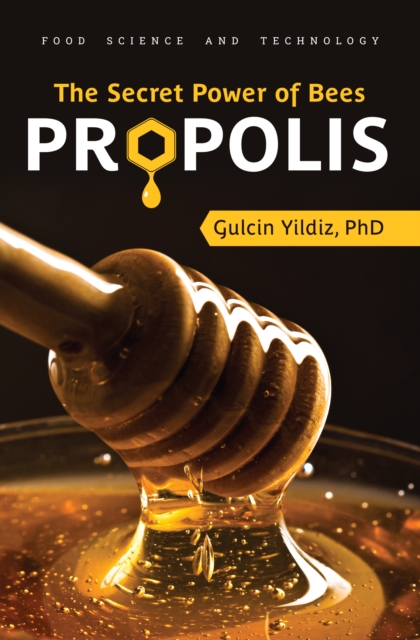
Secret Power of Bees: Propolis
Today, with the understanding of the importance of functional natural products, the interest of people in these products and the increase in the use of these products have caused scientists to diversify their research on these issues. Propolis, which is used for defense and hygiene in beehives, is also known as bee glue. Especially in recent years, the effects of propolis in the treatment and prevention of cancer, which is an important disease, draw attention. Raw propolis is not suitable for use without processing due to its low solubility in water. For this reason, propolis is made suitable for use by using food processing methods. In this book, plant-based propolis sources, propolis production and processing, structural properties (physical and chemical) of propolis, its biological activities (antioxidant, antibacterial, antifungal and antiviral effects), its usage types and areas and its use in food technology with the benefits and disadvantages of propolis are mentioned.
eBook

Glue Strips Measurement and Breakage Detection Based on YOLOv11 and Pixel Geometric Analysis
With the rapid development of the new energy vehicle industry, the quality control of battery pack glue application processes has become a critical factor in ensuring the sealing, insulation, and structural stability of the battery. However, existing detection methods face numerous challenges in complex industrial environments, such as metal reflections, interference from heating film grids, inconsistent orientations of glue strips, and the difficulty of accurately segmenting elongated targets, leading to insufficient precision and robustness in glue dimension measurement and glue break detection. To address these challenges, this paper proposes a battery pack glue application detection method that integrates the YOLOv11 deep learning model with pixel-level geometric analysis. The method first uses YOLOv11 to precisely extract the glue region and identify and block the heating film interference area. Glue strips orientation correction and image normalization are performed through adaptive binarization and Hough transformation. Next, high-precision pixel-level measurement of glue strip width and length is achieved by combining connected component analysis and multi-line statistical strategies. Finally, glue break and wire drawing defects are reliably detected based on image slicing and pixel ratio analysis. Experimental results show that the average measurement errors in glue strip width and length are only 1.5% and 2.3%, respectively, with a 100% accuracy rate in glue break detection, significantly outperforming traditional vision methods and mainstream instance segmentation models. Ablation experiments further validate the effectiveness and synergy of the modules. This study provides a high-precision and robust automated detection solution for glue application processes in complex industrial scenarios, with significant engineering application value.
Journal Article

Exploring green environmental composites as hosts for shielding materials using experimental, theoretical and Geant4 simulation methods
Rice straw is considered an agricultural waste harmful to the environment, which is abundant in most parts of the world. From this point, the present study is devoted to preparing new composites of two types of glue based on rice straw as a plentiful, low-cost matrix. Straw glue samples were prepared by mixing 20% wt. of rice straw with 80% wt. of animal glue (RS-An) and polyvinyl acetate (RS-PVA
C
) at different thicknesses of 1, 2, and 3 cm. The chemical composition of the prepared samples was identified by energy dispersive X-ray analysis and their morphology was examined using a scanning electron microscope. The mechanical test explored that RS-An and RS-PVA
C
respectively required a stress of 25.2 and 25.5 MPa before reaching the breaking point. γ-ray shielding performance was analyzed and determined at numerous photon energies from 0.059 to 1.408 MeV emitted from five-point γ-rays sources using NaI (Tl). Linear attenuation coefficient was calculated by obtaining the area under the peak of the energy spectrum observed from Genie 2000 software in the presence and absence of the sample. The experimental results of mass attenuation coefficient were compared with theoretical data of XCOM software with relative deviation ranging from 0.10 to 2.99%. Geant4 Monte Carlo simulation code was also employed to validate the experimental results. The relative deviation of XCOM and Geant4 outcomes was 0.09–1.77%, which indicates a good agreement between them. Other radiation shielding parameters such as half value layer (HVL), tenth value layer, and mean free path were calculated in three ways: experimentally, theoretically from the XCOM database, and by simulation using Geant4 code. Additionally, effective atomic number (Z
eff
), effective atomic number (N
eff
), equivalent atomic number (Z
eq
), and buildup factors were evaluated. It was confirmed that the γ-ray shielding properties were further boosted by mixing rice straw with the animal glue compared to the synthetic one.
Journal Article
