
Catalogue Search | MBRL


Are you sure you want to remove the book from the shelf?

{{itemTitle}}
21
result(s) for
"Goddesses, Roman History"
Sort by:
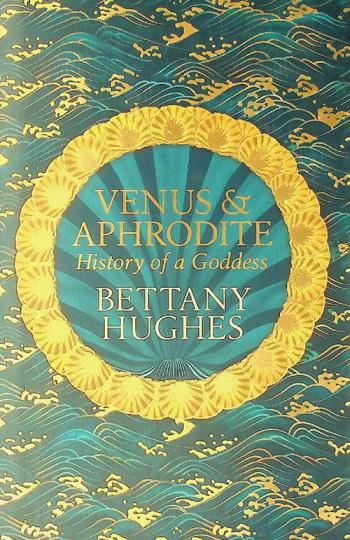
Venus & Aphrodite : history of a goddess
Through ancient art, evocative myth, exciting archaeological revelations and philosophical explorations Bettany Hughes shows why this immortal goddess endures through to the twenty-first century, and what her journey through time reveals about what matters to us as humans. Charting Venus's origins in powerful ancient deities, Bettany demonstrates that Venus is far more complex than first meets the eye. Beginning in Cyprus, the goddess's mythical birthplace, Bettany decodes Venus's relationship to the Greek goddess Aphrodite, and, in turn, Aphrodite's mixed-up origins both as a Cypriot spirit of fertility and procreation - but also, as a descendant of the prehistoric war goddesses of the Near and Middle East, Ishtar, Inanna and Astarte. On a voyage of discovery to reveal the truth behind Venus, Hughes reveals how this mythological figure is so much more than nudity, romance and sex. It is the both the remarkable story of one of antiquity's most potent forces, and the story of human desire - how it transforms who we are and how we behave.

Antlered Female Deer: The Archeological Perspective on a Phantasmagoric Animal
The article examines the rare phenomenon of a hind crowned as a stag, a creature that only male red deer typically embody due to their antlers. In mythology and folklore, creature is fantastical, akin to the unicorn or phoenix.Only male red deer possess antlers. Hinds crowned as stags are an exceptionally rare phenomenon in nature. In mythology and folklore, this creature is seen as phantasmagoric, akin to the unicorn or the phoenix. Such a being, inherently ambivalent, was often perceived as a monstrum, violating the natural order and evoking both wonder and fear.However, when a majestically antlered hind is described as miraculously saving starving humans by breastfeeding them, it introduces the wondrous world of the divine, life-giving female deer, symbol of fertility and renewal. Emblematic of this is the mythical rescue of ancient heroes, such as the Greek Telephus, the son of Herakles, as documented in related archaeological records.In the archaic folklore of Central-Eastern Europe, the antlered female deer is sometimes compared to a girl or bride, acting as a substitute for her or embodying her most intimate nature. The parallels between a young virgin and a doe sprouting horns are deeply rooted in ancient Greek myths, particularly those involving metamorphoses orchestrated by the goddess Artemis-Diana. Noteworthy examples include Taygete and Titanis (Cos), who were transformed into golden-horned does. Additionally, in some versions of the myth, a horned hind is offered by Artemis-Diana as a substitute for the sacrifice of Princess Iphigenia. The mythological figure of the female deer with antlers is also associated with the goddess’s chariot, as well as the Ceryneian Hind, a target of one of Herakles’ labors.Expanding the focus to ancient Celtic and Gallo-Roman religion, we find the goddess Cernunna, a female equivalent and partner to the god Cernunnos, “The Horned One,” depicted with antlers—a feature typically reserved for male deities.These ancient goddesses, either with antlers or transformed into antlered hinds, are rooted in ancestral mythological traditions where dominant women were larger-than-life figures capable of transforming into deer, or vice versa. According to this totemic narrative, these supernatural women, initiated into the Deer-Mother cult, ruled the world and appeared as stags, covered in hair and with enormous branching antlers. The enduring figure of the Stag Goddess has been reinterpreted in neo-Pagan and Wiccan spirituality as a continuation and revision of these ancient divinities.This article aims to explore the archaeological evidence that, in ancient times, brought to life the extraordinary creature of the crowned hind and her transformation into an antlered goddess.
Journal Article

Polytheism and Society at Athens
This book makes use of recently discovered archaeological and epigraphical evidence to give an account of the religious life of ancient Athens. The city's many festivals are discussed in detail, with attention to recent anthropological theory; so too, for instance, are the cults of households and of smaller groups, the role of religious practice and argumentation in public life, the authority of priests, the activities of religious professionals such as seers and priestesses, magic, and the place of theatrical representations of the gods within public attitudes to the divine. A final section considers the sphere of activity of the various gods, and takes Athens as a uniquely detailed test case for the structuralist approach to polytheism.
eBook

Latin Poets and Italian Gods
Based on Elaine Fantham's 2004 Robson lectures, Latin Poets and Italian Gods reconstructs the response of Roman poets in the late republic and Augustan age to the rural cults of central Italy. Study of Roman gods is often limited to the grand equivalents of the Olympian Greek deities such as Jupiter, Mars, and Juno. However, real-life Italians gave a lot of their affection and loyalty to humbler gods with no Greek equivalent: local nymphs who supplied healing waters, the great Tiber river and other lesser rivers, the lusty garden god Priapus, and more.
Latin Poets and Italian Gods surveys the representation of these old country gods in poets from Plautus to Statius. Fantham offers historical and epigraphic evidence of worship offered to these colourful lesser spirits and reveals the emotional importance of local Italian deities to the sophisticated poets of the Augustan age.
eBook
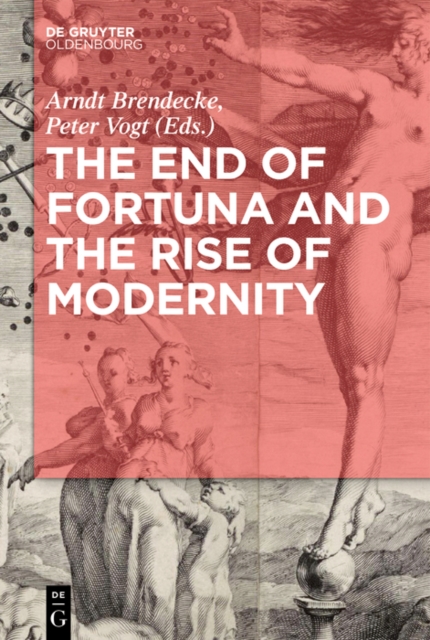
The end of Fortuna and the rise of modernity: contingency and certainty in early modern history
The late 16th century and the first half of the 17th century saw a final resurgence of the concept of Fortuna. Shortly thereafter, this goddess of chance and luck, who had survived for millennia, rapidly lost her cultural and intellectual relevance. This volume explores the late heyday and subsequent erasure of Fortuna. It examines vernacular traditions and confessional differences, analyses how the iconography and semantics of Fortuna motifs transformed, and traces the rise of complementary concepts such as those of probability, risk, fate and contingency. Thus, a multidisciplinary team of contributors sheds light on the surprising ways in which the end of Fortuna intersected with the rise of modernity.
eBook

Style and Substance: Some Metal Figurines from South-West Britain
A hoard found in Southbroom, Devizes in 1714 contained a group of copper-alloy figurines executed in both classical and local styles and depicting deities belonging to the Graeco-Roman and Gallo-Roman pantheons. The deities in a local style appear to form part of a larger tradition of figurines, predominantly found in the South-West, which are characterised both by a similar artistic style and by the use of Gallo-Roman symbolism and deities, such as the torc, ram-horned snake, carnivorous dog and Sucellus. The unique composition of the hoard in comparison with other hoards of similar date provides insights into the beliefs of Roman Britain.
Journal Article


The Christian Goddess
The Christian Goddess: Archetype and Theology in the Fantasies of George MacDonald, examines this British Victorian writer's employment of female figures to represent Deity. Such symbolism is extremely unusual for a Christian author of this period and anticipates the efforts of many modern theologians to develop an image of God as Mother. Bonnie Gaarden reads the goddess-figures in MacDonald's fantasies as both archetypes of the collective unconscious and as emblems articulating MacDonald's unique Christian theology, which is Trinitarian, Neo-Platonic, mystical and universalist. The goddesses become the central figures around which the author develops her interpretations of MacDonald's adult fantasy-novels, his children's books and some of his fairy tales. These readings discover MacDonald's ideas about God and the nature of good and evil, models of spiritual and psychological development that foreshadow the theories of Carl Jung and Eric Neumann, and acerbic commentary on the values and customs of Victorian society and religion. According to The Christian Goddess, MacDonald's Romantic belief in God's self-revelation in Nature led him to create Nature-mothers (such as the Green Lady in 'The Golden Key' and Lilith's Eve) which evoke both the Great Mother archetype described by Eric Neumann, and the modern neopagan Great Mother as developed in the works of James Frazer, Robert Graves, and Marija Gimutas. MacDonald dramatized his view of evil and its cure in the title character of Lilith, a Terrible Mother archetype historically embodied in the Hindu goddess Kali. MacDonald's notion of the world as Keat's 'vale of Soulmaking,' also elaborated by religious philosopher John Hick, is conveyed by Magic Cauldron archetypes in The Wise Woman, 'The Gray Wolf,' and Lilith. Muse-figures in Phantastes and At the Back of the North Wind express MacDonald's conviction that a 'right imagination' is the voice of God, while Divine Children in The Wise Woman and 'The Golden Key' communicate his belief that 'true childhood' is the Divine nature. The great-grandmother in the Princess books, a personification of the multi-dimensional activity of Divine Wisdom, springs from the Judeo-Christian Sophia and the classical Athena, while Kore figures in The Princess and the Goblin, Lilith, and Phantastes re-present the transforming descents of Persephone and Christ. This book shows MacDonald's fantasies as a chronological bridge, anchored in the traditions of the Hebrew Bible and the New Testament, incorporating the teachings of Christian mysticism and theistic Romanticism, and linking to the contemporary concerns in Western society that have given birth to the New Age. The Christian goddess portrayed in these fantasies may strike the reader as a Deity whose time has come.
eBook

A Tale of Seven Nudes: The Capitoline and Medici Aphrodites, Four Nymphs at Elean Herakleia, and an Aphrodite at Megalopolis
The Capitoline Aphrodite (fig. 1) counts among the most copied statues of antiquity. In 1951, Bianca Felletti Maj collected 101 replicas of the type compared with 33 for the Medici Aphrodite (fig. 2) and a mere five for the so-called Aphrodite of the Troad; and many more examples have surfaced since.’ Yet despite the Capitoline type's popularity, the date, location and authorship of its original remain clouded, as does its relation to these other ‘pudica’-type Aphrodites, especially the Medici. Leaving aside the Aphrodite of the Troad, this article presents new evidence that may resolve one of these problems and sheds some new light upon some of the others.
Journal Article
Praising the Goddess
In recent decades, the relation between Egyptian and Greek praises of the goddess Isis has received much scholarly attention. The present study, however, focuses on six Demotic hymns and praises directed to this goddess: P. Heidelberg dem. 736 verso, O. Hor 10, Theban Graffiti 3156, 3462, 3445, and P. Tebt. Tait 14. These texts from the second century BC to the second century AD are re-edited in facsimile, transliteration and translation. A commentary to each document discusses philological matters, providing improved readings in some instances. For the first time, the six texts are analyzed comparatively in regard to formal features and content. The concept of Isis that is outlined by the Demotic sources is set against Isis' role as described by other Egyptian sources (such as temple inscriptions or theophoric personal names) and by Greek eulogies of the goddess. An appendix offers an overview of other Demotic hymns and praises addressed to various divinities.
eBook