
Catalogue Search | MBRL


Are you sure you want to remove the book from the shelf?

{{itemTitle}}
75
result(s) for
"Goddesses Folklore."
Sort by:


A Calabash of Cowries
A Calabash of Cowries: Ancient Wisdom for Modern Times is a collection of tales featuring the Orishas and the wonders of the natural world. Suitable for adults and children, artists and teachers, readers of all cultures will discover in these retellings of traditional tales a resource that illuminates the mythic and the real, the ancient past and the emerging present. An offering of spiritual wisdom and cultural celebration through stories that have and will continue to endure the test of time.
eBook

Mountain witches : yamauba
Mountain Witches is a comprehensive guide to the complex figure of yamauba—female y?kai often translated as mountain witches, who are commonly described as tall, enigmatic women with long hair, piercing eyes, and large mouths that open from ear to ear and who live in the mountains—and the evolution of their roles and significance in Japanese culture and society from the premodern era to the present. In recent years yamauba have attracted much attention among scholars of women's literature as women unconstrained by conformative norms or social expectations, but this is the first book to demonstrate how these figures contribute to folklore, Japanese studies, cultural studies, and gender studies. Situating the yamauba within the construct of y?kai and archetypes, Noriko T. Reider investigates the yamauba attributes through the examination of narratives including folktales, literary works, legends, modern fiction, manga, and anime. She traces the lineage of a yamauba image from the seventh-century text Kojiki to the streets of Shibuya, Tokyo, and explores its emergence as well as its various, often conflicting, characteristics. Reider also examines the adaptation and re-creation of the prototype in diverse media such as modern fiction, film, manga, anime, and fashion in relation to the changing status of women in Japanese society. Offering a comprehensive overview of the development of the yamauba as a literary and mythic trope, Mountain Witches is a study of an archetype that endures in Japanese media and folklore. It will be valuable to students, scholars, and the general reader interested in folklore, Japanese literature, demonology, history, anthropology, cultural studies, gender studies, and the visual and performing arts.
eBook

An Exploration of the Evolution of the Loong Mother Belief System in Lingnan: Formation and Transformation
The rise of a patriarchal society has led to a prevalent perception of male superiority over women, which is reflected in the gender-based disparities within the deity system of China. However, in contrast to the situation in the Central Plains, the Lingnan region assigns a significant social status to women, as evidenced by the active worship of female deities. Among them, the Loong Mother stands out as a highly revered goddess in Lingnan’s mythology. This paper investigates the evolution of the Loong Mother’s deification from a mortal woman, and explores the varying religious principles of Buddhism, Taoism, and Confucianism, as well as their influence on the veneration of female deities in Lingnan. Additionally, this paper analyzes the Loong Mother’s portrayal within civil society. Despite undergoing continuous transformation to cater to diverse religious traditions and societal needs, the goddess’s actions and functions ultimately reflect her creation and shaping by the community.
Journal Article

Holme I (Seahenge) and Holme II: ritual responses to climate change in Early Bronze Age Britain
Holme I and II were contemporary, adjacent Early Bronze Age (EBA) oak-timber enclosures exposed intertidally at Holme-next-the-sea, Norfolk, England, in 1998. Holme I enclosed a central upturned tree-stump, its function and intent unknown. Holme II is thought a mortuary structure. Both are proposed here best explained as independent ritual responses to reverse a period of severe climate deterioration recorded before 2049 BC when their timbers were felled. Holme I is thought erected on the summer-solstice, when the cuckoo traditionally stopped singing, departing to the ‘Otherworld’. It replicated the cuckoo’s supposed overwintering quarters: a tree-hole or the ‘bowers of the Otherworld’ represented by the tree-stump, remembered in folklore as ‘penning-the-cuckoo’ where a cuckoo is confined to keep singing and maintain summer. The cuckoo symbolised male-fertility being associated with several Indo-European goddesses of fertility that deified Venus - one previously identified in EBA Britain. Some mortal consorts of these goddesses appear to have been ritually sacrificed at Samhain. Holme II may be an enclosure for the body of one such ‘sacral king’. These hypotheses are considered, using abductive reasoning, as ‘inferences to the best explanations’ from the available evidence. They are supported with environmental data, astronomic and biological evidence, regional folklore, toponymy, and an ethnographic analogy with indigenous Late Iron Age practices that indirect evidence indicates were undertaken in EBA Britain. Cultural and religious continuity is supported by textual sources, the material record and ancient DNA (aDNA) studies.
Journal Article

Antlered Female Deer: The Archeological Perspective on a Phantasmagoric Animal
The article examines the rare phenomenon of a hind crowned as a stag, a creature that only male red deer typically embody due to their antlers. In mythology and folklore, creature is fantastical, akin to the unicorn or phoenix.Only male red deer possess antlers. Hinds crowned as stags are an exceptionally rare phenomenon in nature. In mythology and folklore, this creature is seen as phantasmagoric, akin to the unicorn or the phoenix. Such a being, inherently ambivalent, was often perceived as a monstrum, violating the natural order and evoking both wonder and fear.However, when a majestically antlered hind is described as miraculously saving starving humans by breastfeeding them, it introduces the wondrous world of the divine, life-giving female deer, symbol of fertility and renewal. Emblematic of this is the mythical rescue of ancient heroes, such as the Greek Telephus, the son of Herakles, as documented in related archaeological records.In the archaic folklore of Central-Eastern Europe, the antlered female deer is sometimes compared to a girl or bride, acting as a substitute for her or embodying her most intimate nature. The parallels between a young virgin and a doe sprouting horns are deeply rooted in ancient Greek myths, particularly those involving metamorphoses orchestrated by the goddess Artemis-Diana. Noteworthy examples include Taygete and Titanis (Cos), who were transformed into golden-horned does. Additionally, in some versions of the myth, a horned hind is offered by Artemis-Diana as a substitute for the sacrifice of Princess Iphigenia. The mythological figure of the female deer with antlers is also associated with the goddess’s chariot, as well as the Ceryneian Hind, a target of one of Herakles’ labors.Expanding the focus to ancient Celtic and Gallo-Roman religion, we find the goddess Cernunna, a female equivalent and partner to the god Cernunnos, “The Horned One,” depicted with antlers—a feature typically reserved for male deities.These ancient goddesses, either with antlers or transformed into antlered hinds, are rooted in ancestral mythological traditions where dominant women were larger-than-life figures capable of transforming into deer, or vice versa. According to this totemic narrative, these supernatural women, initiated into the Deer-Mother cult, ruled the world and appeared as stags, covered in hair and with enormous branching antlers. The enduring figure of the Stag Goddess has been reinterpreted in neo-Pagan and Wiccan spirituality as a continuation and revision of these ancient divinities.This article aims to explore the archaeological evidence that, in ancient times, brought to life the extraordinary creature of the crowned hind and her transformation into an antlered goddess.
Journal Article

The Malevolent Icon Lantern Incident
During the 2017 Taipei City Lantern Festival, a twenty-foot-tall lantern of Moniang, a character from Taiwanese artist Wei Tsung-cheng’s manga series Apocalypse of Darkness Warfare, was inaugurated and put on parade. Moniang represents a new image of the goddess Mazu, incarnated as a cute-sexy high school student. This article examines how this display allowed a new image of Mazu to move from the subculture of “male-oriented” manga creators and fans into a broader public sphere. Debates over the lantern reveal a gap in both generational and political leanings in terms of ideas about the relationship between deities and worshippers. The display of Moniang has opened up the possibility for the younger generation’s reconceptualization of divinity to challenge some of the traditional images and rituals at the core of Chinese folk religion.
Journal Article
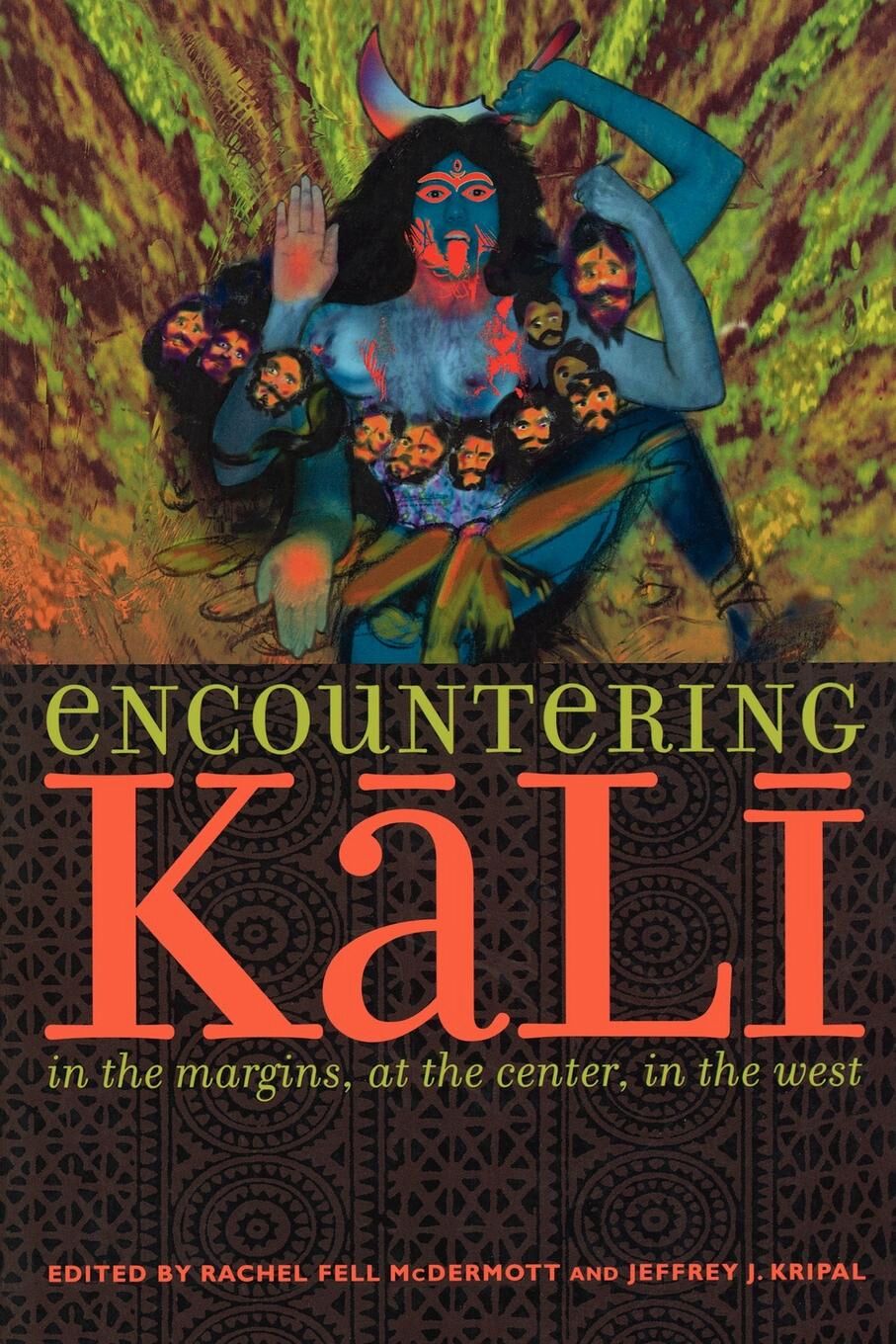
Encountering Kali
Encountering Kali explores one of the most remarkable divinities the world has seen—the Hindu goddess Kali. She is simultaneously understood as a blood-thirsty warrior, a goddess of ritual possession, a Tantric sexual partner, and an all-loving, compassionate Mother. Popular and scholarly interest in her has been on the rise in the West in recent years. Responding to this phenomenon, this volume focuses on the complexities involved in interpreting Kali in both her indigenous South Asian settings and her more recent Western incarnations. Using scriptural history, temple architecture, political violence, feminist and psychoanalytic criticism, autobiographical reflection, and the goddess's recent guises on the Internet, the contributors pose questions relevant to our understanding of Kali, as they illuminate the problems and promises inherent in every act of cross-cultural interpretation.
eBook

The Xtabay: From Forest Guardian to Hungry Demon
The Xtabay is a legendary Mayan forest entity associated with the sacred ceiba tree. The prose-poem by native ethnologist Antonio Mediz Bolio, translated here, represents the version of her story that he knew a century ago, where she appears as a temptress who lures young men under the tree to become her slaves. Behind the romantic sensibility that pervades this poem may lurk the combined shadow of two avatars, an ancient goddess of the hunt and a hybrid bird-woman who regards as prey those who threaten her forest or the creatures that call it their home.
Journal Article

Place-lore in the Mélusine Narrative from Irish Tradition
The Melusine story is an international migratory legend (\"Migratory Legend Suggested Irish Type\", MLSIT 4081), whose essential ingredients are an Otherworld bride and an interdiction. First attested in medieval Irish literature (Macha), the narrative has survived in modern Irish folklore, with possible influences from the French Romance of Melusine. This article examines both medieval written and modern oral forms of the narrative from a novel perspective: their place-lore dimension. Key Words. Melusine, Macha, Place-lore, Lakes, Goddess. La historia de Melusine es una leyenda migratoria internacional (\"Migratory Legend Suggested Irish Type\" [Leyenda Migratoria Internacional de Sugerido Origen Irlandes], MLSIT 4081) cuyos ingredientes esenciales incluyen una interdiccion y una esposa del mas alla. Descubrida en primera instancia en la literatura irlandesa medieval (Macha), la narrativa ha sobrevivido en el folklore moderno irlandes con influencias posibles del romance frances de Melusine. El presente articulo examina las formas escritas y orales de la narrativa desde una perspectiva innovadora: la dimension de la tradicion local. Palabras clave. Melusine, Macha, tradicion local, lagos, diosa.
Journal Article