
Catalogue Search | MBRL


Are you sure you want to remove the book from the shelf?

{{itemTitle}}
1,683
result(s) for
"Goddesses."
Sort by:

Change, continuity and complexity : the Mahهavidyهas in East Indian âSهakta traditions
\"The Mahهavidyهas are the representative Tantric feminine pantheon consisting of ten goddesses. It is formed by divergent religious strands and elements: the mهat[ and yoginهi worship, the cult of Kهalهi and Tripurasundarهi, Vajrayهana Buddhism, Jain Vidyهadevهis, âSaiva and VaicGava faith, âSrهividyهa, the Brahmanical strand of Puranic traditions, etc. This volume is the first attempt to explore the historical process, through which these traditions culminated in the Mahهavidyهa cult and the goddesses with different origins and contradictory attributes were brought into a cluster, with special reference to socio-political changes in the lower GaEgهa and Brahmaputra Valley between the 9th and 15th centuries CE.Based on a close analysis of PurهaGas, Tantras and inscriptional evidence, and on extensive field research on archaeological remains as well as sacred sites, Jae-Eun Shin discusses the two trajectories of the Mahهavidyهas in eastern âSهakta traditions. Each led to the systematization of Daâsamahهavidyهas in a specific way: one, as ten manifestations of Durgهa upholding dharma in the cosmic dimension, and the other, as ten mandalic goddesses bearing magical powers in the actual sacred site. Their attributes and characteristics have neither been static nor monolithic, and the mode of worship prescribed for them has changed in a dialectical religious process between Brahmanical and Tantric traditions of the region.This is the definitive work for anyone seeking to understand goddess cults of South Asia in general and the history of eastern âSهakta traditions in particular. To aid study, the volume includes images, diagrams and maps.\"-- Front matter.
BOOK

Queens of the Wild
A concise history of the goddess-like figures who evade
both Christian and pagan traditions, from the medieval period to
the present day In this riveting account, renowned scholar
Ronald Hutton explores the history of deity-like figures in
Christian Europe. Drawing on anthropology, archaeology, literature,
and history, Hutton shows how hags, witches, the fairy queen, and
the Green Man all came to be, and how they changed over the
centuries. Looking closely at four main figures-Mother Earth, the
Fairy Queen, the Mistress of the Night, and the Old Woman of Gaelic
tradition-Hutton challenges decades of debate around the female
figures who have long been thought versions of pre-Christian
goddesses. He makes the compelling case that these goddess figures
found in the European imagination did not descend from the
pre-Christian ancient world, yet have nothing Christian about them.
It was in fact nineteenth-century scholars who attempted to
establish the narrative of pagan survival that persists today.
eBook


The Great Mother
This landmark book explores the Great Mother as a primordial image of the human psyche. Here the renowned analytical psychologist Erich Neumann draws on ritual, mythology, art, and records of dreams and fantasies to examine how this archetype has been outwardly expressed in many cultures and periods since prehistory. He shows how the feminine has been represented as goddess, monster, gate, pillar, tree, moon, sun, vessel, and every animal from snakes to birds. Neumann discerns a universal experience of the maternal as both nurturing and fearsome, an experience rooted in the dialectical relation of growing consciousness, symbolized by the child, to the unconscious and the unknown, symbolized by the Great Mother.
Featuring a new foreword by Martin Liebscher, this Princeton Classics edition ofThe Great Motherintroduces a new generation of readers to this profound and enduring work.
eBook
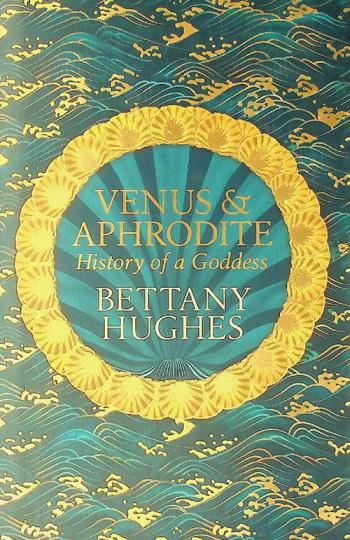
Venus & Aphrodite : history of a goddess
Through ancient art, evocative myth, exciting archaeological revelations and philosophical explorations Bettany Hughes shows why this immortal goddess endures through to the twenty-first century, and what her journey through time reveals about what matters to us as humans. Charting Venus's origins in powerful ancient deities, Bettany demonstrates that Venus is far more complex than first meets the eye. Beginning in Cyprus, the goddess's mythical birthplace, Bettany decodes Venus's relationship to the Greek goddess Aphrodite, and, in turn, Aphrodite's mixed-up origins both as a Cypriot spirit of fertility and procreation - but also, as a descendant of the prehistoric war goddesses of the Near and Middle East, Ishtar, Inanna and Astarte. On a voyage of discovery to reveal the truth behind Venus, Hughes reveals how this mythological figure is so much more than nudity, romance and sex. It is the both the remarkable story of one of antiquity's most potent forces, and the story of human desire - how it transforms who we are and how we behave.

The Mother of the Gods, Athens, and the Tyranny of Asia
Among maternal deities of the Greek pantheon, the Mother of the Gods was a paradox. She is variously described as a devoted mother, a chaste wife, an impassioned lover, and a virgin daughter; she is said to be both foreign and familiar to the Greeks. In this erudite and absorbing study, Mark Munn examines how the cult of Mother of the Gods came from Phrygia and Lydia, where she was the mother of tyrants, to Athens, where she protected the laws of the Athenian democracy. Analyzing the divergence of Greek and Asiatic culture at the beginning of the classical era, Munn describes how Kybebe, the Lydian goddess who signified fertility and sovereignty, assumed a different aspect to the Greeks when Lydia became part of the Persian empire. Conflict and resolution were played out symbolically, he shows, and the goddess of Lydian tyranny was eventually accepted by the Athenians as the Mother of the Gods, and as a symbol of their own sovereignty. This book elegantly illustrates how ancient divinities were not static types, but rather expressions of cultural systems that responded to historical change. Presenting a new perspective on the context in which the Homeric and Hesiodic epics were composed, Munn traces the transformation of the Asiatic deity who was the goddess of Sacred Marriage among the Assyrians and Babylonians, equivalent to Ishtar. Among the Lydians, she was the bride to tyrants and the mother of tyrants. To the Greeks, she was Aphrodite. An original and compelling consideration of the relations between the Greeks and the dominant powers of western Asia, The Mother of the Gods, Athens, and the Tyranny of Asia is the first thorough examination of the way that religious cult practice and thought influenced political activities during and after the sixth and fifth centuries B.C.
eBook


From Historical Memory to Cultural Identity: The Construction of Archetypal Symbols for the Statues and Images of Mazu
The archetypal symbols of Mazu’s statues and pictorial art are the mapping of a religious concept, a way of belief, and some programmed behaviours and rituals. They are also emotional imagery used to arouse the cultural awareness of international Chinese, inspire them to help and trust each other, to encourage and to comfort each other, to share weal and woe, and to always forge ahead. From the perspectives of historical memory, visual signs, and cultural identity, this paper explores the construction of archetypal symbols for the statues and images of Mazu. In addition, this paper generalizes the foundation and methods of this construction by analyzing the artistic forms and characteristics of the surviving Mazu images and statues and comparing the rules and regulations for making statues of other religions. Moreover, we consider the function of artistic signs that refer to and symbolize broader religious concepts and beliefs. The purpose of this work is to make the image of Mazu more visually present and strengthen cultural identity.
Journal Article

Pallas the pal
Pallas, the daughter of Triton and messenger of the sea, enrolls at Mount Olympus Academy.
Book

The stripper goddess of Japan : the life and afterlives of Ame no Uzume
She is not afraid of the authorities.She saunters in, inviting laughter and liveliness.With an open mind, not with a weapon, she redefines the world and the nation.She is Ame no Uzume, the half-naked dancing Japanese goddess.The author, Tsurumi Shunsuke, is one of Japan' s leading postwar thinkers and philosophers.
eBook