
Catalogue Search | MBRL


Are you sure you want to remove the book from the shelf?

{{itemTitle}}
3,794
result(s) for
"Goethe, Johann Wolfgang von, 1749-1832"
Sort by:


Goethe's Allegories of Identity
A century before psychoanalytic discourse codified a scientific language to describe the landscape of the mind, Johann Wolfgang von Goethe explored the paradoxes of an interior self separate from a conscious self. Though long acknowledged by the developers of depth psychology and by its historians, Goethe's literary rendering of interiority has not been the subject of detailed analysis in itself. Goethe's Allegories of Identity examines how Goethe created the essential bridge between the psychological insights of his contemporary, Jean-Jacques Rousseau, and the psychoanalytic theories of his admirer Sigmund Freud.Equally fascinated and repelled by Rousseau's vision of an unconscious self, Goethe struggled with the moral question of subjectivity: what is the relation of conscience to consciousness? To explore this inner conflict through language, Goethe developed a unique mode of allegorical representation that modernized the long tradition of dramatic personification in European drama. Jane K. Brown's deft, focused readings of Goethe's major dramas and novels, from The Sorrows of Young Werther to Elective Affinities, reveal each text's engagement with the concept of a subconscious or unconscious psyche whose workings are largely inaccessible to the rational mind. As Brown demonstrates, Goethe's representational strategies fashioned a language of subjectivity that deeply influenced the conceptions of important twentieth-century thinkers such as Freud, Michel Foucault, and Hannah Arendt.
eBook
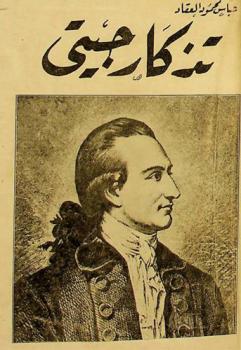
تذكار جيتي
هذا الكتاب يتحدث عن الشاعر الألماني جيتي، لمحات من سيرة حياته وبقلم عملاق الأدب عباس العقاد، تطرق العقاد للكتابة عن شخصية الألماني على وجه العموم، فقد عرف عنهم اهتمامهم بالدين والفلسفة والسحر و الموسيقى فيقول العقاد ؛ هذه السمات تعود في قراراتها لولعهم بالإيمان بالغيب ! وكيف أن معنى الحرية والوطن يختلف عند الألمان مقارنة بغيره من الشعوب، ويثبت العقاد بأن جيتي تأثر من الأدب العربي من خلال ما وصله من ترجمة فكان لذلك الأثر البالغ على عبقريته، وأما الحديث عن حياة جيتي فممتع ، منها بأن جيتي اكتسب حب القراءة من ولادته وحبه للحياة أيضا، وأما رواياته فقد استوحاها من مواقف الحب التي عاشها ، فهو رجل عاشق لا تكل نفسه من العشق ولا تزهق روحه.
Rare Book

The Spell of Italy
A study of the lure of Italy in German culture from the eighteenth to the twentieth century.
Wearied by his life as an administrator at the Duke's court in Weimar, in 1786 Johann Wolfgang von Goethe departed unannounced in the middle of the night for what had been the destination of his imagination since childhood: Italy. His extended stay there dramatically affected his views of art, architecture, prose, poetry, and science. When he returned to Germany and Weimar, Goethe's experiences translated into his life and work in ways that influenced countless others as they developed Germany's own brand of high culture.
The Spell of Italy: Vacation, Magic, and the Attraction of Goethe tracks the peculiar space Italy occupies in the cultural consciousness of German writers by reconsidering the Italian journeys of Goethe and Winckelmann and the legacy of those journeys in the works of Heine, Nietzsche, Freud, Mann, Carossa, and Bachmann. Author Richard Block contests previous assumptions about Italy as a place to encounter classical culture and creative rebirth. His study examines the degree to which Germany's literary and cultural traditions appropriated a phantasmic Italy, showing how Winckelmann's art history and Goethe's Italian journey predisposed later writers to search for an aesthetic ideal in Italy that did not exist, and how their search for this absent ideal eventually resulted in disillusionment and deception. Building on previous work on Goethe, literary theory, and cultural history, The Spell of Italy offers compelling new ways of understanding Germany's fascination with Italy from the eighteenth century to its troubled political history of the twentieth century.
eBook
Getty Souvenir
هذا الكتاب يتحدث عن الشاعر الألماني جيتي، لمحات من سيرة حياته وبقلم عملاق الأدب عباس العقاد، تطرق العقاد للكتابة عن شخصية الألماني على وجه العموم، فقد عرف عنهم اهتمامهم بالدين والفلسفة والسحر و الموسيقى فيقول العقاد ؛ هذه السمات تعود في قراراتها لولعهم بالإيمان بالغيب ! وكيف أن معنى الحرية والوطن يختلف عند الألمان مقارنة بغيره من الشعوب، ويثبت العقاد بأن جيتي تأثر من الأدب العربي من خلال ما وصله من ترجمة فكان لذلك الأثر البالغ على عبقريته، وأما الحديث عن حياة جيتي فممتع ، منها بأن جيتي اكتسب حب القراءة من ولادته وحبه للحياة أيضا، وأما رواياته فقد استوحاها من مواقف الحب التي عاشها ، فهو رجل عاشق لا تكل نفسه من العشق ولا تزهق روحه.
Rare Book
Das Weimarer Hoftheater unter Goethes Leitung: Kunstanspruch und Kulturpolitik im Konflikt
Goethe was director of the Weimar Court Theatre from 1791 to 1817. During these years, which were characterized by political upheavals, he was not only a famous and influential poet but at the same time a close confidant of the Grand Duke Carl August and minister in his government. As theatre director he took advantage of both of his social functions and made the stage a place of communication of cultural policy. This study explores the influence of political events on Goethe's theatre conception and which role the stage played as political medium in the duchy.
eBook

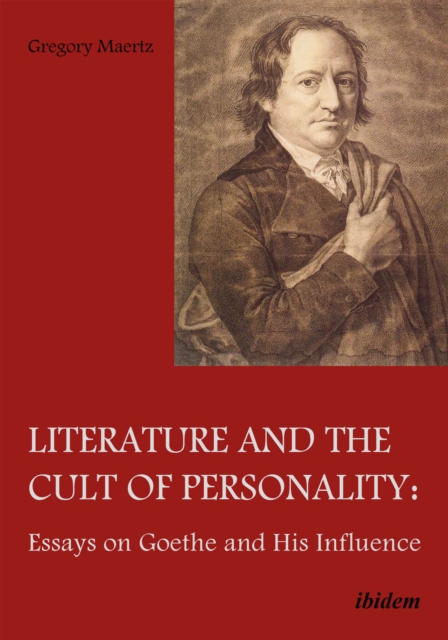
Literature and the cult of personality : essays on Goethe and his influence
The construction of Johann Wolfgang von Goethe as an Anglo-American sage and literary icon was the product of a cult of personality that lay at the center of nineteenth-century cultural politics. A reconstruction of the culture wars fought over Goethe's authority, a previously hidden chapter in the intellectual history of the period ranging from the late eighteenth century to the threshold of Modernism, is the focus of Literature and the Cult of Personality. Marginal as well as canonical writers and critics figured prominently in this process, and Literature and the Cult of Personality offers insight into the mediation activities of Mary Wollstonecraft, Henry Crabb Robinson, the canonical Romantic poets, Thomas Carlyle, Margaret Fuller, George Eliot, Matthew Arnold, and others. For women writers and Jacobins, Scots, and Americans, translating Goethe served as an empowering cultural platform that challenges the myth of the self-sufficiency of British literature. Reviewing and translating German authors provided a means of gaining literary enfranchisement and offered a paradigm of literary development according to which 're-writers' become original writers through an apprenticeship of translation and reviewing. In the diverse and fascinating body of critical writing examined in this book, textual exegesis plays an unexpectedly minor role; in its place, a full-blown cult of personality emerges along with a blueprint for the ideology of hero-worship that is more fully mapped out in the cultural and political life of twentieth-century Europe.
eBook
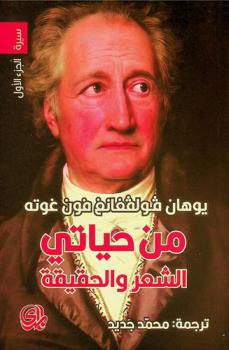
من حياتي : الشعر والحقيقة
صدرت عن دار المدى حديثا الترجمة العربية لمذكرات الشاعر الألماني يوهان غوته بعنوان \"من حياتي : الشعر والحقيقة\"، يتحدث غوته في هذه المذكرات عن حياته منذ طفولته حتى عام 1775 عندما كان على وشك مغادرة فايمار. الترجمة الذاتية تتكون من جزأين، تغطي سنوات طويلة من حياة المؤلف. كتب غوته الترجمة الذاتية تزامنا مع تأليفه لروايته \"سنوات تجوال فلهلم أو الزاهدون\".
Book

Passions of the sign : revolution and language in Kant, Goethe, and Kleist
Passions of the Sign traces the impact of the French Revolution on Enlightenment thought in Germany as evidenced in the work of three major figures around the turn of the nineteenth century: Immanuel Kant, Johann Wolfgang von Goethe, and Heinrich von Kleist. Andreas Gailus examines a largely overlooked strand in the philosophical and literary reception of the French Revolution, one which finds in the historical occurrence of revolution the expression of a fundamental mechanism of political, conceptual, and aesthetic practice.
With a close reading of a critical essay by Kleist, an in-depth discussion of Kant's philosophical writing, and new readings of the novella form as employed by both Goethe and Kleist, Gailus demonstrates how these writers set forth an energetic model of language and subjectivity whose unstable nature reverberates within the very foundations of society. Unfolding in the medium of energetic signs, human activity is shown to be subject to the counter-symbolic force that lies within and beyond it. History is subject to contingency and is understood not as a progressive narrative but as an expanse of revolutionary possibilities; language is subject to the extra-linguistic context of utterance and is conceived primarily not in semantic but in pragmatic terms; and the
individual is subject to impersonal affect and is figured not as the locus of self-determination but as the site of passions that exceed the self and its pleasure principle.
At once a historical and a conceptual study, this volume moves between literature and philosophy, and between textual analysis and theoretical speculation, engaging with recent discussions on the status of sovereignty, the significance of performative language in politics and art, and the presence of the impersonal, even inhuman, within the economy of the self.
eBook