
Catalogue Search | MBRL


Are you sure you want to remove the book from the shelf?

{{itemTitle}}
7
result(s) for
"Good and evil -- Religious aspects -- Christianity -- History of doctrines"
Sort by:

The Father of the Devil (John 8:44)
This article argues that John 8:44 helped to inspire the early Christian view that the creator was an evil being. John 8:44 has at least four possible readings allowed by grammar. In two of these readings, taken by a variety of early Christian groups (including early catholics), there is indication that the devil has a father. Since the desires of this father are known from the parallel desires of his children, some early Christians inferred the hostility of the devil’s father toward Christ, and thus his evil nature.
Journal Article
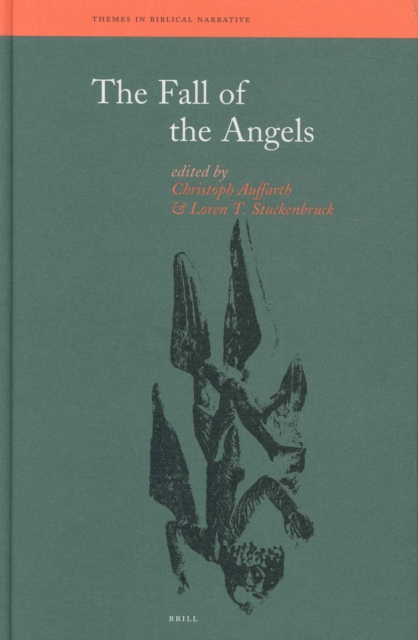
The fall of the angels
Fall of the Angels focuses on a biblical tradition whose significance has been recognised, elaborated and explored in literature and art outside the Bible. Its extensive influence on religion and culture during the last two millenia is reflected in the wide variety of interpretations of this tradition among communities as they came to terms with religious identity in the face of opposition.
eBook

The Root of All Evil
Demonstrates that the essence of love and tolerance at the core of all religions, of all great traditions, is universal. This title explores the roots of the world's evils in fundamentalism and patriarchy.
eBook

The Prince of Darkness : radical evil and the power of good in history
While recounting how past generations have personified evil, Jeffrey Burton Russell deepens our understanding of the ways in which people have dealt with the enduring problem of radical evil.
eBook

Good and Evil Actions
Modern philosophy has long dismissed the traditional moral notion that some actions are inherently good or evil, claiming rather that actions lack clear boundaries and have no set nature, whether good, evil, or anything else. We might expect to find resources to rebut these consequentialist assertions in the perennial philosophy of St. Thomas Aquinas. Unfortunately, the analysis of the moral species within Aquinas confounds even the most resolute. Thomists are far from unanimity on the very questions at issue, such as the role of intention in moral judgment and the importance of the exterior or 'physical' act. One influential reading of Aquinas assigns intention a central role; another extols a return to teleology and to the physical nature of the action. In \"\"Good and Evil Actions\"\", Steven J. Jensen navigates a path through the debate, retrieving what is of value from each interpretation. Intention receives its proper due, while leaving room for physical causality and teleology. Jensen provides a novel explanation of self-defense and develops a much needed account of the dignity of the human person. With exceptional clarity, he identifies the essential issues, resolves conflicting views, and reveals the truth as conveyed by Aquinas. In his foreword, Ralph McInerny praises the book as 'a remarkable compendium of the status quaestionis of a large number of prickly issues associated with Thomas Aquinas' theory of human action, a fair look at proposed solutions, and finally Jensen's own best thought on the matter'. This title tackles the Thomistic debate surrounding the inherent good and evil of human actions.
eBook

Beyond theodicy : Jewish and Christian continental thinkers respond to the Holocaust
Explores the work of post-Holocaust Jewish and Christian thinkers who reject theodicy—arguments explaining why a loving God can permit evil and suffering in the world. Beyond Theodicy analyzes the rising tide of objections to explanations and justifications for why God permits evil and suffering in the world. In response to the Holocaust, striking parallels have emerged between major Jewish and Christian thinkers centering on practical faith approaches that offer meaning within suffering. Author Sarah K. Pinnock focuses on Jewish thinkers Martin Buber and Ernst Bloch and Christian thinkers Gabriel Marcel and Johann Baptist Metz to present two diverse rejections of theodicy, one existential, represented by Buber and Marcel, and one political, represented by Bloch and Metz. Pinnock interweaves the disciplines of philosophy of religion, post-Holocaust thought, and liberation theology to formulate a dynamic vision of religious hope and resistance.
eBook
Sin
What is sin? Is it simply wrongdoing? Why do its effects linger over time? In this sensitive, imaginative, and original work, Gary Anderson shows how changing conceptions of sin and forgiveness lay at the very heart of the biblical tradition. Spanning nearly two thousand years, the book brilliantly demonstrates how sin, once conceived of as a physical burden, becomes, over time, eclipsed by economic metaphors. Transformed from a weight that an individual carried, sin becomes a debt that must be repaid in order to be redeemed in God's eyes.
Anderson shows how this ancient Jewish revolution in thought shaped the way the Christian church understood the death and resurrection of Jesus and eventually led to the development of various penitential disciplines, deeds of charity, and even papal indulgences. In so doing it reveals how these changing notions of sin provided a spur for the Protestant Reformation.
Broad in scope while still exceptionally attentive to detail, this ambitious and profound book unveils one of the most seismic shifts that occurred in religious belief and practice, deepening our understanding of one of the most fundamental aspects of human experience.
eBook