
Catalogue Search | MBRL


Are you sure you want to remove the book from the shelf?

{{itemTitle}}
6
result(s) for
"Gorillas Bwindi Impenetrable National Park (Uganda)"
Sort by:

Breakfast in the rainforest : a visit with mountain gorillas
Powerful but shy, the African mountain gorilla struggles for survival in the rainforests of Uganda's national parks. Follow wildlife photographer Richard Sobol on an arduous journey to these hidden habitats and take a hushed, close-up look at the gentle giants. Learn about the efforts being made to preserve these magnificent creatures.
Book

Census of the mountain gorilla Gorilla beringei beringei population in Bwindi Impenetrable National Park, Uganda
Mountain gorillas Gorilla beringei beringei are Critically Endangered, with just two small populations: in Bwindi Impenetrable National Park in south-western Uganda and the nearby Virunga Volcanoes on the borders with Rwanda and Uganda. A survey of the Bwindi population was carried out in 2002 and results were compared with the previous census in 1997. Our estimate of total population size increased over that period by c. 7% to 320 individuals and the structure and distribution of the population were largely unchanged. Signs of human disturbance were more common in 2002 than 1997, and gorillas tended to be found in areas of relative low disturbance. This suggested that disturbance could be a constraint on population growth and distribution but demographic stochasticity may also be responsible for the observed level of population change over a short time period. Other potential limiting factors, including habitat availability and disease, are discussed. While conservation activities in Bwindi have probably contributed to the stability of the population, strengthening of law enforcement and continued vigilance are needed to ensure the population's long-term growth and survival.
Journal Article
The rules and the reality of mountain gorilla Gorilla beringei beringei tracking: how close do tourists get?
Mountain gorilla Gorilla beringei beringei tracking tourism generates important revenue for conservation efforts but brings with it the threat of disease transmission into the gorilla population. This study quantifies for the first time aspects of encounters between gorillas and tourists at Bwindi Impenetrable National Park that are likely to contribute to the risk of disease transmission. These include how close tourists get to gorillas, how close encounters are initiated, how long they last, and the age class of gorillas involved. Tourists got significantly closer to gorillas than the park rules allow (a mean of 2.76 m, compared to the rule of 7 m), and remained close for long periods. Contacts with the gorillas most vulnerable to disease, the juveniles, were closer but of shorter duration than those with adults. Contacts initiated by gorillas were closer but shorter than those initiated by tourists. Taken together these results demonstrate that the present rules are failing, and that the risk of disease transmission may be greater than previously believed.
Journal Article

Preliminary Study of the Temporal and Spatial Biomass Patterns of Herbaceous Vegetation Consumed by Mountain Gorillas in an Afromontane Rain Forest
Although many animal species consume herbaceous vegetation found in African tropical forests, little is known of the temporal and spatial availability of these plants. From September 2004 to August 2005 we conducted a study that quantified the temporal and spatial biomass availability of 20 species of herbs frequently consumed by endangered mountain gorillas at two locations (Buhoma and Ruhija) in Bwindi Impenetrable National Park, Uganda. In general, the biomass of herbs varied over the study period, but these changes were relatively small. For 12 of 18 and nine of 11 species in Buhoma and Ruhija, respectively, herb biomass differed significantly among habitat types. Of the nine species found in both locations, seven species had a higher biomass at Ruhija, one species had a higher biomass at Buhoma, and one species showed no difference. These results demonstrate that herb biomass varied little temporally but spatial differences in herb biomass were more pronounced. Future studies should investigate the variables that may influence herb phenological patterns such as rainfall, light, soil quality, previous disturbance regimes, and animal foraging and trampling damage.
Journal Article

Intestinal parasites and bacteria of mountain gorillas (Gorilla beringei beringei) in Bwindi Impenetrable National Park, Uganda
A survey in 1994 examined intestinal helminths and bacterial flora of mountain gorillas (Gorilla beringei beringei) in Bwindi Impenetrable National Park, Uganda. Parasites and bacteria were identified to genus in the feces of two groups of tourist-habituated and one group of non-tourist-habituated mountain gorillas. Eggs were identified as those of an anoplocephalid cestode, and nematode eggs representative of the genera: Trichuris, Ascaris, Oesophagostomum, Strongyloides, and Trichostrongylus. This is the first report of Ascaris lumbricoides-like eggs in mountain gorillas. Fecal samples (n=76) from all groups contained helminth eggs, with strongyle eggs and anoplocephalid eggs being the most common. Salmonella and Campylobacter were found in both gorilla groups. Regular long-term non-invasive fecal monitoring of the populations of mountain gorillas is essential for the prevention and identification of potential health threats by intestinal parasites and bacteria in this highly endangered subspecies.
Journal Article
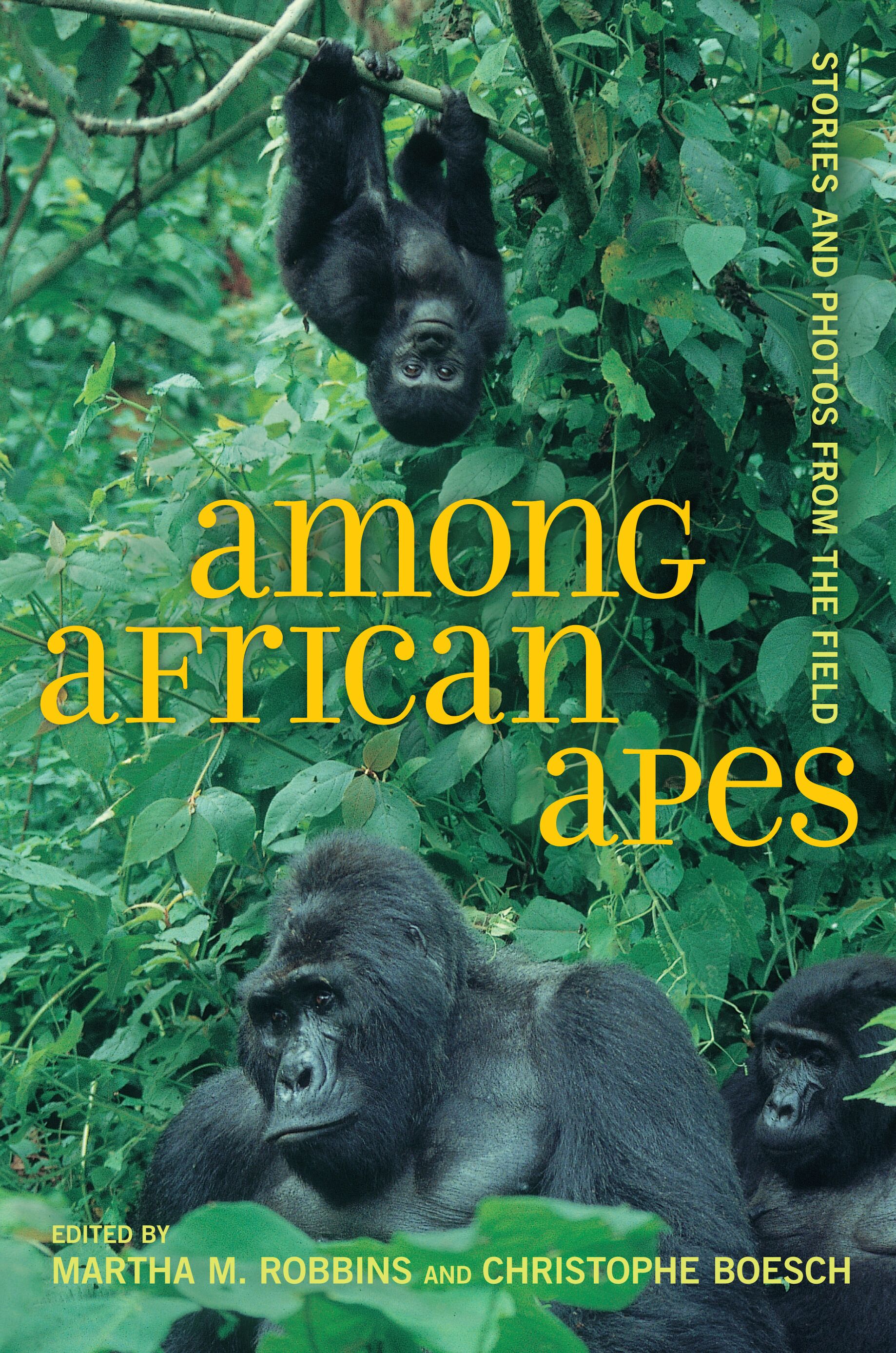
Among African apes
These compelling stories and photographs take us to places like Bwindi Impenetrable National Park in Uganda, Ivindo National Park in Gabon, and the Taï National Park in Côte d’Ivoire for an intimate and revealing look at the lives of African wild apes—and at the lives of the humans who study them. In tales of adventure, research, and conservation, veteran field researchers and conservationists describe exciting discoveries made over the past few decades about chimpanzees, bonobos, and gorillas. The book features vivid descriptions of interactions among these highly intelligent creatures as they hunt, socialize, and play. More difficult themes emerge as well, including the threats apes face from poaching, disease, and deforestation. In stories that are often moving and highly personal, this book takes measure of how special the great apes are and discusses positive conservation efforts, including ecotourism, that can help bring these magnificent animals back from the brink of extinction.
eBook