
Catalogue Search | MBRL


Are you sure you want to remove the book from the shelf?

{{itemTitle}}
702
result(s) for
"Gotthold Ephraim Lessing"
Sort by:

Space and time in artistic practice and aesthetics : the legacy of Gotthold Ephraim Lessing
When the Enlightenment thinker Gotthold Ephraim Lessing wrote his treatise Laocoon: An Essay on the Limits of Painting and Poetry in 1766, he outlined the strengths and weaknesses of each art. Painting was assigned to the realm of space; poetry to the realm of time. 'Space and Time in Artistic Practice and Aesthetics' explores how artists since the eighteenth century up to the present day have grappled with the consequences of Lessing's theory and those that it spawned. As the book reveals, many artists have been - and continue to be - influenced by Lessing-like theories, which have percolated into the art education and art criticism. Artists from Jean Raoux to Willem de Kooning and Frances Bacon, and art critics such as Clement Greenberg, have felt the weight of Lessing's theories in their modes of creation, whether consciously or not. Should we sound the death knell for the theories of Lessing and his kind? Or will conceptions of temporality, spatiality and artistic competition continue to unfold? This book - the first to consider how Lessing's writings connect to visual art's production - brings these questions to the fore.
BOOK

“The Pattern for Jewish Reformation”: The Impact of Lessing on Nineteenth-Century German Jewish Religious Thought
The widespread Jewish sympathies for Lessing’s pre-Hegelian, pro-Jewish, progressive Deism from the Education of the Human Race spurred some Jewish authors to return to and discuss Lessing’s religious thought within the theological endeavors of the Wissenschaft des Judentums in nineteenth-century Germany. To be able to rely on Lessing, even retroactively, was welcome proof for Jewish Reformers that the humanistic approach to religious problems that stood at the very center of their project was at once Jewish and universal. It was the spirit of Lessing’s Education that was appropriated here for Judaism rather than Lessing’s letter. With Lessing in the camp of Reform Judaism the intended modernization of Judaism was safeguarded against the accusation of political and social egoism on the part of the Jews. It was the universal idea of religious progress that they shared with Lessing, not just the sloughing off of the yoke of outdated talmudic law.
Journal Article
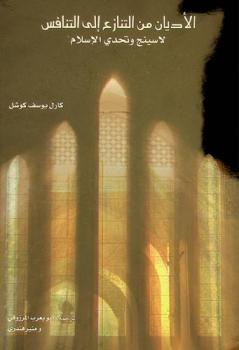
الأديان من التنازع إلى التنافس : لاسنج وتحدي الإسلام
يمثل هذا الكتاب محاولة يتيمة تعرض عرضا نسقيا وموضوعيا علاقة الأديان المنزلة الثلاثة في الفكر الأوروبي من العصر الوسيط إلى عصر التنوير نهاية القرن الثامن عشر وهو يحلل الظاهرة على مستويين مهمين هما مستوى الفكر الكلامي أو اللاهوت المسيحي وفكر التنوير عامة وفكر لاسنج خاصة ومستوى الإبداع الأدبي والأدب المسرحي الأوروبي عامة وعند لاسنج خاصة ورغم أن التركيز يتجه في الحالتين إلى الصراع بين الإسلام والمسيحية بسبب الصدام السياسي والعسكري في مجالي الدول الإسلامية (الحروب الصليبية وحروب الاسترداد) والدول المسيحية (حروب الفتح في الأندلس وفي البلقان) فإن الكتاب يتألف من قسمين متساويين تقريبا أحدهما تاريخ العلاقة بين الأديان المنزلة في أوروبا إلى حدود عصر التنوير من خلال الجدل الكلامي والثاني تاريخ العلاقة بين الأديان المنزلة في أوروبا إلى حدود التنوير من خلال الإبداع والمسرح.
BOOK
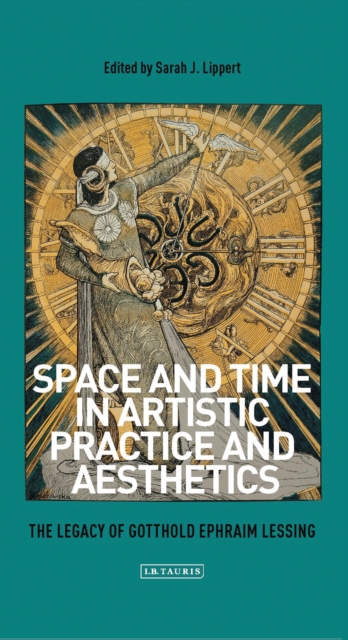
Space and Time in Artistic Practice and Aesthetics
When the Enlightenment thinker Gotthold Ephraim Lessing wrote his treatise Laocoon: An Essay on the Limits of Painting and Poetry in 1766, he outlined the strengths and weaknesses of each art. Painting was assigned to the realm of space; poetry to the realm of time. Space and Time in Artistic Practice and Aesthetics explores how artists since the eighteenth century up to the present day have grappled with the consequences of Lessing's theory and those that it spawned. As the book reveals, many artists have been - and continue to be - influenced by Lessing-like theories, which have percolated into the art education and art criticism. Artists from Jean Raoux to Willem de Kooning and Frances Bacon, and art critics such as Clement Greenberg, have felt the weight of Lessing's theories in their modes of creation, whether consciously or not. Should we sound the death knell for the theories of Lessing and his kind? Or will conceptions of temporality, spatiality and artistic competition continue to unfold? This book - the first to consider how Lessing's writings connect to visual art's production - brings these questions to the fore.
eBook
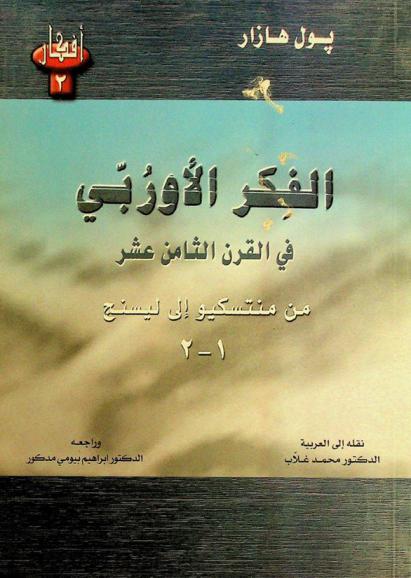
الفكر الأوربي في القرن الثامن عشر : من منتسكيو إلى ليسنج
بعد كتاب \"أزمة الضمير الأوربي\" لبول هازار الذي نشرته وزارة الثقافة ها هي الوزارة تقدم ما يمكن اعتباره جزءا ثانيا لهذا الكتاب الهام، فإذا كان الكتاب السابق يعالج الفكر الأوربي في الفترة ما بين 1680- 1715، فإن هذا الكتاب [الفكر الأوربي في القرن الثامن عشر : من منتسكيو إلى ليسنج] للمؤلف نفسه، يتابع سيرورة هذا الفكر وتحولاته وإنجازاته في القرن التالي ؛ أي القرن الثامن عشر-عصر الأنوار-، وهو قرن لا تقل أهمية ما حصل فيه، وما ترك من أثر عن القرن السالف. يساعد هذان الكتابان اللذان نتمنى على القارئ الكريم أن يقرأهما بالتتالي في تكوين فكرة واضحة عن أساس التحولات الفكرية والاجتماعية التي جرت وتجري في العالم المعاصر.
BOOK
Spinoza's Modernity
Spinoza’s Modernity is a major, original work of intellectual history that reassesses the philosophical project of Baruch Spinoza, uncovers his influence on later thinkers, and demonstrates how that crucial influence on Moses Mendelssohn, G. E. Lessing, and Heinrich Heine shaped the development of modern critical thought. Excommunicated by his Jewish community, Spinoza was a controversial figure in his lifetime and for centuries afterward. Willi Goetschel shows how Spinoza’s philosophy was a direct challenge to the theological and metaphysical assumptions of modern European thought. He locates the driving force of this challenge in Spinoza’s Jewishness, which is deeply inscribed in his philosophy and defines the radical nature of his modernity.
eBook

Nathan the Wise: Dialogue without words
The ‘dramatic poem’, Nathan der Weise [Nathan the Wise], was written in 1779 by Gotthold Ephraim Lessing in Germany. The scene is set in medieval Jerusalem, where Sultan Saladin rules and where the wealthy merchant Jew, Nathan, lives with his adopted daughter Recha, who is saved from a burning house by a Christian Templar knight. It is clear from the characters that the poem has the making of a fine example of interreligious dialogue. The culmination of the interreligious encounter in the poem is the account of what is now known as the parable of the Three Rings. The principle behind the parable has theological and socio-ethical implications that may guide us in understanding how religions can and ought to engage. This contribution presents a critical reflection of the Three Rings parable to add to the current debate on interreligious relations. The text of the poem is read from a theological socio-ethical perspective. The conclusion drawn from this reflection is that theological reasons may sometimes not be enough to ensure peaceful relations between religions. It may be that religions can together address socio-ethical challenges. Such co-action may transcend theological differences and mitigate interreligious dialogue.ContributionThis contribution wants to critically discuss the dramatic poem ‘Nathan der Weise’ and determine how the Three Rings parable can contribute to current interreligious relations. The research addresses United Nations Sustainable Development Goals numbers 11 and 16, contributing to peaceful co-existence in sustainable communities.
Journal Article

Last Works
Moses Mendelssohn (1729-1786) was the central figure in the emancipation of European Jewry. His intellect, judgment, and tact won the admiration and friendship of contemporaries as illustrious as Johann Gottfried Herder, Gotthold Ephraim Lessing, and Immanuel Kant. His enormously influential Jerusalem (1783) made the case for religious tolerance, a cause he worked for all his life._x000B__x000B_Last Works includes, for the first time complete and in a single volume, the English translation of Morning Hours: Lectures on the Existence of God (1785) and To the Friends of Lessing (1786). Bruce Rosenstock has also provided a historical introduction and an extensive philosophical commentary to both texts. _x000B__x000B_At the center of Mendelssohn's last works is his friendship with Lessing. Mendelssohn hoped to show that he, a Torah-observant Jew, and Lessing, Germany's leading dramatist, had forged a life-long friendship that held out the promise of a tolerant and enlightened culture in which religious strife would be a thing of the past._x000B__x000B_Lessing's death in 1781 was a severe blow to Mendelssohn. Mendelssohn wrote his last two works to commemorate Lessing and to carry on the work to which they had dedicated much of their lives. Morning Hours treats a range of major philosophical topics: the nature of truth, the foundations of human knowledge, the basis of our moral and aesthetic powers of judgment, the reality of the external world, and the grounds for a rational faith in a providential deity. It is also a key text for Mendelssohn's readings of Spinoza. In To the Friends of Lessing, Mendelssohn attempts to unmask the individual whom he believes to be the real enemy of the enlightened state: the Schwärmer, the religious fanatic who rejects reason in favor of belief in suprarational revelation.
eBook

Better “A Well-Trained Werewolf” Than “A Jewish Wolf in Philosophical Sheep’s Clothing”? Heine and Litter-ary Jews
In the Jessica chapter of his 1838 Shakespeare’s Maidens and Women , Heinrich Heine provocatively identified Shylock as a “well-trained werewolf.” Was Heine also alluding to the characterization of Gotthold Ephraim Lessing’s eponymous protagonist Nathan the Wise as a “Jewish wolf in philosophical sheep’s clothing” that would ironize the seemingly self-evident coupling of the two foremost Jewish characters to appear on German stages in the correlation Nathan:Shylock::good Jew:bad Jew? This article investigates that possibility first by situating each lupine image within its respective text (as well as noting Shakespeare’s use of canid aspersions of Shylock in Merchant of Venice ). It then examines the German and English critical reception of Shylock and other Jewish stage characters (e.g., Richard Cumberland’s The Jew ) to which Heine would have had access, after which it directs attention to the deployment of “Shylock” as an epithet, the references to Lessing and Nathan, and the use of lupine and canine figures in Heine’s letters and writings. In addition, the article charts the history of the specifically German-Jewish reception of Nathan /Nathan and indicates their late, post-“Jessica” coining as the opposed faces of the Jewish ducat exchanged in the German imaginary. It concludes by discussing Ernst Simon’s invocation, on the occasion of the 150th anniversary of Nathan ’s publication, of Heine’s characterization of Shylock in order to turn the by-then-commonplace polarity on its head.
Journal Article
