
Catalogue Search | MBRL


Are you sure you want to remove the book from the shelf?

{{itemTitle}}
90
result(s) for
"Government, Resistance Fiction."
Sort by:

Red Rising
Darrow, the narrator, works in the mines on Mars, a life of drudgery and subservience. He's a member of the Reds, an \"inferior\" class, though he's happily married to Eo, an incipient rebel who wants to overthrow the existing social order, especially the Golds, who treat the lower-ranking orders cruelly. When Eo leads him to a mildly rebellious act, she's caught and executed, and Darrow decides to exact vengeance on the perpetrators of this outrage.
Book

Forging Alternative Resistance Through Empathy in Sahar Khalifeh's Wild Thorns
Until recently, Palestinian nonviolent resistance has historically been overshadowed by the narrative of armed and violent resistance. This article contends that the reality of Palestinian resistance is relatively nonviolent and explores alternative nonviolent approaches drawing on Sahar Khalifeh's novel Wild Thorns. Originally published in 1976 and translated into English in 1985, Khalifeh's novel serves as a blueprint for nonviolent resistance, emphasizing empathy. This research demonstrates how interethnic connections between antagonistic groups, particularly in workplace settings, can mitigate violence by humanizing the face of the perceived enemy. Through documenting the violence of imperial imposition and scrutinizing the means by which a nation can resist its occupier nonviolently, Khalifeh creates a readership that is ready to empathize by acknowledging the trauma experienced by the Other.
Journal Article

Children of virtue and vengeance
After Zâelie and Amari bring magic back to the land of Orèisha, the monarchy and military unite to keep control of Orèisha, forcing Zâelie to fight to secure Amari's right to the throne and protect the new maji from the monarchy's wrath.
Book
Distortion of ‘Self-Image’: Effects of Mental Delirium in Fahrenheit 451 by Ray Bradbury
The Mountain State Centers for Independent Living states the Self- image is how one perceives oneself. The existence of Self- image is twisted and devoid of human feelings in Bradbury’s future-narrated Post literature universe. It is several numbers of self-impressions that develop over time that creates positive and concurrently unfavourable impacts. In the realm of psychology, Self-image is a pivotal factor in leading a fortunate life. An individual’s impression of himself forms the collective depiction of his strength and weakness. It is quintessential to talk about and compare the Self-image that Bradbury’s era had lived because self-image comprises not only one’s perception but also the intervention of the culture in which they lived. He lived in a timeline with World wars, Nazi book-burning, Stalin’s Great Purge, Nuclear warfare, and the technological development of radio and television. Bradbury found that these elements be disrupting the Self of an individual. This same connection can also be seen developing in the novel, where the government brainwashes the characters and makes them live a pre-programmed life. The interactions between the individuals are artificial and rare; they do not share any sense of feelings or the need to communicate. This diminishing effect of life is the disintegration of Self-image in the novel.
Journal Article

Restore me
\"It's been sixteen days since Juliette Ferrars killed the supreme commander of North America and took over as ruler of the Reestablishment on the continent ... Juliette thought she'd won. She took over sector 45 and now has Warner by her side. But she's still the girl with the ability to kill with a single touch--and with so much power in her young hands, the world is watching her every move, waiting to see what happens next.\"--Dust jacket.
Book

Haiti Fights Back
Haiti Fights Back: The Life and Legacy of Charlemagne Péralte is the first US scholarly examination of the politician and caco leader (guerrilla fighter) who fought against the US military occupation of Haiti. The occupation lasted close to two decades, from 1915-1934. Alexis argues for the importance of documenting resistance while exploring the occupation’s mechanics and its imperialism. She takes us to Haiti, exploring the sites of what she labels as resistance zones, including Péralte’s hometown of Hinche and the nation’s large port areas--Port-au-Prince and Cap-Haïtien. Alexis offers a new reading of US military archival sources that record Haitian protests as banditry. Haiti Fights Back illuminates how Péralte launched a political movement, and meticulously captures how Haitian women and men resisted occupation through silence, military battles, and writings. She locates and assembles rare, multilingual primary sources from traditional repositories, living archives (oral stories), and artistic representations in Haiti and the United States. The interdisciplinary work draws on legislation, cacos’ letters, newspapers, and murals, offering a unique examination of Péralte’s life (1885-1919) and the significance of his legacy through the 21st century. Haiti Fights Back offers a new approach to the study of the US invasion of the Americas by chronicling how Caribbean people fought back.
eBook

Article 5
Seventeen-year-old Ember Miller has perfected the art of keeping a low profile in a future society in which Moral Statutes have replaced the Bill of Rights and offenses carry stiff penalties, but when Chase, the only boy she has ever loved, arrests her rebellious mother, Ember must take action.
Book
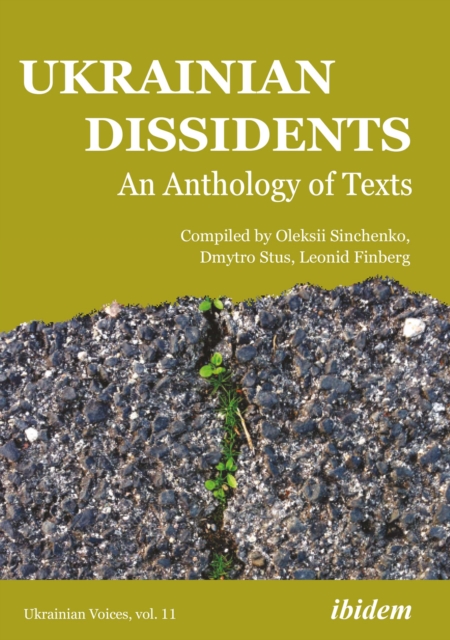
Ukrainian Dissidents: An Anthology of Texts
This anthology of seminal texts documents the development of the post-war anti-Soviet Ukrainian dissident movement. The collection is designed to introduce, via some crucial primary sources, Western and other non-Ukrainian readers to various forms of Ukrainian opposition to the communist regime. Stories of ideas and personal undertakings are unfolding before the reader in a vivid pulsation of texts that testify for themselves.
The anthology gathers contributions from different genres. They range from poetry, public speeches, and samvydav—uncensored, self-published—texts to court speeches. They come from dissidents who were held in jails, special psychiatric hospitals (for not accepting the official ideology), and prison camps. Finally, they include self-reflections by dissidents on their personal experience of opposing the totalitarian system. This variety of contributions creates a multidimensional picture of the Ukrainian dissident movement—a generation of prominent Ukrainian public and cultural figures who, in one way or another, insisted on their freedom of speech and made history by daring to challenge the official ideology and culture.
This remarkable book about the struggle for freedom has been compiled by Oleksii Sinchenko, Dmytro Stus, and Leonid Finberg. Scholarly reviewed by Myroslav Marynovych.
eBook


Structural Fear and the Ways to Resist It
The article approaches the concept of structural violence by elaborating on the idea of fear as an indicator of social or individual self-destruction. It argues that learning to read fear is an important skill for individuation and, therefore, a part of resistance to oppressive practices. Based on Tolstoy’s political thought, the article draws attention to honesty, gratefulness, love, trust, creative act and responsibility as essential conditions for developing sensibility to read fear and the social structures. Likewise, the article looks at several popular series and literary pieces in each other’s context as an existing intellectual or even social discourse with a special emphasis on the science fiction and fantasy genres in the context of spiritual anti-hierarchical thought. A distinction is made between organic fear –a natural emotion with a function of developing self-recognitio– and structural fear –a tool for manipulation and control over individuals employed by social institutions. The natural character of the emotion, in other words, the experience of fear common to every person, makes it a convenient mechanism of control over the Other. The article uses the findings to support the qualitative turn in the social studies and particularly the tendency towards the holistic or ecological approach to data selection and data interpretation. El artículo despliega el concepto de violencia estructural mediante la idea del miedo como indicador de la auto-destrucción social o individual y plantea que aprender a leer el miedo hace parte de la resistencia a las prácticas opresivas. Con base en el pensamiento político de Tolstoi, el artículo llama la atención sobre la honestidad, el amor, la confianza, el acto creativo y la responsabilidad como condiciones esenciales para desarrollar la sensibilidad a la opresión. Asimismo, el artículo analiza varias series populares y piezas literarias en el contexto de cada una como parte del discurso intelectual y social existente. Se hace una distinción entre el miedo orgánico, una emoción natural con la función de desarrollar el auto-reconocimiento, y el miedo estructural, una herramienta de manipulación y control. El artículo pretende contribuir al giro cualitativo en los estudios sociales y, particularmente, la tendencia hacia el enfoque holístico o ecológico al conocimiento y a la investigación social.
Journal Article