
Catalogue Search | MBRL


Are you sure you want to remove the book from the shelf?

{{itemTitle}}
139,140
result(s) for
"Government program"
Sort by:


Does Money Matter? The Effects of Cash Transfers on Child Development in Rural Ecuador
A large body of research indicates that child development is sensitive to early‐life environments, so that poor children are at higher risk for poor cognitive and behavioral outcomes. These developmental outcomes are important determinants of success in adulthood. Yet, remarkably little is known about whether poverty‐alleviation programs improve children’s developmental outcomes. We examine how a government‐run cash transfer program for poor mothers in rural Ecuador influenced the development of young children. Random assignment at the parish level is used to identify program effects. Our data include a set of measures of cognitive ability that are not typically included in experimental or quasi‐experimental studies of the impact of cash transfers on child well‐being, as well as a set of physical health measures that may be related to developmental outcomes. The cash transfer program had positive, although modest, effects on the physical, cognitive, and socioemotional development of the poorest children in our sample.
Journal Article

The labor of lunch : why we need real food and real jobs in American public schools
\"Children, parents, and pundits agree that there's a problem with school lunch. Big Food companies have largely replaced the nation's school cooks by supplying cafeterias with cheap precooked hamburger patties and chicken nuggets chock-full of industrial fillers. Yet it's no secret that meals cooked from scratch with nutritious, locally sourced ingredients are better for children, workers, and the environment. So why not empower \"lunch ladies\" to do more than just reheat ready-made industrial food? And why not organize together to make healthy, ethically sourced, free school lunches a reality? The Labor of Lunch aims to spark a progressive movement that will transform food in American schools, and with it the lives of thousands of low-paid cafeteria workers and the millions of children they feed. By providing a feminist history of the National School Lunch Program, Jennifer Gaddis recasts the humble school lunch as an important and often overlooked form of public care. Through vivid narration and moral heft, The Labor of Lunch offers a stirring call to action and a blueprint for school lunch reforms capable of delivering a healthier, more equitable, caring, and sustainable future\"--Provided by publisher.
Book

Brazil's unified health system: the first 30 years and prospects for the future
In 1988, the Brazilian Constitution defined health as a universal right and a state responsibility. Progress towards universal health coverage in Brazil has been achieved through a unified health system (Sistema Único de Saúde [SUS]), created in 1990. With successes and setbacks in the implementation of health programmes and the organisation of its health system, Brazil has achieved nearly universal access to health-care services for the population. The trajectory of the development and expansion of the SUS offers valuable lessons on how to scale universal health coverage in a highly unequal country with relatively low resources allocated to health-care services by the government compared with that in middle-income and high-income countries. Analysis of the past 30 years since the inception of the SUS shows that innovations extend beyond the development of new models of care and highlights the importance of establishing political, legal, organisational, and management-related structures, with clearly defined roles for both the federal and local governments in the governance, planning, financing, and provision of health-care services. The expansion of the SUS has allowed Brazil to rapidly address the changing health needs of the population, with dramatic upscaling of health service coverage in just three decades. However, despite its successes, analysis of future scenarios suggests the urgent need to address lingering geographical inequalities, insufficient funding, and suboptimal private sector–public sector collaboration. Fiscal policies implemented in 2016 ushered in austerity measures that, alongside the new environmental, educational, and health policies of the Brazilian government, could reverse the hard-earned achievements of the SUS and threaten its sustainability and ability to fulfil its constitutional mandate of providing health care for all.
Journal Article


Family Policies in OECD Countries: A Comparative Analysis
This article discusses the diversity of family policy models in 28 OECD countries in terms of the balance between their different objectives and the mix of instruments adopted to implement the policies. Cross-country policy differences are investigated by applying a principal component analysis to comprehensive country-level data from the OECD Family Database covering variables such as parental leave conditions, childcare service provision, and financial support to families. The results find persistent differences in the family policy patterns embedded in different contexts of work-family \"outcomes.\" Country classifications of family policy packages only partially corroborate categorizations in earlier studies, owing to considerable within-group heterogeneity and the presence of group outliers. The Nordic countries outdistance the others with comprehensive support to working parents with very young children. Anglo-Saxon countries provide much less support for working parents with very young children, and financial support is targeted on low-income and large families and focuses on preschool and early elementary education. Continental and Eastern European countries form a more heterogeneous group, while the support received by families in Southern Europe and in Asian countries is much lower in all its dimensions.
Journal Article

Disability politics and care : the challenge of direct funding
\"'We do not need care!' is a rallying cry for disability movements. It is informed by a recognition that a lack of choice over simple care decisions--like what to eat or wear--is a subtle yet pervasive form of violence endured by many disabled people. Disability Politics and Care examines an independent living program to explore what happens when people with disabilities take control of their own care arrangements. Christine Kelly documents responses by a wide range of stakeholders of this program and reflects on some of its broader social and political implications.\"-- Provided by publisher.
Book
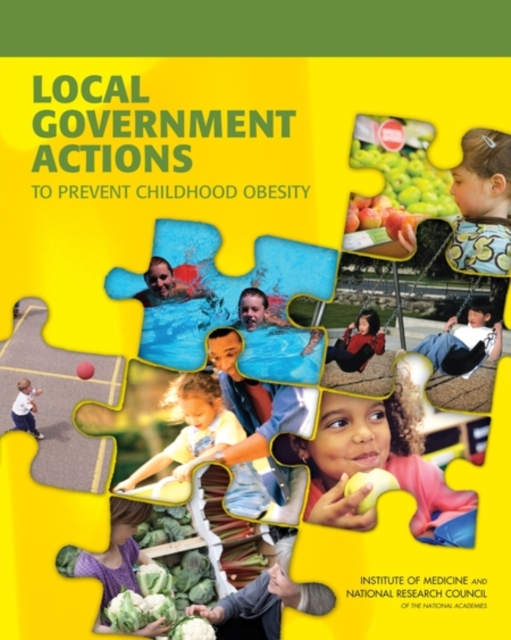
Local government actions to prevent childhood obesity
The prevalence of childhood obesity is so high in the United States that it may reduce the life expectancy of today's generation of children. While parents and other adult caregivers play a fundamental role in teaching children about healthy behaviors, even the most positive efforts can be undermined by local environments that are poorly suited to supporting healthy behaviors. For example, many communities lack ready sources of healthy food choices, such as supermarkets and grocery stores. Or they may not provide safe places for children to walk or play. In such communities, even the most motivated child or adolescent may find it difficult to act in healthy ways. Local governments-with jurisdiction over many aspects of land use, food marketing, community planning, transportation, health and nutrition programs, and other community issues-are ideally positioned to promote behaviors that will help children and adolescents reach and maintain healthy weights.
Local Government Actions to Prevent Childhood Obesity presents a number of recommendations that touch on the vital role of government actions on all levels-federal, state, and local-in childhood obesity prevention. The book offers healthy eating and physical activity strategies for local governments to consider, making it an excellent resource for mayors, managers, commissioners, council members, county board members, and administrators.
eBook


Countdown to 2030: eliminating hepatitis B disease, China
Hepatitis B virus (HBV) infection is a major public health problem worldwide. China has the world's largest burden of HBV infection and will be a major contributor towards the global elimination of hepatitis B disease by 2030. The country has made good progress in reducing incidence of HBV infection in the past three decades. The achievements are mainly due to high vaccination coverages among children and high coverage of timely birth-dose vaccine for prevention of mother-to-child transmission of HBV (both > 95%). However, China still faces challenges in achieving its target of 65% reduction in mortality from hepatitis B by 2030. Based on targets of the World Health Organization's
, we highlight further priorities for action towards HBV elimination in China. To achieve the impact target of reduced mortality we suggest that the service coverage targets of diagnosis and treatment should be prioritized. First, improvements are needed in the diagnostic and treatment abilities of medical institutions and health workers. Second, the government needs to reduce the financial burden of health care on patients. Third, better coordination is needed across existing national programmes and resources to establish an integrated prevention and control system that covers prevention, screening, diagnosis and treatment of HBV infection across the life cycle. In this way, progress can be made towards achieving the target of eliminating hepatitis B in China by 2030.
Journal Article