
Catalogue Search | MBRL


Are you sure you want to remove the book from the shelf?

{{itemTitle}}
123,650
result(s) for
"Government property."
Sort by:


Monumental ambivalence : the politics of heritage
From ancient Maya cities in Mexico and Central America to the Taj Mahal in India, cultural heritage sites around the world are being drawn into the wave of privatization that has already swept through such economic sectors as telecommunications, transportation, and utilities. As nation-states decide they can no longer afford to maintain cultural properties—or find it economically advantageous not to do so in the globalizing economy—private actors are stepping in to excavate, conserve, interpret, and represent archaeological and historical sites. But what are the ramifications when a multinational corporation, or even an indigenous village, owns a piece of national patrimony which holds cultural and perhaps sacred meaning for all the country’s people, as well as for visitors from the rest of the world? In this ambitious book, Lisa Breglia investigates “heritage” as an arena in which a variety of private and public actors compete for the right to benefit, economically and otherwise, from controlling cultural patrimony. She presents ethnographic case studies of two archaeological sites in the Yucatán Peninsula—Chichén Itzá and Chunchucmil and their surrounding modern communities—to demonstrate how indigenous landholders, foreign archaeologists, and the Mexican state use heritage properties to position themselves as legitimate “heirs” and beneficiaries of Mexican national patrimony. Breglia’s research masterfully describes the “monumental ambivalence” that results when local residents, excavation laborers, site managers, and state agencies all enact their claims to cultural patrimony. Her findings make it clear that informal and partial privatizations—which go on quietly and continually—are as real a threat to a nation’s heritage as the prospect of fast-food restaurants and shopping centers in the ruins of a sacred site.
eBook


Intangible Heritage and the Museum
In this comparative, international study Marilena Alivizatou investigates the relationship between museums and the new concept of \"intangible heritage.\" She charts the rise of intangible heritage within the global sphere of UN cultural policy and explores its implications both in terms of international politics and with regard to museological practice and critical theory. Using a grounded ethnographic methodology, Alivizatou examines intangible heritage in the local complexities of museum and heritage work in Oceania, the Americas and Europe. This multi-sited, cross-cultural approach highlights key challenges currently faced by cultural institutions worldwide in understanding and presenting this form of heritage.
eBook


Intellectual Property Rights in China
Over the past three decades, China has transformed itself from a stagnant, inward, centrally planned economy into an animated, outward-looking, decentralized market economy. Its rapid growth and trade surpluses have caused uneasiness in Western governments, which perceive this growth to be a result of China's rejection of international protocols that protect intellectual property and its widespread theft and replication of Western technology and products. China's major trading partners, particularly the United States, persistently criticize China for delivering, at best, half-hearted enforcement of intellectual property rights (IPR) norms. Despite these criticisms, Zhenqing Zhang argues that China does respect international intellectual property rights, but only in certain cases. In Intellectual Property Rights in China , Zhang addresses the variation in the effectiveness of China's IPR policy and explains the mechanisms for the uneven compliance with global IPR norms.
Covering the areas of patent, copyright, and trademark, Zhang chronicles how Chinese IPR policy has evolved within the legacy of a planned economy and an immature market mechanism. In this environment, compliance with IPR norms is the result of balancing two factors: the need for short-term economic gains that depend on violating others' IPR and the aspirations for long-term sustained growth that requires respecting others' IPR. In case studies grounded in theoretical analysis as well as interviews and fieldwork, Zhang demonstrates how advocates for IPR, typically cutting-edge Chinese companies and foreign IPR holders, can be strong enough to persuade government officials to comply with IPR norms to achieve the country's long-term economic development goals. Conversely, he reveals the ways in which local governments protect IPR infringers because of their own political interests in raising tax revenues and creating jobs.
eBook


Core Competencies for Federal Facilities Asset Management Through 2020
The U.S.government is faced with growing challenges to managing its facilities and infrastructure.A number of factors such as shrinking budgets, an aging workforce, and increasing costs demand new approaches to federal facilities management.
eBook

Urban development in China under the institution of land rights
\"How have the development and redevelopment of China's cities since the early 1950s transformed the settlements and fortunes of a fifth of the world's population? Rapid urbanization since the 1980s has changed the nation from a rural society to an urban one, marking it as one of the most significant transformations in history. As a country with severe land scarcity, land resources are intensively contested for during urbanization under the new regime of marketization. This book focuses on the impact of the institution of land rights that have transitioned from private ownership to socialist state ownership, and subsequently to public land leasing in the urban domain, and to collective ownership in rural areas. In the context of defining the relationship between the state and the market, the gradualist transition of land rights gives rise to intriguing processes of place-making. The elaboration of these processes will engage several revealing conceptual notions: land as a means of production, land commodification, ambiguous land rights, incomplete land rights, trading land use rights for land development rights, institutional uncertainty, land rent seeking and dissipating, local developmental state, danwei-enterprises, and more. The newly created landed interests are embedded intricately within the urban spatial structure. This book would especially be of interest to scholars interested in developmental economics, urban planning, geography, public policies, public management and sociology, and also practitioners focusing on development and planning\"-- Provided by publisher.
Book
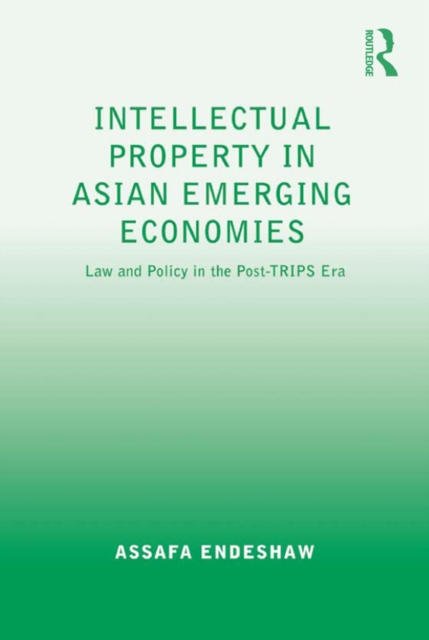
Intellectual Property in Asian Emerging Economies
This book critically reviews the recurrent debate on Intellectual Property law and policy in developing countries carried out in the last decade. It identifies the still unresolved policy issues and proposes alternative approaches that resonate with the needs for transformation of the economic and social reality of developing countries. Focusing on emerging economies in Asia, the work draws the wider lessons to be learnt by researchers, policy makers, legislators and the business sector in general and concludes by putting forward proposals for reform.
eBook