
Catalogue Search | MBRL


Are you sure you want to remove the book from the shelf?

{{itemTitle}}
12
result(s) for
"Grail Folklore."
Sort by:

Parzival : the quest of the Grail Knight
A retelling of the Arthurian legend in which Parzival, unaware of his noble birth, comes of age through his quest for the Holy Grail.
Book
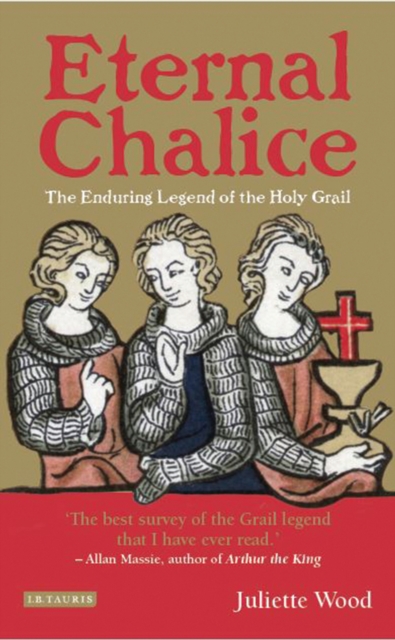
Eternal Chalice
\"What is the secret of the Grail?\" So intoned a heavenly voice to Sir Percival in John Boorman's stylish and influential film Excalibur (1981). The sacred allure of the Holy Grail has fascinated writers and ensnared knights for over a thousand years. From Malory to Monty Python, the eternal chalice--said to be the very cup from which Christ drank at the Last Supper--has the richest associations of any icon in British myth. Many different meanings have been devised for the Grail, which has been linked to the Celts and King Arthur, the eucharistic rites of Eastern Christianity, ancient mystery religions, Jungian archetypes, dualist heresies, Templar treasure and even the alleged descendants of Christ himself and Mary Magdalene. The common thread running through all these stories is the assumption that the Grail legend has a single source with a meaning that--if only we could decode it--is concealed in the romances themselves. That meaning has become the subject of coded, secret documents and is the central feature of a vast conspiracy supposedly stretching back to the dawn of western civilization. Juliette Wood here reveals the elusive and embedded significance of the Grail story in popular consciousness--as myth, medieval romance, tangible holy relic and finally as the centre of an esoteric theory of global conspiracy. The author shows how various interpretations of the Grail, over the centuries, reflect changing cultural needs and desires. Her book will enthrall those who, like Sir Percival, seek to unlock the mysterious secrets of western mythology's most extraordinary and tantalizing enigma, and will delight students of history, myth and religion alike.
eBook

Misunderstanding, Misperception and Mistakes: The Logic of the Grail in Old French Arthurian Romance and Thomas Malory’s Tale of the Sankgreal
This article seeks to resituate critical discussions about logic in the Old French Grail romances and Thomas Malory’s Tale of the Sankgreal. Where previous scholarship has emphasised the mystical elements of the Old French Grail narratives to suggest alternate meanings for the Grail itself, this article reads the Grail miracles as structuring devices that reflect classical theories of dialectic and demonstrative argumentation. Through examining one example from Chrétien de Troyes’ Perceval, the Didot-Perceval, The Vulgate Cycle Queste del Saint Graal, and Thomas Malory’s Tale of the Sankgreal, this article also highlights fundamental similarities between the logical systems underlying each Grail narrative that are not restricted by language or date of composition. Thus, the article depicts Malory not just as consciously drawing upon the Vulgate Queste del Saint Graal, but also as unconsciously inheriting elements from each of his Old French predecessors.
Journal Article
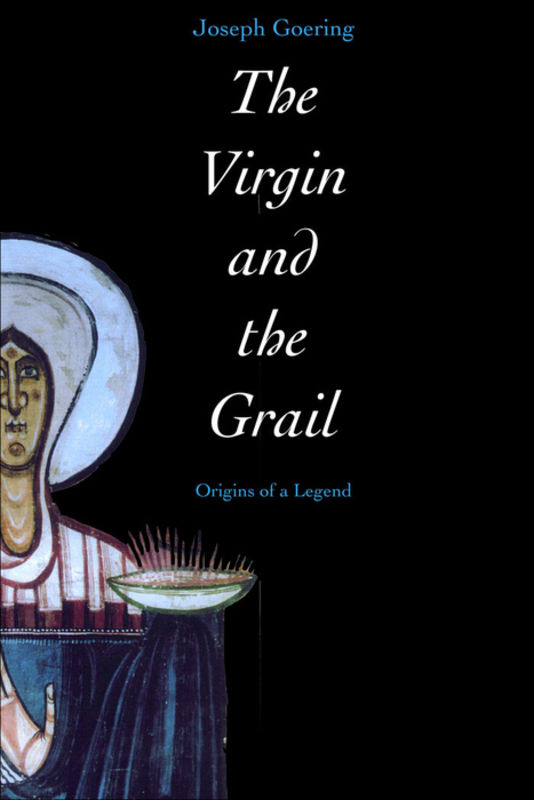
The Virgin and the Grail
Some fifty years before Chrétien de Troyes wrote what is probably the first and certainly the most influential story of the Holy Grail, images of the Virgin Mary with a simple but radiant bowl (called a \"grail\" in local dialect) appeared in churches in the Spanish Pyrenees. In this fascinating book, Joseph Goering explores the links between these sacred images and the origins of one of the West's most enduring legends.While tracing the early history of the grail, Goering looks back to the Pyrenean religious paintings and argues that they were the original inspiration of the grail legend. He explains how storytellers in northern France could have learned of these paintings and how the enigmatic \"grail\" in the hands of the Virgin came to form the centerpiece of a story about a knight in King Arthur's court. Part of the allure of the grail, Goering argues, was that neither Chrétien nor his audience knew exactly what it represented or why it was so important. And out of the attempts to answer those questions the literature of the Holy Grail was born.
eBook
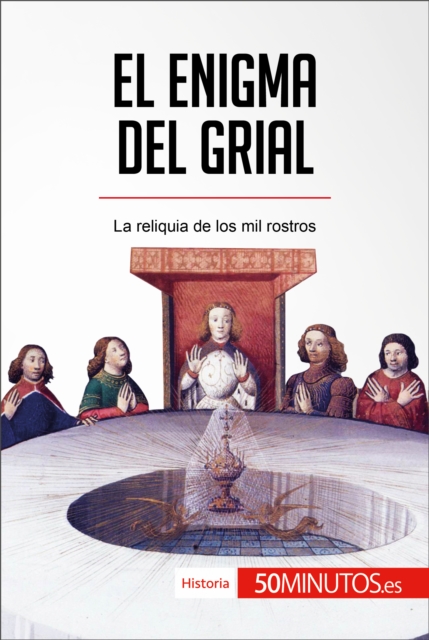
El enigma del grial
Este libro es una guía práctica y accesible para saber más sobre el enigma del grial, que le aportará la información esencial y le permitirá ganar tiempo. En tan solo 50 minutos, usted podrá: •Descubrir cómo nace el enigma del grial, mencionado por primera vez por Chrétien de Troyes en el siglo XII en El Cuento del Grial, una obra que se inscribe dentro de la tradición artúrica •Profundizar en las distintas percepciones y simbolismos del grial: el grial cristiano, el ritual, el celta y la teoría del sangreal, y hacer un repaso por los principales «verdaderos» griales repartidos por el mundo •Analizar las distintas posturas sobre la naturaleza del grial que existen en la actualidad y descubrir otras misteriosas reliquias, como la lanza que sangra SOBRE 50MINUTOS.ES | Historia 50MINUTOS.ES le ofrece las claves para entender rápidamente los principales acontecimientos históricos que cambiaron el mundo.Nuestras obras narran de forma rápida y eficaz una gran variedad de acontecimientos históricos clave de distintas épocas, desde la Antigua Grecia hasta la caída del muro de Berlín. ¡Descubra en un tiempo récord la historia que ha marcado el rumbo del mundo!
eBook
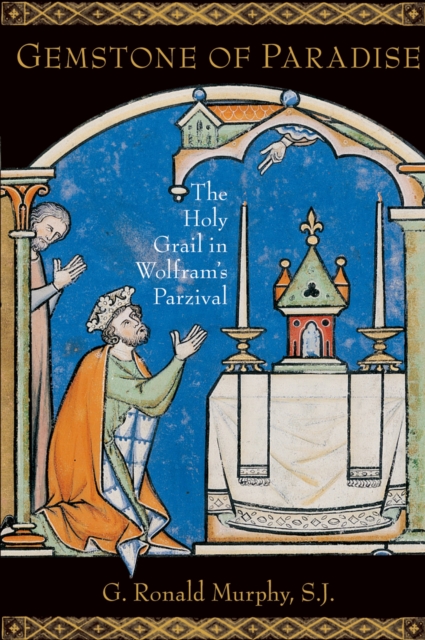
Gemstone of paradise : the Holy Grail in Wolfram's Parzival
The story of the Grail, usually identified as some kind of mystical vessel, has gripped the imaginations of millions since it first appeared in several medieval romances. Of these, Wolfram von Eschenbach's Middle High German Parzival (c. 1210) is generally recognized as the most complex and beautiful. Strangely, in Parzival, the Grail is identified as a stone rather than a cup or dish. This oddity is usually seen as just another mystery, further evidence of the difficulty of discerning the true sources of the Grail legend. This book seeks to illuminate this mystery and to enable a far better appreciation of Wolfram's insight into the nature of the Grail and its relationship to the Crusades. The Grail, container of the sacred body and blood of Christ, Wolfram was saying, was where God said it would be: on the altar at the consecration of the Mass. Wolfram's “sacred stone” was none other than a consecrated altar, precious by virtue of the sacrament but also, this book argues, by virtue of the material from which it was made: a green gem, one of the precious stones associated with the rivers of Paradise. The book explores what it signifies for the Grail to be a translucent gemstone and an altar made portable only by a woman. Wolfram's stone is a sacramental reference to the stone the Crusaders fought to obtain — the Holy Sepulchre. Parzival, the book states, was intended as an argument against continued efforts by Latin Christians to recover the Holy Sepulcher in Jerusalem by force of arms. In Wolfram's story, warring Christian and Muslim brothers are brought together in peace by the power of Wolfram's Holy Grail.
eBook

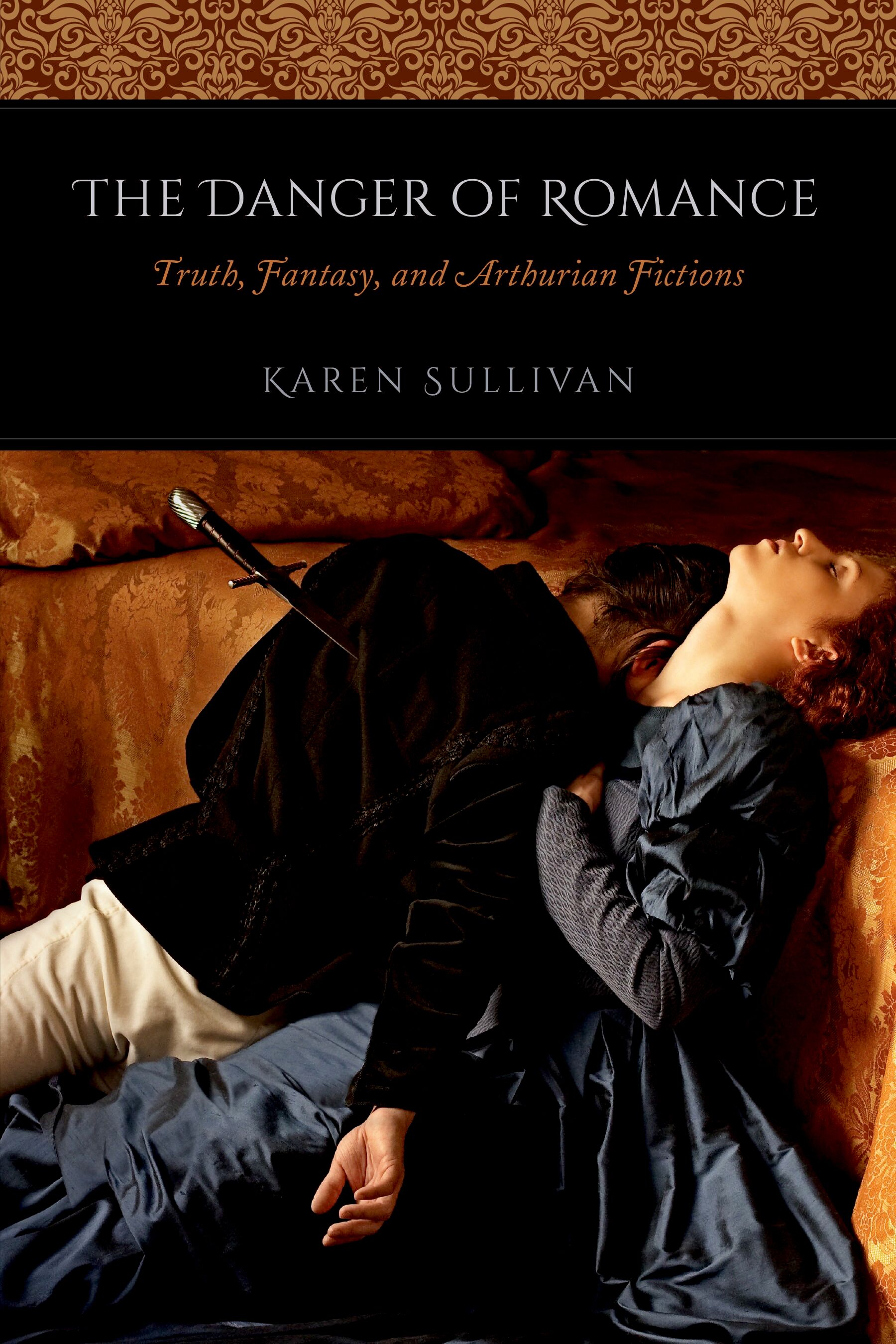
The Danger of Romance
The curious paradox of romance is that, throughout its history, this genre has been dismissed as trivial and unintellectual, yet people have never ceased to flock to it with enthusiasm and even fervor. In contemporary contexts, we devour popular romance and fantasy novels like The Lord of the Rings, Harry Potter, and Game of Thrones, reference them in conversations, and create online communities to expound, passionately and intelligently, upon their characters and worlds. But romance is \"unrealistic,\" critics say, doing readers a disservice by not accurately representing human experiences. It is considered by some to be a distraction from real literature, a distraction from real life, and little more. Yet is it possible that romance is expressing a truth—and a truth unrecognized by realist genres? The Arthurian literature of the Middle Ages, Karen Sullivan argues, consistently ventriloquizes in its pages the criticisms that were being made of romance at the time, and implicitly defends itself against those criticisms. The Danger of Romance shows that the conviction that ordinary reality is the only reality is itself an assumption, and one that can blind those who hold it to the extraordinary phenomena that exist around them. It demonstrates that that which is rare, ephemeral, and inexplicable is no less real than that which is commonplace, long-lasting, and easily accounted for. If romance continues to appeal to audiences today, whether in its Arthurian prototype or in its more recent incarnations, it is because it confirms the perception—or even the hope—of a beauty and truth in the world that realist genres deny.
eBook

Perceval, or, The story of the grail
In this verse translation of Perceval; or, The Story of the Grail , Ruth Harwood Cline restores to life the thematically crucial Arthurian tale of the education of a knight in his search for the Holy Grail.
Cline's translation, faithful to the highly synthetic, deliberately ornate nature of medieval French, follows Perceval from his home in Wales, through his rich and raucous adventures as a member of the fraternity of knights, to his climactic meeting with the Fisher King. Paralyzed by his first glimpse of the Grail, Perceval fails to save the ailing king. Distraught, the knight begins a new quest for the Grail, a journey on the road of penitence and faith. Perceval's venture, the true test of his knighthood, ends without conclusion; the death of author Chrétien de Troyes left unsaid and undetermined the success of Perceval's quest.
eBook

The Sacred Secret
Why did Dan Brown's The Da Vinci Code, a reasonably interesting murder mystery of ordinary literary caliber, sell 65 million copies? Was its amazing popularity due to \"the sacred secret,\" the feminine principle which has been missing and ignored in world consciousness for well over five thousand years by a patriarchal culture in which male political power and the masculine principle have dominated? Tracing this \"secret\" leads to a search that includes a history that precedes writing, only recorded by archeologists in artifacts as the Neolithic goddess tradition. It is also found in key figures in both the Old and New Testament, in dreams and other communications from the unconscious, in myths, as well as in nature. This article focusses on the Arthurian Legends and the search for the Grail, an explicit symbol for the sacred feminine. While Brown's book is a modern variation of the Grail legend and several key characters are portrayed as scholars of the feminine, ideas about the feminine are discussed in subtle ways, leaving deepest meaning of the Grail sub rosa.
The feminine principle goes deeper to the maternal dimension that embraces as well as transcends all opposites, including good and evil, and becomes the universal all-inclusive gnosis, an intrinsic intelligence that is in all of nature. Sir James Jean, a Noble-prize winning quantum physicist spoke about a general consensus among his scientific associates that the universe should be understood more \"like a great thought than a great machine.\" The feminine principle as maternal is all inclusive in its complex yet unified intelligence. In Meister Eckhart, so valued by Jung, we find this same archetype in his distinction between God and Godhead. God is a human way of understanding the divine, and the name is masculine in both Latin and German. Godhead is the mystery in all of existence, and this name is feminine in both languages. The ultimate gnosis in psyche and nature is an inclusive, mysterious creative intelligence.
Journal Article