
Catalogue Search | MBRL


Are you sure you want to remove the book from the shelf?

{{itemTitle}}
885
result(s) for
"Grammar, Comparative and general -- Usage"
Sort by:
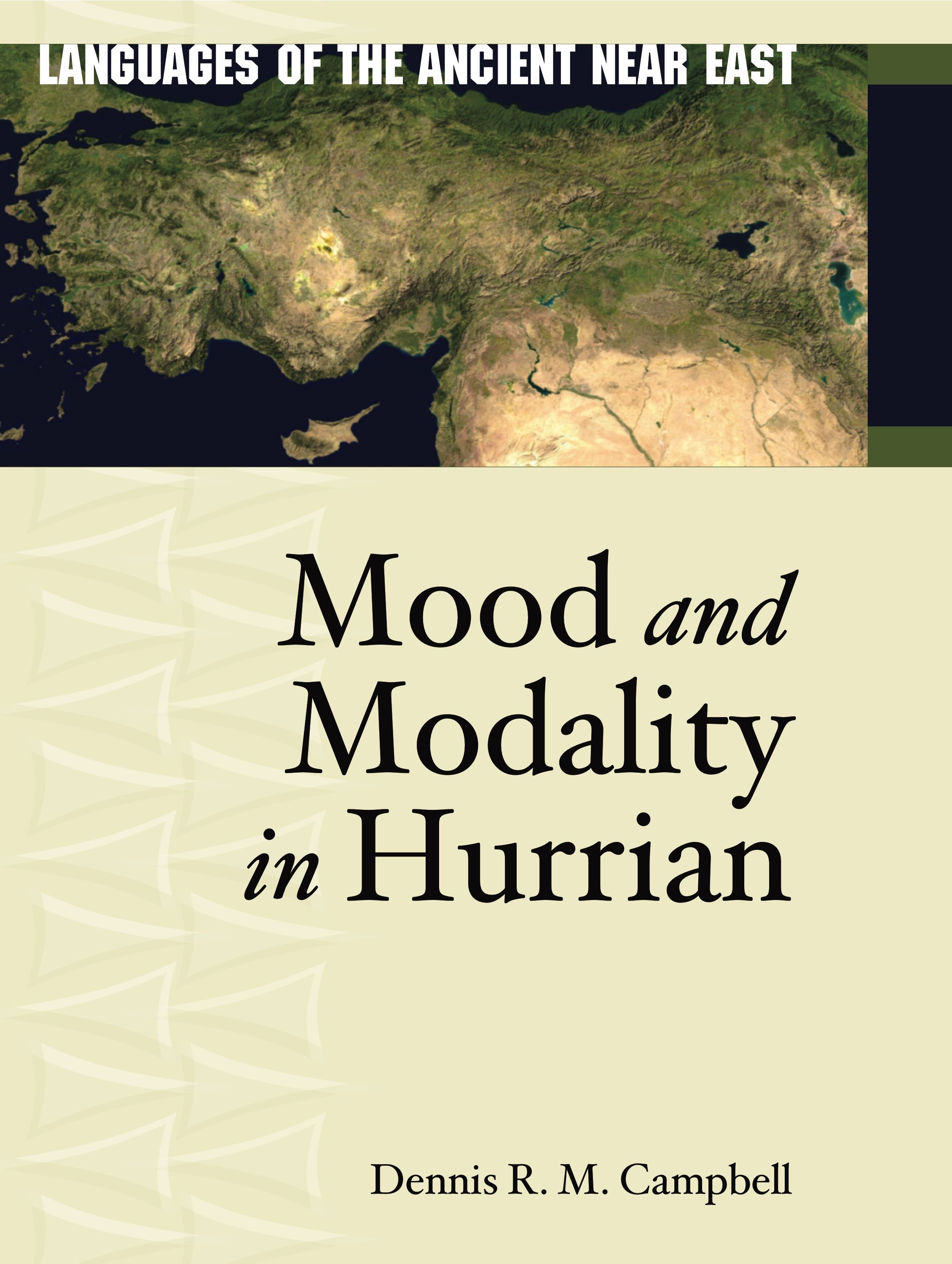
Mood and modality in Hurrian
In a long dead language isolate such as Hurrian, grammatical studies are replete with difficulties. The paucity of material and our inability to compare it to modern, well-documented languages typically results in more questions than answers. Many posited answers to these questions lead inevitably to dead ends. Studies in languages such as Hurrian run the risk of either stagnating due to an adherence to the status quo by scholars or fragmenting when no two scholars can (or will) agree on any point. In this book, Campbell has in many ways broken with tradition in an attempt to go beneath the surface and reveal further complexities in Hurrian grammar. This work, the first English-language monograph on Hurrian since 1941, is not a dogmatic treatise meant to counter the status quo but an exploration of the complexities of the Hurrian language from a new perspective. His conclusions may challenge present perceptions, but the hope is that they will in turn inspire challenges, for it is only in this way that our understanding of this wonderful language and the people who spoke it can be furthered.
Mood and Modality in Hurrian provides a formal and functional analysis of the Hurrian modal morphemes. Unlike the better-known Semitic and Indo-European languages of the ancient Near East, Hurrian has a rich complement of modal endings. This at-times bewildering variety in form and function of modal morphemes in Hurrian has been a largely unstudied topic. Although it has been touched upon in a number of studies, it has not received a detailed treatment until now.
Beyond a philological treatment of a dead language, Campbell also adds to the accumulated knowledge of ergativity. This book explores the interplay between ergativity and modality in Hurrian. Furthermore, Campbell explores the issue of voice in Hurrian and its relation to modality.
eBook
Functionalist and usage-based approaches to the study of language : in honor of Joan L. Bybee
The contributions to this volume honor Joan Bybee's 2005 LSA Presidential address 'Grammar is Usage and Usage is Grammar,' as a cumulative articulation of Professor Bybee's long and influential career in linguistics.
eBook

Constructional Change in English
Martin Hilpert combines construction grammar and advanced corpus-based methodology into a new way of studying language change. Constructions are generalizations over remembered exemplars of language use. These exemplars are stored with all their formal and functional properties, yielding constructional generalizations that contain many parameters of variation. Over time, as patterns of language use are changing, the generalizations are changing with them. This book illustrates the workings of constructional change with three corpus-based studies that reveal patterns of change at several levels of linguistic structure, ranging from allomorphy to word formation and to syntax. Taken together, the results strongly motivate the use of construction grammar in research on diachronic language change. This new perspective has wide-ranging consequences for the way historical linguists think about language change. It will be of particular interest to linguists working on morpho-syntax, sociolinguistics and corpus linguistics.
eBook
Mobilizing others : grammar and lexis within larger activities
Requesting, recruitment, and other ways of mobilizing others to act have garnered much interest in Conversation Analysis and Interactional Linguistics. This volume takes a holistic perspective on the practices that we use to get others to act either with us, or for us. It argues for a more explicit focus on 'activity' in unpacking the linguistic and embodied choices we make in designing mobilizing moves. Drawing on studies from a variety of different languages and settings, the collected studies in this volume illustrate how interactants design their turns not only for specific recipients, but also for a specific interactional situation. In doing so, speakers are able to mobilize others' cooperation, contribution, or assistance in the most appropriate and economical ways. By focusing on 'situation design' across languages and settings, this volume provides new insights into the ways in which the ongoing activity, with its attendant participation structures, shapes the design, placement, and understanding of moves which mobilize others to act.
eBook
The Regularity of the 'Irregular' Verbs and Nouns in English
This volume presents an in-depth study of the so-called irregular Past Tense (sing/sang) and Noun Plural (foot/feet) forms with Internal Vowel Alternation (IVA) in English demonstrating that they possess both a fixed phonological and semantic regularity. The innovative sign-oriented analysis and inductive methodology employed in this study are further supported by additional first language acquisition data, experimental studies and historical evidence. The data culled from multiple linguistic anthologies, dictionaries and thesauri have shown that although the IVA process comprises a relatively small number of nominal and verbal forms in Modern English, IVA, originally, was a prevalent and productive process in Old English, Indo-European and other language families. The results of this empirical study present and introduce a novel classification based on the regular and systematic iconic-phonological and semantic nature of all these diverse IVA processes both nominal and verbal that has been maintained throughout the history of English.
eBook

The influence of aspect markers and tense on the action-sentence compatibility effect in Mandarin action sentence comprehension
The Action-sentence Compatibility Effect (ACE) suggests that action sentences comprehension is based on embodied mental simulation. In studies of English, aspect markers and tense has been shown to influence ACE; however, their effects remain unclear in Mandarin. This study utilized Mandarin action sentences with single objects and employed the classic sentence sensibility judgment paradigm to investigate the ACE for concrete and abstract action sentences under different aspect marker (Experiment 1 and 2) or future tense (Experiment 3) conditions across three experiments. The results showed that ACE occurred for both concrete and abstract action sentences in the progressive aspect, perfective aspect, and future tense. Action simulation during sentence comprehension was unaffected by the type of aspect markers and future tense or the concreteness/abstractness of the sentences. These findings suggest that the comprehension of Mandarin action sentences relies on the mental simulation of verbs. Moreover, aspect markers and future tense in Mandarin do not influence the mental simulation process, and Mandarin action sentences comprehension may be centered around the mental simulation of the verb.
Journal Article

Extended Grammar of Systematized Nomenclature of Medicine – Clinical Terms for Semantic Representation of Clinical Data: Methodological Study
Interoperability has been a challenge for half a century. Led by an informatics view of the world, the quest for interoperability has evolved from typing and categorizing data to building increasingly complex models. In parallel with the development of these models, the field of terminologies and ontologies emerged to refine granularity and introduce notions of hierarchy. Clinical data models and terminology systems vary in purpose, and their fixed categories shape and constrain representation, which inevitably leads to information loss.
Despite these efforts, semantic interoperability remains imperfect. Achieving it is essential for effective data reuse but requires more than rich terminologies and standardized models. This methodological study explores the extent to which the SNOMED CT (Systematized Nomenclature of Medicine - Clinical Terms) compositional grammar can be leveraged and extended to approximate a formal descriptive grammar, allowing clinical reality to be expressed in coherent, meaningful sentences rather than preconstrained categories.
Building on a decade of semantic representation efforts at the Geneva University Hospitals, we developed a framework to identify recurring semantic gaps in clinical data. We addressed these gaps by systematically modifying the SNOMED CT Machine Read` Concept Model and extending its Augmented Backus-Naur Form syntax to support necessary grammatical structures and external vocabularies.
This approach enabled the semantic representation of over 119,000 distinct data elements covering 13 billion instances. By extending the grammar, we successfully addressed critical limitations such as negation, scalar values, uncertainty, temporality, and the integration of external terminologies like Pango. The extensions proved essential for capturing complex clinical nuances that standard precoordinated concepts could not represent.
Rather than creating a new standard from scratch, extending the grammatical capabilities of SNOMED CT offers a viable pathway toward high-fidelity semantic representation. This work serves as a proof-of-concept that separating the rules of composition from vocabulary allows for a more flexible and robust description of clinical reality, provided that challenges regarding governance and machine readability are addressed.
Journal Article
A comparative analysis of syntactic complexity in argumentative essays from rhetorical perspective: ChatGPT vs. English native speakers
This study investigates the syntactic complexity of argumentative essays generated by ChatGPT in comparison to those written by native speakers. By examining cross-rhetorical-stage variation in syntactic complexity, we explore how ChatGPT’s writing aligns with or diverges from human argumentative writing. The results reveal that ChatGPT and native speakers exhibit similar patterns in mean length of sentence in the thesis stage, mean length of T-unit and complex nominals per T-unit in the conclusion stage. However, ChatGPT showed a preference for coordination structures across all stages, relying more on parallel constructions, and native speakers used subordination structure and verb phrases more frequently across all stages. Additionally, ChatGPT’s syntactic complexity was characterized by lower variability across multiple measures, indicating a more uniform and formulaic output. These findings underscore the differences between ChatGPT and native speakers in syntactic complexity and rhetorical functions in argumentative essays, therefore contributing to our understanding of ChatGPT’s argumentative writing performance and providing valuable insights for ChatGPT integration into writing instruction.
Journal Article
Novel forms for the expression of aspect in heritage Greek across majority languages
This paper investigates, on the one hand, which verbal features are re-organized in heritage grammars and, on the other hand, the production of novel non-canonical forms for the expression of verbal aspect by Greek heritage speakers in Germany and the US compared to monolingually-raised speakers of Modern Greek (henceforth Greek). As aspect cannot be seen in isolation from other morphological features such as voice, tense, and phi-features, the analysis of the novel forms is conducted under the prism of the verbal complex. The results indicate that φ-features and aspect seem to be the most re-organized elements encoded in Greek verbs and, furthermore, that heritage speaker groups differ significantly from monolingually-raised controls in terms of the production of novel morphological forms, demonstrating that heritage speakers, especially those in the US, face difficulties with the morpho-phonological adjustments needed to be built in verbal forms.
Journal Article

The Syntax of ??i '??a al-fu??a:??i:ja 'If of Surprise' in Classical Arabic
This scholarly investigation deals with the intricacies surrounding the syntactical nature of the phenomenon known as \"If of Surprise\" in the context of Classical Arabic, employing a methodological lens derived from the Minimalist framework. The \"If of Surprise\" construct represents a unique form of expression that incorporates a particle phonetically resembling the conditional particle \"if in Classical Arabic, yet its underlying structure diverges from establishing genuine conditional relationships. By employing the analytical tools provided by the Minimalist Program, this study scrutinizes the data associated with \"If of Surprise\" constructions, utilizing several syntactic diagnostics to uncover their distinctive characteristics. The findings of this study unequivocally demonstrate that \"If of Surprise\" exhibits remarkable traits that set it apart from conventional syntactic patterns. By shedding light on the mechanisms through which these projections operate, the study provides a comprehensive understanding of the sudden interpretive nature exhibited by \"If of Surprise\" By delving into the intricacies of its syntactic structure and exploring the role of Speech Act Projections, this research contributes to the broader field of linguistic inquiry and aids in unraveling the complexities inherent in the syntax of Classical Arabic. Index Terms--particles, syntax, The Minimalist Program, small clauses
Journal Article