
Catalogue Search | MBRL


Are you sure you want to remove the book from the shelf?

{{itemTitle}}
239
result(s) for
"Great Britain -- Description and travel"
Sort by:

United Kingdom
Made up of Great Britain (which includes England, Scotland, and Wales) and Northern Ireland (which is part of a nearby island), the United Kingdom is home to a diverse range of cultures and traditions. Your tour guide, Isla, will help you navigate her amazing homeland as she explains what it is like to live in the United Kingdom. She will also share what she knows about the countrys long history, rich culture, and unique traditions.
BOOK

Tasting Tourism: Travelling for Food and Drink
Along with basic practical reasons, our practices concerning food and drink are driven by context and environment, belief and convention, aspiration and desire to display - in short, by culture. Similarly, culture guides how tourism is used and operates. This book examines food and drink tourism, as it is now and is likely to develop, through a cultural 'lens'. It asks: what is food and drink tourism, and why have food and drink provisions and information points become tourist destinations in their own right, rather than remaining among a number of tourism features and components? While it offers a range of international examples, the main focus is on food and drink tourism in the UK. What with the current diversification of tourism in rural areas, the increased popularity of this type of tourism in the UK, the series of BSE, vCJD and foot and mouth crises in British food production, and the cultural and ethnic fusion in British towns and cities, it makes a particularly rich place in which to explore this subject. The author concludes that the future of food and drink tourism lies in diversity and distinctiveness. In an era of globalisation, there is a particular desire to enjoy varied, rather than mono-cultural ambiance and experience. She also notes that there is an immediacy of gratification in food and drink consumption which has become a general requirement of contemporary society.
Contents: Food and drink, from past to present; Food and drink become a leisure destination; Food for thought and visit; Ripe time for providers; Initiative and opinion; Production and display centres and venues; Outlets and markets; Accommodation; Feeding and drinking; Special events and devices, and resources for education; The wine dimension; From among the Cornucopia; The crop now, and for sowing in future; Bibliography; Index.
eBook


Rivers of Britain
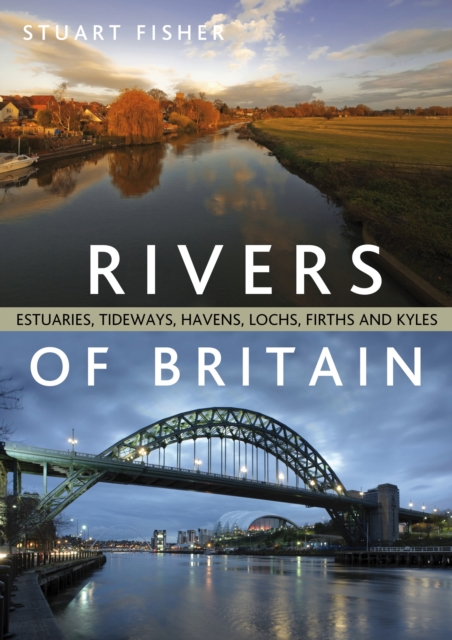
Britain's rivers deserve to be better known. Teeming with wildlife, steeped in history, sporting bridges, docks and stunning architecture, not to mention supporting riverside pubs, waterways museums and a variety of places of interest, they are the country's essential arteries, connecting inland Britain with the sea. Covering Britain's best known tidal rivers (the Avon, Severn, Dee, Mersey and Thames), the picturesque rural ones (the Camel, Wye, Orwell and Crouch), the industrial rivers of the Medway, Tyne and Clyde, right down to the smallest and lesser known of Britain's tidal waterways, this is a fascinating and comprehensive guide, packed with maps, colour photographs and interesting facts about the lifeblood of our country. Of interest to sailors, fishermen, motorised craft and canoeists keen to discover beautiful unfrequented spots, stopping points, places of interest, riverside pubs and lookout points, as well as practical information on rapids, weirs and nearby towns and car parks, it will also interest walkers, cyclists, families and holidaymakers discovering the local history, folklore, riverside architecture and places to take river trips. This is a unique comprehensive and fascinating guide to Britain's river system, providing a revealing insight for anyone with an interest in Britain's watery arteries.
eBook

Our island stories : country walks through colonial Britain
The countryside is cherished by many Britons. There is a depth of feeling about rural places, the moors and lochs, valleys and mountains, cottages and country houses. Yet the British countryside, so integral to our national identity, is rarely seen as having anything to do with British colonialism. Where the countryside is celebrated, histories of empire are forgotten. Historian Corinne Fowler brings rural life and colonial rule together with transformative results. Through ten country walks, roaming the island with varied companions, she combines local and global history, connecting the Cotswolds to Calcutta, Dolgellau to Virginia, and Grasmere to Canton. Empire transformed rural lives for better and for worse: whether in Welsh sheep farms or Cornish copper mines, it offered both opportunity and exploitation.
Book
United Kingdom Society & Culture Complete Report
Need to know it all? Our all-inclusive culture report for United Kingdom will get up to speed on all aspects of culture in United Kingdom, including lifecycle, religion, women, superstitions & folklore, sports, holidays & festivals, and etiquette.
eBook

Interpreting the Landscape
Most places in Britain have had a local history written about them. Up until this century these histories have addressed more parochial issues, such as the life of the manor, rather than explaining the features and changes in the landscape in a factual manner. Much of what is visible today in Britain's landscape is the result of a chain of social and natural processes, and can be interpreted through fieldwork as well as from old maps and documents.Michael Aston uses a wide range of source material to study the complex and dynamic history of the countryside, illustrating his points with aerial photographs, maps, plans and charts. He shows how to understand the surviving remains as well as offering his own explanations for how our landscape has evolved.
eBook