
Catalogue Search | MBRL


Are you sure you want to remove the book from the shelf?

{{itemTitle}}
287
result(s) for
"Great Britain -- Social conditions -- 19th century"
Sort by:

Heroes of invention : technology, liberalism and British identity, 1750-1914
This is an innovative study of why inventors rose to heroic stature and popular acclaim in Victorian Britain.
Book

Regulated Lives
Regulated Lives explores the British life insurance industry's changing assessments of the values and risks of human life between 1800 and 1914. Timothy Alborn's unique study uses insurance practices to demonstrate how Victorian ideas about the lived experience altered both to accommodate and resist elements of modernity such as statistical thinking, medicalization, and capitalist bureaucracy.
The nature of Victorian life insurance companies meant that their customers were both consuming subjects and objectified abstractions. Policyholders were active consumers of a product as well as passive objects which were evaluated for 'risk' in the objective and homogenizing terms determined by the industry. By examining how salesmen, actuaries, and doctors utilized their differing conceptions of what the various aspects of people's lives meant, Regulated Lives suggests that the very complexity of modern commercial and social institutions produces space where individuality can flourish.
eBook


The Archaeology of Improvement in Britain, 1750–1850
In this innovative 2007 study, Sarah Tarlow shows how the archaeology of this period manifests a widespread and cross-cutting ethic of improvement. Theoretically informed and drawn from primary and secondary sources in a range of disciplines, the author considers agriculture and the rural environment, towns, and buildings such as working-class housing and institutions of reform. From bleach baths to window glass, rubbish pits to tea wares, the material culture of the period reflects a particular set of values and aspirations. Tarlow examines the philosophical and historical background to the notion of improvement and demonstrates how this concept is a useful lens through which to examine the material culture of later historical Britain.
eBook

In search of the new woman : middle-class women and work in Britain, 1870-1914
\"The 'New Women' of late nineteenth-century Britain were seen as defying society's conventions. Studying this phenomenon from its origins in the 1870s to the outbreak of the Great War, Gillian Sutherland examines whether women really had the economic freedom to challenge norms relating to work, political action, love and marriage, and surveys literary and pictorial representations of the New Woman. She considers the proportion of middle-class women who were in employment and the work they did, and compares the different experiences of women who went to Oxbridge and those who went to other universities. Juxtaposing them against the period's rapidly expanding but seldom studied groups of women white-collar workers, the book pays particular attention to clerks and teachers and their political engagement. It also explores the dividing lines between ladies and women, the significance of respectability and the interactions of class, status and gender lying behind such distinctions\"-- Provided by publisher.
Book
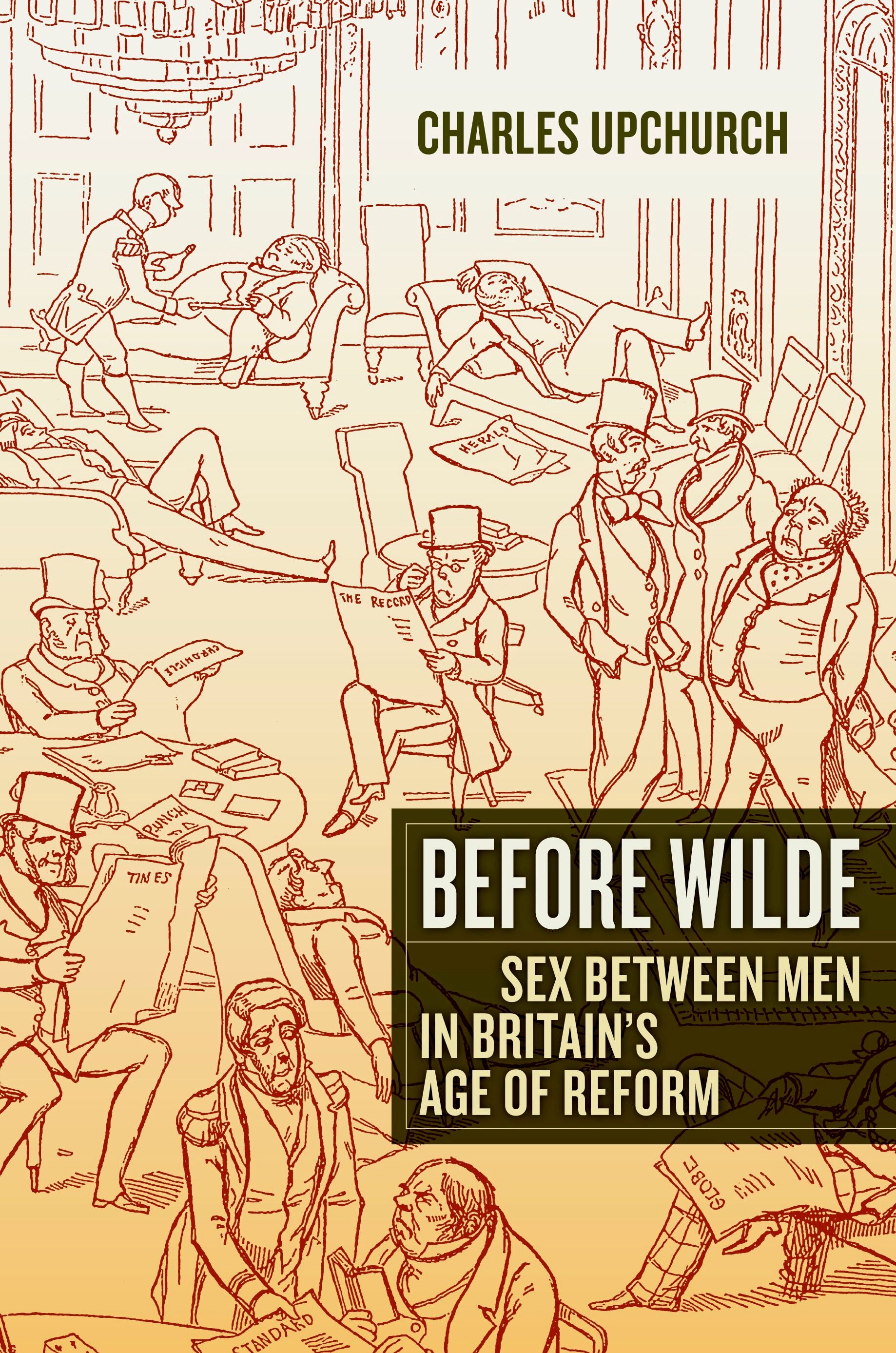
Before Wilde
This book examines changing perceptions of sex between men in early Victorian Britain, a significant yet surprisingly little explored period in the history of Western sexuality. Looking at the dramatic transformations of the era—changes in the family and in the law, the emergence of the world's first police force, the growth of a national media, and more—Charles Upchurch asks how perceptions of same-sex desire changed between men, in families, and in the larger society. To illuminate these questions, he mines a rich trove of previously unexamined sources, including hundreds of articles pertaining to sex between men that appeared in mainstream newspapers. The first book to relate this topic to broader economic, social, and political changes in the early nineteenth century, Before Wilde sheds new light on the central question of how and when sex acts became identities.
eBook


Martial masculinities
This collection explores the role of martial masculinities in shaping nineteenth-century British culture and society in a period framed by two of the greatest wars the world had ever known. It offers a fresh, interdisciplinary perspective on an emerging field of study and draws on historical, literary, visual and musical sources to demonstrate the centrality of the military and its masculine dimensions in the shaping of Victorian and Edwardian personal and national identities. Focusing on both the experience of military service and its imaginative forms, it examines such topics as bodies and habits, families and domesticity, heroism and chivalry, religion and militarism, and youth and fantasy. This collection will be required reading for anyone interested in the cultures of war and masculinity in the long nineteenth century.
eBook


An Everyday Life of the English Working Class
This book concerns two men, a stockingmaker and a magistrate, who both lived in a small English village at the turn of the nineteenth century. It focuses on Joseph Woolley the stockingmaker, on his way of seeing and writing the world around him, and on the activities of magistrate Sir Gervase Clifton, administering justice from his country house Clifton Hall. Using Woolley's voluminous diaries and Clifton's magistrate records, Carolyn Steedman gives us a unique and fascinating account of working-class living and loving, and getting and spending. Through Woolley and his thoughts on reading and drinking, sex, the law and social relations, she challenges traditional accounts which she argues have overstated the importance of work to the working man's understanding of himself, as a creature of time, place and society. She shows instead that, for men like Woolley, law and fiction were just as critical as work in framing everyday life.
eBook