
Catalogue Search | MBRL


Are you sure you want to remove the book from the shelf?

{{itemTitle}}
1,071
result(s) for
"Great Britain History Fiction."
Sort by:

War brides
Alice Osbourne, the stolid daughter of the late vicar, is reeling from the news that Richard Fairfax broke their engagement to marry Evangeline Fontaine, an American girl from the Deep South. Evangeline's arrival causes a stir in the village but not the chaos that would ensue if they knew her motives for being there. Scrappy Elsie Pigeon is among the poor of London who see the evacuations as a chance to escape a life of destitution. Another new arrival is Tanni Zayman, a young Jewish girl who fled the horrors of Europe and now waits with her newborn son, certain that the rest of her family is safe and bound to show up any day. And then there's Frances Falconleigh, a madcap, fearless debutante whose father is determined to keep her in the countryside and out of the papers.--Amazon.com.
Book

Better Left Unsaid
Better Left Unsaid is in the unseemly position of defending censorship from the central allegations that are traditionally leveled against it. Taking two genres generally presumed to have been stymied by the censor's knife-the Victorian novel and classical Hollywood film-this book reveals the varied ways in which censorship, for all its blustery self-righteousness, can actually be good for sex, politics, feminism, and art.
As much as Victorianism is equated with such cultural impulses as repression and prudery, few scholars have explored the Victorian novel as a \"censored\" commodity-thanks, in large part, to the indirectness and intangibility of England's literary censorship process. This indirection stands in sharp contrast to the explicit, detailed formality of Hollywood's infamous Production Code of 1930. In comparing these two versions of censorship, Nora Gilbert explores the paradoxical effects of prohibitive practices. Rather than being ruined by censorship, Victorian novels and Hays Code films were stirred and stimulated by the very forces meant to restrain them.
eBook

Anna Sewell's Black Beauty
A simplified, abridged version of Black Beauty's experiences with both good and bad masters in nineteenth-century England.
Book

Just Flesh and Blood
Just Flesh and Blood is the highly anticipated conclusion in the popular trilogy about Queen Elizabeth I.'A terrible dread took hold in my belly.The only bed left to me was my deathbed and I was not ready for that - not yet.No, not yet.' Although she lies unmoving on a pile of cushions, Elizabeth is a survivor.
eBook
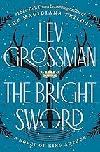
The bright sword : a novel of King Arthur
\"Collum, a brilliantly gifted young knight from the provinces, arrives at Camelot two weeks after the Battle of Camlann, hoping to compete for a spot on the Round Table. But he finds the city empty, King Arthur dead, and the Table destroyed. The remaining six knights aren't the mighty heroes, the legends, like Lancelot and Gawain and Tristram and Galahad. These are the survivors, a grab-bag of minor oddball knights from the margins-Sir Palomides, the Saracen Knight; Sir Bedivere, Arthur's one-handed longtime companion; Sir Dagonet, Arthur's fool, knighted as a joke; Sir Dinadan, a cutting wit who's hiding a deep secret. Arthur's death has exposed the splinters of his kingdom, and a void has opened in the heart of Britain. As power-hungry lords from the north descend on Camelot to seize control of the land, Collum is thrust into the front lines. Here lies the battlefield between pagans and Christians, fantasy and empire, power and destiny. Monsters and fairies are reawakening, the moral center is gone, and the fragile alliances that held Britain together are breaking. It is up to the surviving knights, the rebellious sorceress Nimue, and young Collum to avenge Arthur's murder and save Camelot. Can they re-build the Table and bring back the glory that was Camelot? Should they even try? The first major Arthurian epic of the new millennium, full of duels and quests, battles and tournaments, magic swords and Fisher Kings, The Bright Sword is a story about power and hope, and the struggle for the soul of England between the new Christian God and the old gods of fairy. But most of all it's a story about flawed men and women full of strength and pain who are looking for a way to reforge a broken land, in spite of being broken themselves\"-- Provided by publisher.
BOOK
Korda
The producer behind such celebrated films as The Four Feathers and The Third Man is one of the most colourful and important figures in the history of the British cinema. This gripping biography tells how with extraordinary ambition, enterprise and showmanship, Alexander Korda established in Britain a film industry that rivalled Hollywood, built Europe's biggest studio, and created world-class stars, including Charles Laughton and Vivien Leigh. The biography traces Korda's path from his rural childhood in a remote part of Hungary to a British knighthood. Korda's legacy, it argues, was a film industry that dared to dream on the largest possible scale. But he also exemplified the pattern of boom and bust that dogged the British cinema ever since he first came into the limelight in 1933 with the international success of The Private Life of Henry VIII. To understand his often turbulent career is to gain a profound insight into the nature of the British cinema both then and now.
eBook

Miss Carter's war
It is 1948 and Britain is struggling to recover from the Second World War. Half French, half English, Marguerite Carter, young and beautiful, has lost her parents and survived a terrifying war, working for the SOE behind enemy lines. Leaving her partisan lover she returns to England to be one of the first women to receive a degree from the University of Cambridge...Now she pins back her unruly auburn curls, draws a pencil seam up her legs, ties the laces on her sensible black shoes, belts her grey gabardine mac and sets out towards her future as an English teacher in a girls' grammar school. For Miss Carter has a mission - to fight social injustice, to prevent war and to educate her girls...Through deep friendships and love lost and found, from the peace marches of the fifties and the flowering of the Swinging Sixties, to the rise of Thatcher and the battle for gay rights, to the spectre of a new war, Sheila Hancock has created a powerful, panoramic portrait of Britain through the life of one very singular woman.
Book

Doctor Who and the Art of Adaptation
Although it started as a British television show with a small but devoted fan base, Doctor Who has grown in popularity and now appeals to audiences around the world. In the fifty-year history of the program, Doctor Who’s producers and scriptwriters have drawn on a dizzying array of literary sources and inspirations. Elements from Homer, classic literature, gothic horror, swashbucklers, Jacobean revenge tragedies, Orwellian dystopias, Westerns, and the novels of Agatha Christie and Evelyn Waugh have all been woven into the fabric of the series. One famous storyline from the mid-1970s was rooted in the Victoriana of authors like H. Rider Haggard and Arthur Conan Doyle, and another was a virtual remake of Anthony Hope’s The Prisoner of Zenda—with robots! In Doctor Who and the Art of Adaptation: Fifty Years of Storytelling, Marcus Harmes looks at the show’s frequent exploration of other sources to create memorable episodes. Harmes observes that adaptation in Doctor Who is not just a matter of transferring literary works to the screen, but of bringing a diversity of texts into dialogue with the established mythology of the series as well as with longstanding science fiction tropes. In this process, original stories are not just resituated, but transformed into new works. Harmes considers what this approach reveals about adaptation, television production, the art of storytelling, and the long-term success and cultural resonance enjoyed by Doctor Who. Doctor Who and the Art of Adaptation will be of interest to students of literature and television alike, and to scholars interested in adaptation studies. It will also appeal to fans of the series interested in tracing the deep cultural roots of television’s longest-running and most literate science-fiction adventure.
eBook

The best of intentions
An ambitious young gardener, Robert's been offered a cottage in the grounds of Anderby Hall in return for his efforts to restore the hornbeam maze and tame the feral roses. When the residents of Greenfields discover that Mrs Fitzgerald has sold the old orchard to a property developer, who intends to build an estate of mock-Tudor bungalows, cracks start to fracture the community's façade.
BOOK

The language of Doctor Who
In a richly developed fictional universe, Doctor Who, a wandering survivor of a once-powerful alien civilization, possesses powers beyond human comprehension. He can bend the fabric of time and space with his TARDIS, alter the destiny of worlds, and drive entire species into extinction. The good doctor’s eleven “regenerations” and fifty years’ worth of adventures make him the longest-lived hero in science-fiction television. In The Language of Doctor Who: From Shakespeare to Alien Tongues, Jason Barr and Camille D. G. Mustachio present several essays that use language as an entry point into the character and his universe. Ranging from the original to the rebooted television series—through the adventures of the first eleven Doctors—these essays explore how written and spoken language have been used to define the Doctor’s ever-changing identities, shape his relationships with his many companions, and give him power over his enemies—even the implacable Daleks. Individual essays focus on fairy tales, myths, medical-travel narratives, nursery rhymes, and, of course, Shakespeare. Contributors consider how the Doctor’s companions speak with him through graffiti, how the Doctor himself uses postmodern linguistics to communicate with alien species, and how language both unites and divides fans of classic Who and new Who as they try to converse with each other. Broad in scope, innovative in approach, and informed by a deep affection for the program, TheLanguage of Doctor Who will appeal to scholars of science fiction, television, and language, as well as to fans looking for a new perspective on their favorite Time Lord.
eBook