
Catalogue Search | MBRL


Are you sure you want to remove the book from the shelf?

{{itemTitle}}
342
result(s) for
"Great Britain History Maps."
Sort by:


Mapping the Victorian social body
The cholera epidemics that plagued London in the nineteenth century were a turning point in the science of epidemiology and public health, and the use of maps to pinpoint the source of the disease initiated an explosion of medical and social mapping not only in London but throughout the British Empire as well. Mapping the Victorian Social Body explores the impact of such maps on Victorian and, ultimately, present-day perceptions of space. Tracing the development of cholera mapping from the early sanitary period to the later “medical” period of which John Snow’s work was a key example, the book explores how maps of cholera outbreaks, residents’ responses to those maps, and the novels of Charles Dickens, who drew heavily on this material, contributed to an emerging vision of London as a metropolis. The book then turns to India, the metropole’s colonial other and the perceived source of the disease. In India, the book argues, imperial politics took cholera mapping in a wholly different direction and contributed to Britons’ perceptions of Indian space as quite different from that of home. The book concludes by tracing the persistence of Victorian themes in current discourse, particularly in terms of the identification of large cities with cancerous growth and of Africa with AIDS.
eBook

The British world : an illustrated atlas
Specially commissioned maps are blended with narrative and artwork to tell the full sweep of British history, from prehistory to the modern age. From literary highlights to social amusements to trends of the day, Jepson provides an essential reference for all Anglophiles.
Book
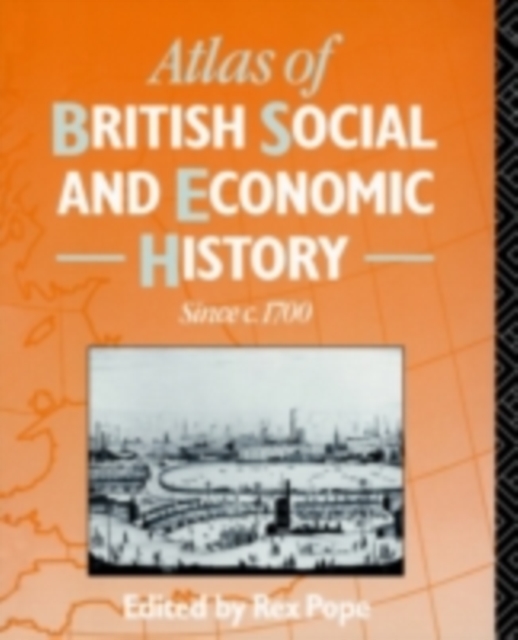
Atlas of British Social and Economic History Since c.1700
First published in 1990. Routledge is an imprint of Taylor & Francis, an informa company.
eBook


Atlas of British social and economic history since c. 1700
This Atlas covers British history from the mid-eighteenth century to the present. Topics include demography, agriculture, transport, trade, labour movements, religion, education, health and housing.
eBook

Historical atlas of the British Isles
\"Illustrated with 150 full-colour maps and plans that range many topics, such as agricultural, political and industrial revolutions\"--The publisher.
Book
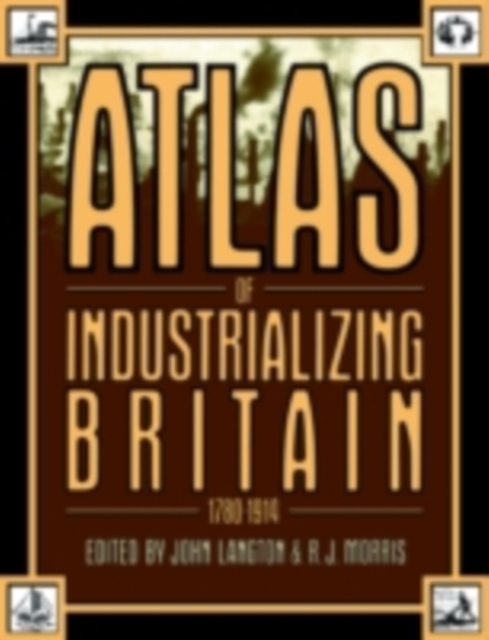
Atlas of Industrializing Britain, 1780-1914
This atlas draws together crucial social and economic data on England, Scotland and Wales between 1780 and 1914, and gives a clear guide to the industrial development of Great Britain during the modern period.
eBook

Boro, L'île d'amour
There has been a recent revival of interest in the work of Polish film director Walerian Borowczyk, a label-defying auteur and \"escape artist\" if there ever was one. This collection serves as an introduction and a guide to Borowczyk's complex and ambiguous body of work, including panoramic views of the director's output, focused studies of particular movies, and more personal, impressionistic pieces. Taken together, these contributions comprise a wide-ranging survey that is markedly experimental in character, allowing scholars to gain insight into previously unnoticed aspects of Borowczyk'soeuvre.
eBook