
Catalogue Search | MBRL


Are you sure you want to remove the book from the shelf?

{{itemTitle}}
76
result(s) for
"Great Britain Politics and government 20th century Biography."
Sort by:


Enoch Powell and the Making of Postcolonial Britain
Enoch Powell's explosive rhetoric against black immigration and anti-discrimination law transformed the terrain of British race politics and cast a long shadow over British society. Using extensive archival research, Camilla Schofield offers a radical reappraisal of Powell's political career and insists that his historical significance is inseparable from the political generation he sought to represent. Enoch Powell and the Making of Postcolonial Britain follows Powell's trajectory from an officer in the British Raj to the centre of British politics and, finally, to his turn to Ulster Unionism. She argues that Powell and the mass movement against 'New Commonwealth' immigration that he inspired shed light on Britain's war generation, popular understandings of the welfare state and the significance of memories of war and empire in the making of postcolonial Britain. Through Powell, Schofield illuminates the complex relationship between British social democracy, racism and the politics of imperial decline in Britain.
eBook


Banished potentates
Though the overthrow and exile of Napoleon in 1815 is a familiar episode in modern history, it is not well known that just a few months later, British colonisers toppled and banished the last king in Ceylon. Beginning with that case, this volume examines the deposition and exile of indigenous monarchs by the British and French - with examples in India, Burma, Malaysia, Vietnam, Madagascar, Tunisia and Morocco - from the early nineteenth century down to the eve of decolonisation. It argues that removal of native sovereigns, and sometimes abolition of dynasties, provided a powerful strategy used by colonisers, though European overlords were seldom capable of quelling resistance in the conquered countries, or of effacing the memory of local monarchies and the legacies they left behind
eBook

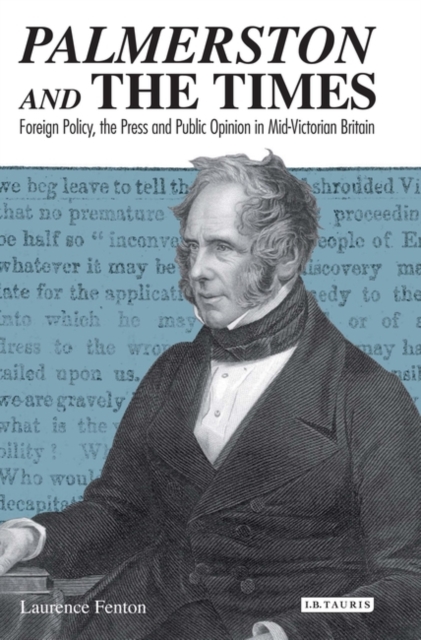
Palmerston and the Times
England in the Age of Palmerston had two players of colossal influence on the world stage: Lord Palmerston himself - the dominant figure in foreign affairs in the mid-nineteenth century - and The Times - the first global newspaper, read avidly by statesmen around the world. Palmerston was also one of the first real media-manipulating politicians of the modern age, forging close links with a number of publications to create the so-called 'Palmerston press'. His relationship with The Times was more turbulent, a prolonged and bitter rivalry preceding eventual rapprochement during the Crimean War. In this book, Laurence Fenton explores the highly charged rivalry between these two titans of the mid-Victorian era, revealing the personal and political differences at the heart of an antagonism that stretched over the course of three decades. Fenton focuses on the years from 1830 to 1865, when Palmerston was British Foreign Secretary and Prime Minister for a combined total of almost twenty-five years, and when The Times, under the editorship of first Thomas Barnes and then John Delane, reached the zenith of its success. It was a period during which public interest in foreign affairs grew immeasurably, encompassing the tumultuous 'Year of Revolutions', the famous 'Don Pacifico' debate and the Crimean War. Palmerston and The Times adds significantly to the understanding of the life and career of Lord Palmerston, in particular the relationship he enjoyed with the press and public opinion that was so vital to his incredibly long and multifaceted political career. It also brings to light the remarkable men behind the success of The Times, paying fair tribute to their abilities while at the same time warning against the long-standing view of The Times as a paragon of newspaper independence in this era. It will be essential reading for researchers of Victorian history and for anyone interested in the tumultuous relationship between politics and the press.
eBook


Richard Wainwright, the Liberals and Liberal Democrats
Richard Wainwright, the Liberals and Liberal Democrats: Unfinished Business now available in paperback, offers new research on familiar themes involving loyalties of politics, faith and locality. Richard Wainwright was a Liberal MP for seventeen years during the Party’s recovery, but his life tells us about much more than this. Wainwright grew up in prosperity, but learned from voluntary work about poverty; he refused to fight in World War Two, but saw war at its cruellest; he joined the Liberal Party when most had given up on it, but gave his fortune to it; lost a by-election but caused the only Labour loss in Harold Wilson’s landslide of 1966. He then played a key role in the fall of Jeremy Thorpe, the Lib-Lab Pact and the formation of the SDP-Liberal Alliance and the Liberal Democrats; he represented a unique Yorkshire constituency which reflected his pride and hope for society; and though he gave his life to the battle to be in the Commons, he refused a seat in the Lords. Richard Wainwright's story is central to the story of the Liberal Party and sheds light on the reasons for its survival and the state of its prospects. At the same time this book is a parable of politics for anyone who wants to represent an apparently lost cause, who wants to motivate people who have been neglected, and who wants to follow their convictions at the highest level.
eBook


Ellen Wilkinson
Ellen Wilkinson was a key radical figure in the 20th century British socialist and feminist movement, a woman of passionate energy who was involved in most of the major struggles of her time.
Born in October 1891 into a working-class textile family, Wilkinson was involved in women's suffrage, helped found the British Communist Party, led the Labour Party's anti-fascist campaign, headed the iconic Jarrow Crusade and was the first female Minister of Education.
In this lively and engaging biography, Paula Bartley charts the political life of this extraordinary campaigner who went from street agitator to government minister whilst keeping her principles intact.
eBook