
Catalogue Search | MBRL


Are you sure you want to remove the book from the shelf?

{{itemTitle}}
10,791
result(s) for
"Great Britain Politics and government History."
Sort by:

Democracy and the Vote in British Politics, 1848-1867
The Second Reform Act, passed in 1867, created a million new voters, doubling the electorate and propelling the British state into the age of mass politics. It marked the end of a twenty year struggle for the working class vote, in which seven different governments had promised change. Yet the standard works on 1867 are more than forty years old and no study has ever been published of reform in prior decades.
This study provides the first analysis of the subject from 1848 to 1867, ranging from the demise of Chartism to the passage of the Second Reform Act. Recapturing the vibrancy of the issue and its place at the heart of Victorian political culture, it focuses not only on the reform debate itself, but on a whole series of related controversies, including the growth of trade unionism, the impact of the 1848 revolutions and the discussion of French and American democracy.
eBook

A century of Labour
Britain's first Labour government took office on 22 January 1924. Its centenary provides an opportunity to reassess the party's performance over the last 100 years, and with an election pending, the character and purpose of the modern party. Labour defined the dominant political settlement of much of the 20th century: the welfare state. It has achieved much in pursuit of material change, social reform and equality. It has challenged patriarchy, racism and the legacy of imperialism, promoted human rights and delivered democratic and constitutional renewal. Yet any honest assessment must acknowledge a century littered with failures and missed opportunities. In this book, Jon Cruddas details the vivid personalities and epic factional battles, the immense achievements and profound disappointments that define a century of Labour.
BOOK
The Liberal Unionist Party
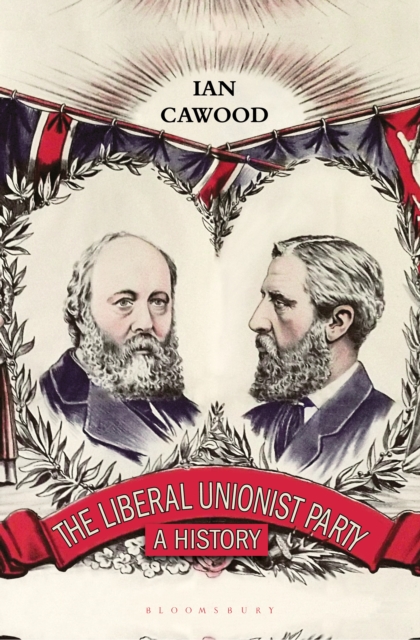
The Liberal Unionist party was one of the shortest-lived political parties in British history. It was formed in 1886 by a faction of the Liberal party, led by Lord Hartington, which opposed Irish home rule. In 1895, it entered into a coalition government with the Conservative party and in 1912, now under the leadership of Joseph Chamberlain, it amalgamated with the Conservatives. Ian Cawood here uses previously unpublished archival material to provide the first complete study of the Liberal Unionist party. He argues that the party was a genuinely successful political movement with widespread activist and popular support which resulted in the development of an authentic Liberal Unionist culture across Britain in the mid-1890s. The issues which this book explores are central to an understanding of the development of the twentieth century Conservative party, the emergence of a ‘national’ political culture, and the problems, both organisational and ideological, of a sustained period of coalition in the British parliamentary system.
eBook


Conservative Politics in National and Imperial Crisis
Whilst serving in the prestigious post of Viceroy of India between 1926 and 1931, Lord Irwin (later the Earl of Halifax) was kept informed about political events in Britain by frequent and lengthy letters from Cabinet Ministers, senior Conservative MPs and other prominent figures, such as the editor of The Times. Covering events from the General Strike of May 1926 to Irwin's negotiation of a pact with Gandhi in March 1931, these private and previously unpublished letters mix analysis and gossip. They offer a frank account from within the highest political circles of the Baldwin government of 1924-29 and the serious crisis in the Conservative Party which followed in 1929-31. There is also much commentary on major figures such as Stanley Baldwin, Neville Chamberlain, Winston Churchill and Ramsay MacDonald. Of great depth and richness, and emanating from experienced and shrewd political insiders, this collection is an essential historical source for British history between the two world wars.
eBook


Vernacular Bodies
Making babies was a mysterious process in early modern England. Mary Fissell employs a wealth of popular sources - ballads, jokes, witchcraft pamphlets, prayerbooks, popular medical manuals - to produce the first account of women's reproductive bodies in early-modern cheap print. Since little was certain about the mysteries of reproduction, the topic lent itself to a rich array of theories. The insides of women's reproductive bodies provided a kind of open interpretive space, a place where many different models of reproductive processes might be plausible. These models were profoundly shaped by cultural concerns; they afforded many ways to discuss and make sense of social, political, and economic changes such as the Protestant Reformation and the Civil War. They gave ordinary people ways of thinking about the changing relations between men and women that characterized these larger social shifts. Fissell offers a new way to think about the history of the body by focusing on women's bodies, showing how ideas about conception, pregnancy, and childbirth were also ways of talking about gender relations and thus all relations of power. Where other histories of the body have focused on learned texts and male bodies, Vernacular Bodies looks at the small books and pamphlets that ordinary people read and listened to - and provides new ways to understand how such people experienced political conflicts and social change.
eBook

The English Constitution
The English Constitution addresses two burning contemporary and complementary questions; one regarding the so-called English ‘question’, the changing identities of England and English-ness, and a second regarding the changing shape of the Anglo-British constitution. It is suggested that there are both internal and external pressures that are driving the reformation of our constitutional order. There are internal pressures of decay, even corruption, and popular apathy, and there are external pressures brought to bear by the geopolitical challenges of the new world order and the new Europe.
eBook