
Catalogue Search | MBRL


Are you sure you want to remove the book from the shelf?

{{itemTitle}}
119
result(s) for
"Great Britain Social life and customs 19th century."
Sort by:


Constructing Girlhood Through the Periodical Press, 1850-1915
Focusing on six popular British girls' periodicals, Kristine Moruzi explores the debate about the shifting nature of Victorian girlhood between 1850 and 1915. During an era of significant political, social, and economic change, girls' periodicals demonstrate the difficulties of fashioning a coherent, consistent model of girlhood. The mixed-genre format of these magazines, Moruzi suggests, allowed inconsistencies and tensions between competing feminine ideals to exist within the same publication. Adopting a case study approach, Moruzi shows that the Monthly Packet, the Girl of the Period Miscellany, the Girl's Own Paper, Atalanta, the Young Woman, and the Girl's Realm each attempted to define and refine a unique type of girl, particularly the religious girl, the 'Girl of the Period,' the healthy girl, the educated girl, the marrying girl, and the modern girl. These periodicals reflected the challenges of embracing the changing conditions of girls' lives while also attempting to maintain traditional feminine ideals of purity and morality. By analyzing the competing discourses within girls' periodicals, Moruzi's book demonstrates how they were able to frame feminine behaviour in ways that both reinforced and redefined the changing role of girls in nineteenth-century society while also allowing girl readers the opportunity to respond to these definitions.
eBook


Leisure, citizenship and working-class men in Britain, 1850-1945
From the bawdy audience of a Victorian Penny Gaff to the excitable crowd of an early twentieth century football match, working-class male leisure proved to be a contentious issue for contemporary observers. For middle-class social reformers from across the political spectrum, the spectacle of popular leisure offered a view of working-class habits, and a means by which lifestyles and behaviour could be assessed. For the mid-Victorians, gingerly stepping into a new mass democratic age, the desire to create a bond between the recently enfranchised male worker and the nation was more important than ever. This trend continued as those in governance perceived that 'good' leisure and citizenship could fend off challenges to social stability such as imperial decline, the mass degenerate city, hooliganism, civic and voter apathy and fascism. Thus, between 1850 and 1945 the issue of male leisure became enmeshed with changing contemporary debates on the encroaching mass society and its implications for good citizenry. Working-class culture has often been depicted as an atomised and fragmented entity lacking any significant cultural contestation. Drawing on a wealth of primary and secondary source material, this book powerfully challenges these recent assumptions and places social class centre stage once more. Arguing that there was a remarkable continuity in male working-class culture between 1850 and 1945, Beaven contends that despite changing socio-economic contexts, male working-class culture continued to draw from a tradition of active participation and cultural contestation that was both class and gender exclusive. This lively and readable book draws from fascinating accounts from those who participated in and observed contemporary popular leisure making it of importance to students and teachers of social history, popular culture, urban history, historical geography, historical sociology and cultural studies.
eBook

The Regency years : during which Jane Austen writes, Napoleon fights, Byron makes love, and Britain becomes modern
\"A surprising history of the era that brought our modern world decisively into view. Though the Victorians are often credited with ushering in our modern era, the seeds were planted in the years before. The Regency (1811- 1820) began when the profligate Prince of Wales replaced his insane father, George III, as Britain's ruler; around the regent surged a society of evangelicalism and hedonism, elegance and brutality, exuberance and despair. The arts showcased extraordinary writers and painters such as Austen, Byron, the Shelleys, Constable, and Turner. Science gave us the steam locomotive and the blueprint for the modern computer. Yet the dark side of the modern era was visible in the poverty, slavery, pornography, opium, and gothic imaginings that birthed Frankenstein. And all the while, the British Empire fought in foreign lands: the Napoleonic Wars in Europe and the War of 1812 in the United States. Exploring these crosscurrents, Robert Morrison illuminates the profound ways this period shaped and indelibly marked the modern world.\"--Provided by publisher.
Book
1895
'Kill the bugger!' _x000B_So read one telegram to the Marquess of Queensberry before his legal battle with Oscar Wilde in the spring of 1895. Today's readers often see the Wilde case as dramatising the intolerance and cruelty of late-Victorian life, but what was its contemporary significance? What was it like to live in Britain in 1895? Which stories, personalities and events really captured the headlines?
eBook
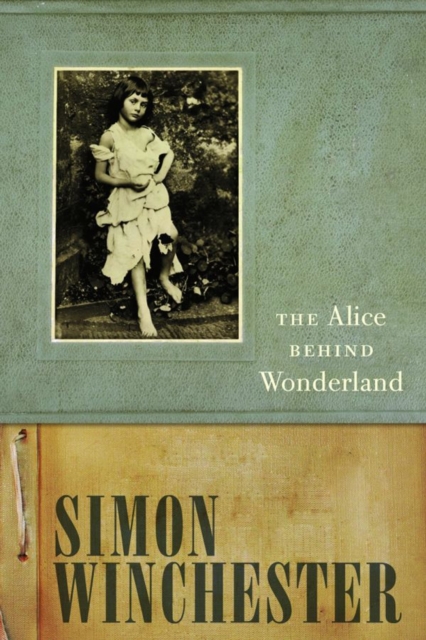
The Alice behind wonderland
In the summer of 1858, in a garden behind Christ Church in Oxford, Charles Dodgson--better known by his pseudonym Lewis Carroll--dressed the six-year-old Alice Liddell in ragamuffin's clothes, and then snapped the camera's shutter. In The Alice Behind Wonderland, Simon Winchester uses the famous photograph of Alice as the launching pad for an appreciative energetic and penetrating look at the inspiration behind, and the making of, one of the greatest classics of children's literature. Indeed, Winchester shows that Dodgson's love of photography deeply influenced his view of the world, helping to transform this shy and half-deaf mathematician into one of the world's best-loved observers of childhood. Much like the fictional Alice's world, as the photograph is subject to closer examination, 'Alice Liddell as The Beggar Maid' becomes curiouser and curiouser, capturing a moment during a golden afternoon that would endure forever. 'Alice Liddell as The Beggar Maid' was, in short, the muse that would inspire the creation of Alice's Adventures in Wonderland. Deftly engaging with Dogson's published writings, private diaries, and photography, Winchester weaves together the poignant, turbulent, and entirely fascinating story behind Lewis Carroll and the making of his Alice. Acclaim for Simon Winchester \"An exceptionally engaging guideat home everywhere, ready for anything, full of gusto and seemingly omnivorous curiosity.\" --Pico Iyer, The New York Times Book Review \"A master at telling a complex story compellingly and lucidly.\" --USA Today \"Extraordinarily graceful.\" --Time \"Winchester is an exquisite writer and a deft anecdoteur.\" --Christopher Buckley \"A lyrical writer and an indefatigable researcher.\" --Newsweek.
eBook

Divergent paths : family histories of Irish emigrants in Britain, 1820-1920
This title documents for the first time a representative sample of Irish immigrant families and uses the techniques of family and digital history to explore their long-term fate.
Book

Dancing out of Line
Dancing out of Linetransports readers back to the 1840s, when the craze for social and stage dancing forced Victorians into a complex relationship with the moving body in its most voluble, volatile form.By partnering cultural discourses with representations of the dance and the dancer in novels such asJane Eyre, Bleak House,andDaniel Deronda,Molly Engelhardt makes explicit many of the ironies underlying Victorian practices that up to this time have gone unnoticed in critical circles. She analyzes the role of the illustrious dance master, who created and disseminated the manners and moves expected of fashionable society, despite his position as a social outsider of nebulous origins. She describes how the daughters of the social elite were expected to \"come out\" to society in the ballroom, the most potent space in the cultural imagination for licentious behavior and temptation. These incongruities generated new, progressive ideas about the body, subjectivity, sexuality, and health.Engelhardt challenges our assumptions about Victorian sensibilities and attitudes toward the sexual/social roles of men and women by bringing together historical voices from various fields to demonstrate the versatility of the dance, not only as a social practice but also as a forum for Victorians to engage in debate about the body and its pleasures and pathologies.
eBook